Tuesday Tea – Black Knight

Don’t you love discovering treasures in unexpected places? I know I do, and that’s exactly what happened to me while walking around a local flea market one day.

Probably second only to books, when I hear the word tea, my ears instantly perk up. So, when I heard the owner of Rusted Leaf Tea Company talking about the loose-leaf blends he creates, I made a beeline for his table.

Allow me to paint a picture for you. Imagine a husky, bearded gentleman wearing what I believe was a Celtic-patterned t-shirt, sporting longish hair, and displaying a passion for tea that lit up his face. I try not to stereotype people, but I must admit, he wasn’t what I expected in a tea seller. And I feel just terrible that I didn’t get his name, so I’ll blame it on my own enthusiasm.

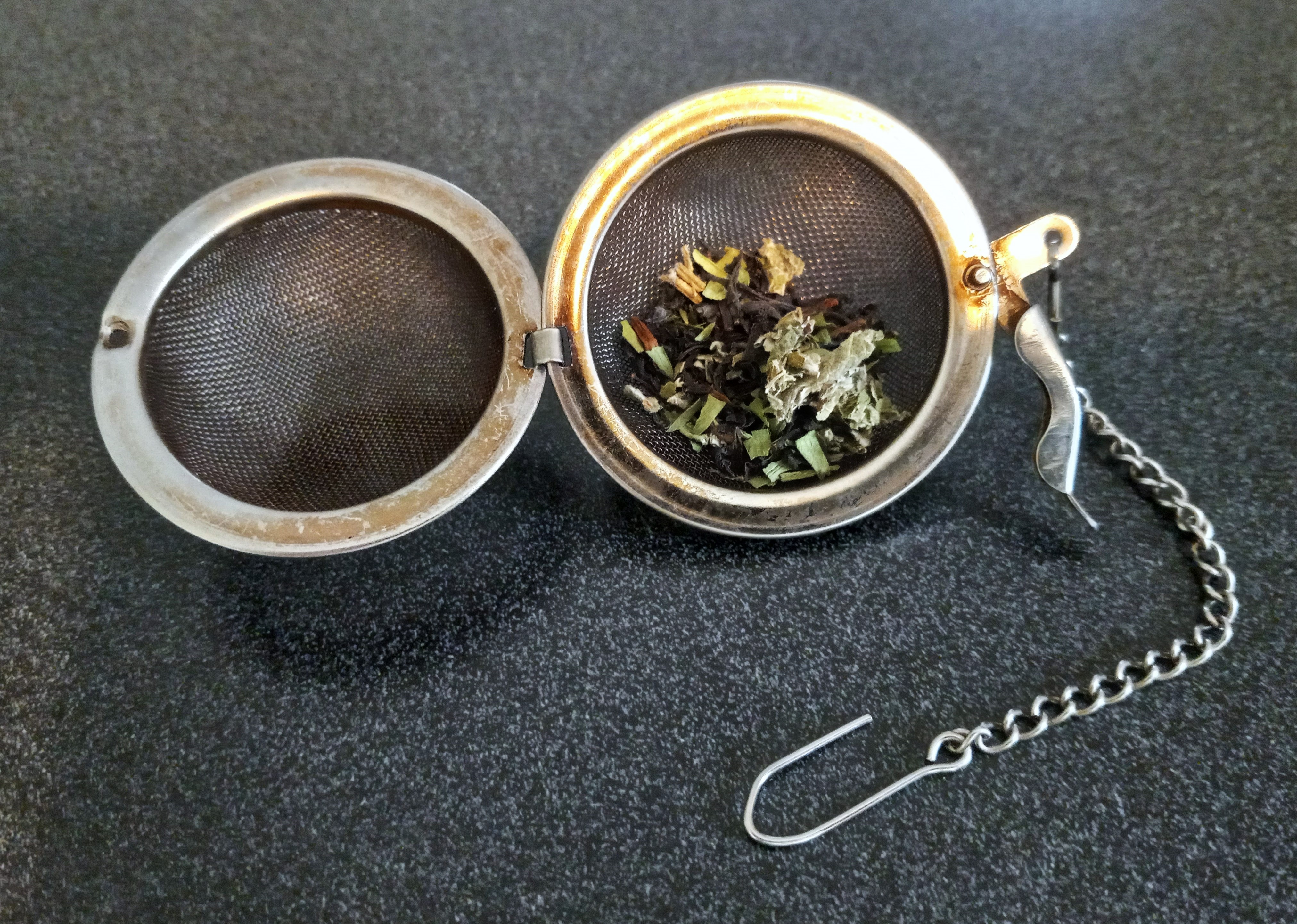
My excitement heightened as he described the ingredients in his proprietary blends and, thrill of thrills, allowed me to enjoy their aroma. He had a little tin with a clear top for each tea so one could see the mixtures and inhale the scent of each delicious concoction. It was difficult to decide, but I settled on Black Knight, and I’ll admit it was in part because the name is just so cool.
Black tea, raspberry leaf, and tarragon make up the ingredients, and in the bag, they smell sweet, fresh, and mildly minty. This last detail is from the tarragon which I love as a seasoning in beef dishes but came to adore in my hot tea. I learned a long time ago that mint teas are not my thing, but tarragon is obviously mint’s close cousin with a sweeter, less bitter personality. I was in love with the flavor that didn’t overpower but left my palate with that cool, minty sensation. Also, Black Knight didn’t require any sweetener or cream, but if you try it that way, let me know how it worked for you.

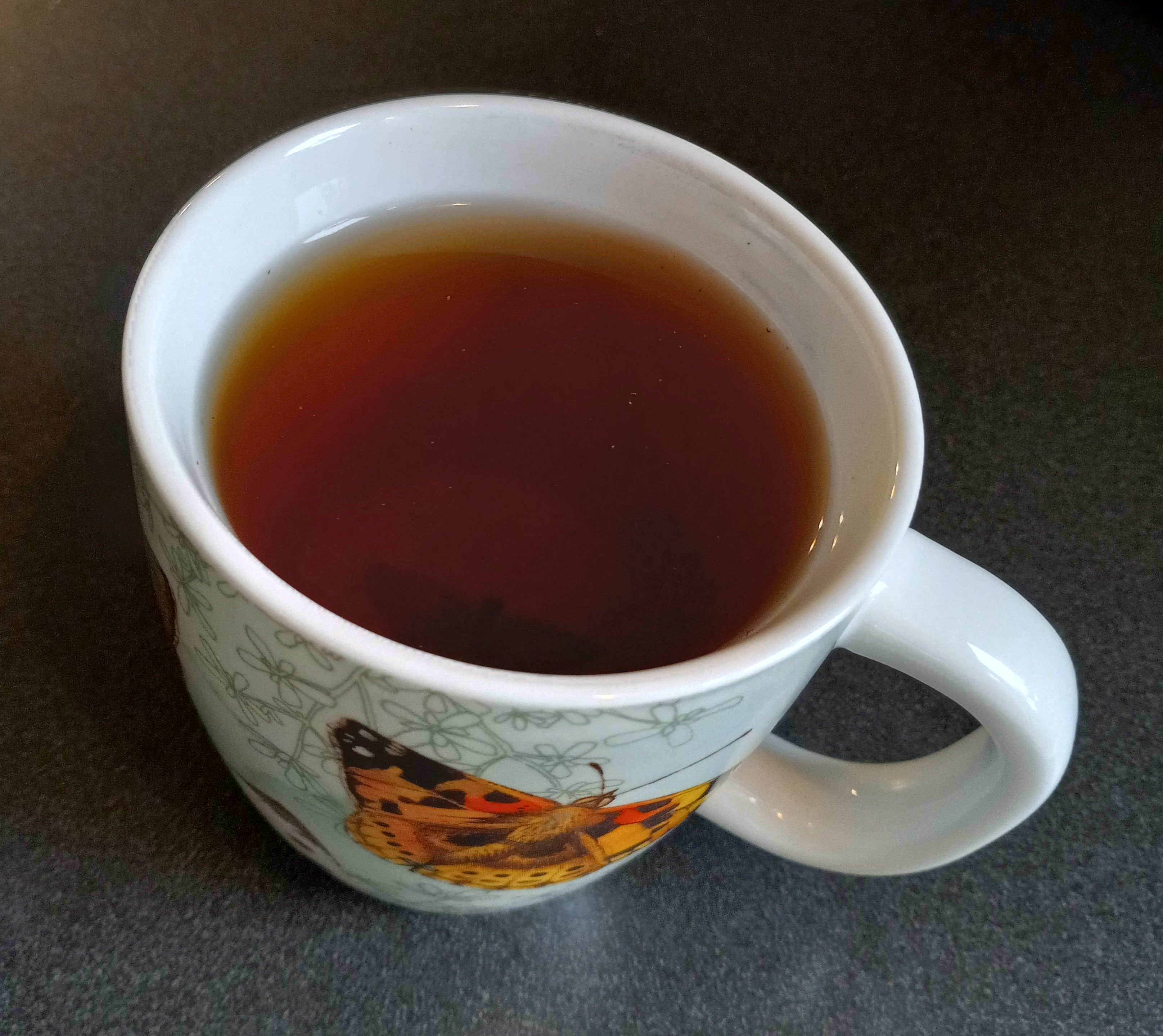
Make sure your water is quite hot for brewing this beauty. One teaspoon of the blend is perfect for a twelve-ounce serving. I found a four-minute steep with an additional minute to swirl my tea ball around the cup delivers a bright, bracing beverage that is perfect any time of the day. The tea is deep mahogany in color and tapers to a lovely green/gold near the edges. The aroma when brewed is that of a freshly mown field with stacks of moist grasses drying in the sun.

Prior to using, a quick fluffing with a fork will keep the settled ingredients well blended in the bag. I suspect Black Knight would make a delicious s iced tea, so if you try it, let me know in the comments how you enjoyed it.

Rusted Leaf Tea Company strikes me as a fledgling company since they are on social media but, as of this posting, do not have a website. Still, Rusted Leaf has much to offer, and I wish the company well and encourage you to seek them out.

Is #TBT Still a Thing?

I usually come late to a trend because I’m off doing my own thing. It’s not because I’m an amazing trailblazer but more because I’m in my own little world.

Still, #TBT crept into my peripheral social media vision, and while it was cute at first, I soon found the trend annoying. I played along a few times when tagged in various games, but I rarely finished.

So here we are, eleven years after the first use of #ThrowbackThursday according to Time, and I still don’t participate in the trend. Until now when I started thinking how can we use #TBT for something worthwhile?

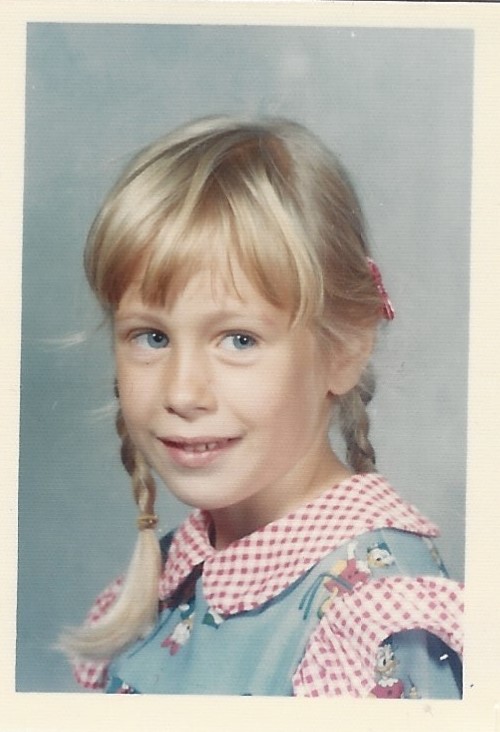
Rather than share a picture of me from kindergarten with my barrettes sliding down my hair and what my husband refers to as my shifty smile, I decided to dig up some of my past writing. That’s what I do, so why not reveal a picture of myself through my chosen art form? So many authors have claimed that they don’t write themselves into their work, but that’s simply not true. We’re in there, somewhere, somehow.

My first goal is to catch the interest of Facebook friends by reposting some of my initial pieces. I won’t share all of them because a few are cringeworthy. Still, one can find them, which is my second goal of encouraging readers to poke around at HL Gibson, Author, especially under the Read & Relax heading where you’ll locate my short stories and flash fiction. If you want to find the dirt, you’re going to have to dig.

My third and most important goal is to draw out other writers. We need to build the writing community, so let everyone know where you can be found. The fourth goal in this process is to give permission to those reading my work to leave feedback. Dear Reader, you never truly needed that permission in the first place because if my writing is out there, it’s understood that feedback is desired, required even. It’s what writers live in fear of and crave at the same time.

Keep in mind that you don’t have to be a writer yourself, but since you do have an opinion, please express it. Be kind and constructive, refrain from insult.

Some in my writing community will no doubt think I’ve gone mental and/or opened a horrible can of worms with my offer. One writing friend is fond of saying, “Let the blood-letting begin.” While I find his misapplied comment humorous, I don’t believe that’s going to happen, and it certainly isn’t necessary. Still, it’s funny when he exposes his wrist at writing group.

Communication is the ultimate goal here. Let’s have a chat in our 21st century coffee house that is social media. Leave your feedback in the comments section and let’s have a conversation.

Quotation Station

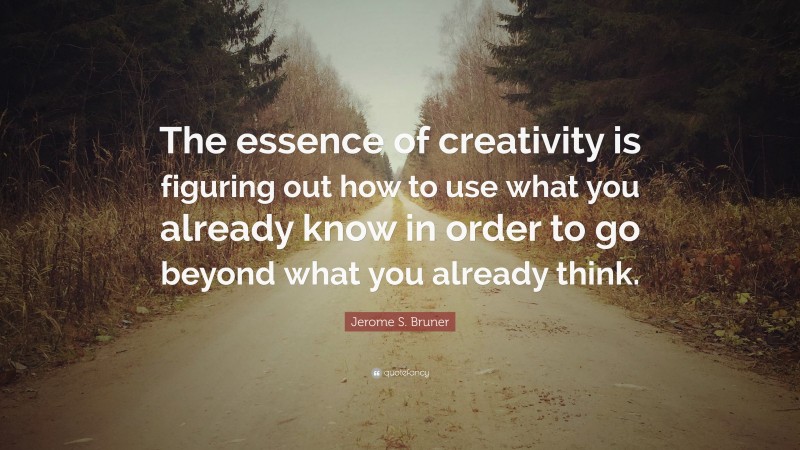
Shabbat Shalom to all the artists

who went beyond!

Let me know in the comments how you tapped into the essence

of your creativity this past week.

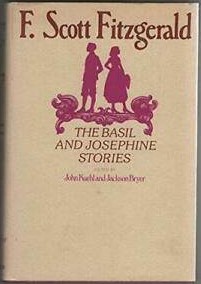
The Basil and Josephine Stories

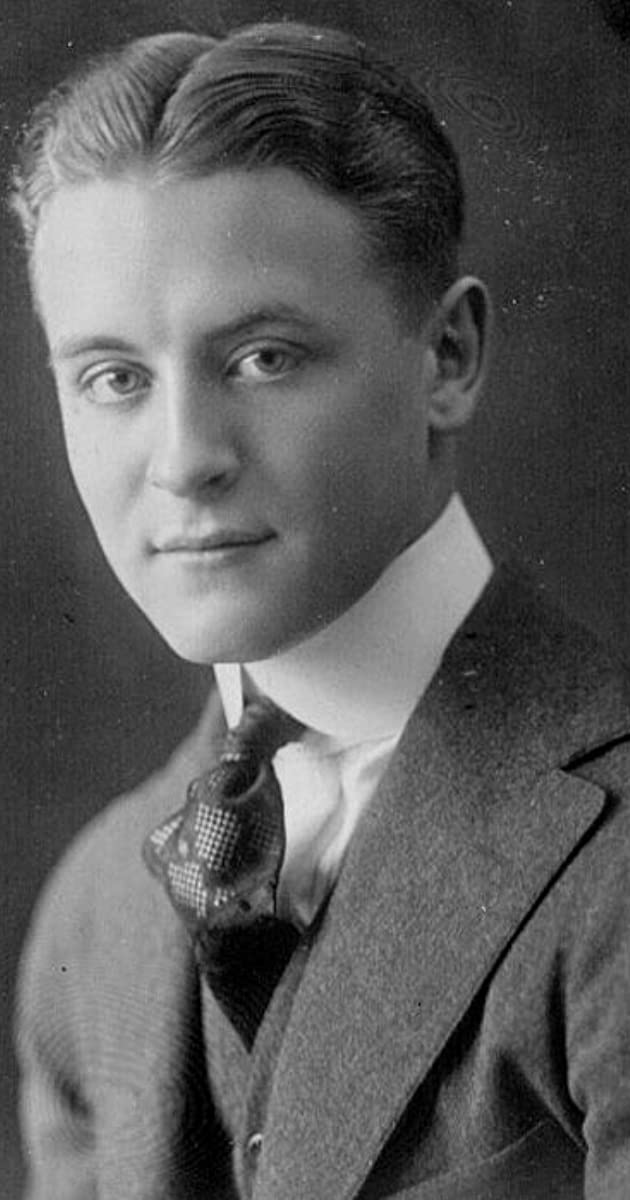
I’m not usually a fan of F. Scott Fitzgerald, and I’ve admitted I have a love/hate relationship with him, which meant I loved to hate him. I felt this way because I did not believe Fitzgerald deserved the acclaim he received, and still receives, for repeatedly producing the same work.

You may read my opinion of the author and his writings here: Under the Influence; Dear Scott, Sincerely, HL; and F. Scott Fitzgerald – The Short Stories.

Recently, I read The Basil and Josephine Stories, a compilation of Fitzgerald’s two previously published series from The Saturday Evening Post, and I honestly enjoyed them. I think they are some of his best writings.

Fitzgerald grabbed my interest by digging deep into the compost pile of this own youth. He transferred specific details and events to fashion Basil’s stories. While I formerly complained that he put too much of himself into his writing, the Basil stories were fresh in that they read like an attempt at self-analyzation, which I found intriguing.

I believe a mature perspective enabled the author to write about the humiliating details while at the same time stepping back and processing them. In doing so, the reader was treated to Basil’s growth and maturity, whereas in Fitzgerald’s own life, one does not see such amazing growth as experienced by his character.

One detail in Basil’s life that shocked me was the absence of his father, who had died in an unspecified manner. I recall reading that Fitzgerald was ashamed of his own father’s lack of success, and I wondered if removing Basil’s father from the stories was a subconscious method of dealing with this shame.

Now, factor in Josephine, a girl who repeatedly brought to mind “Charm is deceitful and beauty fades . . .” She is so shallow and self-absorbed that she never learns or grows throughout her stories until “Emotional Bankruptcy” wherein she is just becoming self-aware. There is more of Fitzgerald written into the character of Josephine than was initially apparent, maybe more than he intended, and she represents a warning of what not to become. Again, look at the author’s own life for evidence.

And she is most definitely a picture of the great lost love of his life, Ginevra King.

My conclusion is that Fitzgerald was crafting his version of the perfect ending to his relationship with Ginevra, a what-could-have-been scenario. I believe this because the author intended for Basil and Josephine to meet when he combined the series at some point.

I know that a book of Basil’s tales was proposed (and discarded for the flimsy reason of not wanting the story to detract from Fitzgerald’s more serious writing, i.e., his novels, in any way) but I’m not sure if the intended meeting between Basil and Josephine was supposed to happen in said book.

Whether as a novel or continuation of the series, I wonder if Fitzgerald began to fear the transparency of the story and/or accept that he could never make it right. The author depended on money earned from the stories to support his and Zelda’s lavish lifestyle between novels. Could the beautiful, troubled Zelda have seen what her wayward husband was attempting to accomplish thus forcing Fitzgerald to abandon the project?

Further, would Fitzgerald have had Basil snub Josephine, a literary comeuppance for Ginevra King, or would he have written a happily-ever-after ending bringing the pair together in a way that would show Ginevra, her father, the rich, and the world in general that a middleclass boy could marry a rich girl and make all her dreams come true? Would love have conquered riches?

We’ll never know, and while I would have liked to read that ending, all I’m left with is speculation. Still, I’m leaning more toward a comeuppance for Ginevra/Josephine because Basil/F. Scott was in the process of outgrowing her. Then again, Fitzgerald’s own lifelong pursuit of wealth and fame may have spelled doom for Basil and Josephine if they, as a couple, failed to overcome their worldly desires as Fitzgerald and Zelda did. Then there is the possibility that Basil would have led Josephine to a higher understanding of true happiness beyond money and reputation.

The whole ball of questions sound like something that would be a fabulous project for a writer of fan fiction, don’t you think?

I’m still itching to vent my usual complaints against Fitzgerald, but I’ll finish by saying that I felt more hope for him after reading The Basil and Josephine Stories. It’s obvious that he was better when writing short stories that built upon certain themes with the intention of having the characters intersect at some point. Perhaps I would like his novels better if he had written them as a collection of short stories. It certainly would have assisted with his inability to focus on longer works because of all he had going on in life.

Unfortunately, my hope for F. Scott Fitzgerald comes too late for an author who showed great potential and squandered much of it.

Quotation Station

Shabbat Shalom to all the creatives filling their minds with creativity!

Let me know in the comments section what amazing things you created this past week.

What’s Going On?

I’ve read a lot of encouraging articles and essays on how to handle bad situations in our lives, and the first thing that always comes through is how calm and enlightened the author was. What I’ve had to remind myself after reading such a piece was that, most likely, when the author wrote, it was from a place of healing resulting in an after-the-fact relaying of the tale.

If you forget this while reading what should be encouraging words, you may come away believing the writer was unsympathetic, unempathetic, and a real know-it-all busybody who never again suffered the way you did or are. That simply isn’t true.

Just because someone overcame a trial and/or testing in his or her life and was able to share it doesn’t mean he or she won’t be down again. In fact, once a person overcomes, there is often barely a moment to catch one’s breath before another attack comes. But this is not the crisis we may believe it is.

Keep in mind that a way through has been made for us. Yes, a way through, not out. The text I’m referencing is often poorly translated to the detriment of many. Not only has the trial or testing been brought to you, or you to it, but it is for your betterment that you’re going through it.

I know that sometimes bad things happen that are simply an evil event, but even then, you’ll not be left without assistance, if you truly want it.

But let’s return to where you may be now or have been in the past. Ask yourself, “What am I learning/did I learn?” If nothing, well, expect to repeat the lesson until you succeed. But if you did learn something, don’t keep it to yourself. From that place of healing, and maybe even from a place of hurting if you’re still going through it, you can move forward by using it to help others.

It sounds so simple when written here, but how many times have we allowed our shame to silence us or believed a negative event was for us alone because we were embarrassed or didn’t want to burden anyone with it? Stop doing that.

While we remember our moments of weakness, we do not allow them to define us. This is done by deep self-examination that should result in a truthful admission of wanting to grow out of and beyond the bad moments in our lives. But again, you must want this.

Society today would have you wallow in your misery at the least and parade your dysfunction at the worst. This is not Adonai’s plan for you. You are better than that, so do not allow yourself to become less than you have to ability to be. You were created for greatness.

Sounds so easy, right? Just jump up, act as if nothing is wrong, plaster on a smile, and whistle a happy tune!

Reality is more often open your eyes, take a deep slow breath, let the tears flow as you put your feet on the ground, and push off into another day. One step at a time. But do it.

Imagine being so unhappy with your surroundings that you decide to take a vacation. You stand up, take one step off your porch, and become even more disgusted, maybe even discouraged and/or enraged, that after taking a single step you didn’t arrive at the beach, the mountains, or wherever would make you feel good again.

Ridiculous, right? And yet, that’s exactly what so many people do in their walk of life when things go wrong. “I tried, and it didn’t work,” they complain to those encouraging them.

How about taking that step toward packing (planning), and getting in your car (moving), and driving to your ideal destination with a few rest stops along the way? Please see that life itself if a process and so isn’t the path to healing.

And yes, it’s going hurt. Consider the beneficial invasiveness that is hip surgery. I watched my own dear mother, who never cried in agony pre-surgery, experience emotional and physical pain post-surgery because healing hurts. She wasn’t permitted to sit until the aching stopped or the inflammation disappeared. She had to move from day one and attend therapy before she could fully wrap her head around what had occurred.

As cruel as it may sound, this is exactly how Adonai works in our lives, especially when something is horribly wrong within. He’ll remove it, and you’re going to hurt during the healing. Again, as hard as it is, it’s for your benefit and quite possibly someone else’s, too.

Consider my experience with thyroid cancer. I would never wish that on anyone but is it only through my experience that I was able to counsel two other people with truth about what they were going through. This is why we must come together as a community. I may have the words you need to hear, and you may have the answer I’ve been looking for.

Do not allow the evil, bad, wrong things in your life to galvanize you against revealing what is occurring to you. Do not be afraid or ashamed. Reach out to those who are part of your community. Seek assistance from wise, older people. Get up and fight. And when you cannot even fight, at least stand until you are able to pick up your sword, take a forward step, and re-engage in the battle. I promise, you will not be left alone or defenseless in your misery.

This post comes to you after almost a week of wrestling with something I still cannot define. But since I’m determined to not let it sidetrack me, I’ve turned it into an article, thus using what was meant for evil to be used for good.

If you’re able, please share a time when you overcame. You never know who may need to hear exactly what you have to say.

If you have comments or questions regarding my post, the comments section is open to you, too. Let’s have a conversation.

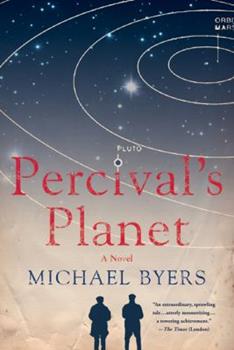
Percival’s Planet

One of the reasons why I never watched the movie Titanic was because no amount of SPOILER ALERT was going to keep me from knowing the end of the story going in. The ship sank. The same was true for a book I recently read called Percival’s Planet, an historical fiction accounting of the discovery of Pluto. I had a good idea how the novel was going to end. Still, I was on an astronomical high from The Comet Seekers, so I thought I’d give Percival’s Planet a whirl.

Most reports I have read indicate that the Titanic sank in about two hours, which is a good length for a movie except that probably not that much occurred onboard that would make a good story. For this reason, pre-iceberg and post-iceberg filler was created to take up some time until the ship sank.

The same was true for Percival’s Planet. The process by which Pluto was discovered was so painfully boring that the author, Michael Byers, would not have much of a story if that was all he wrote about. And even after it was discovered, there was some skepticism as to whether or not what was found was indeed the elusive Planet X.

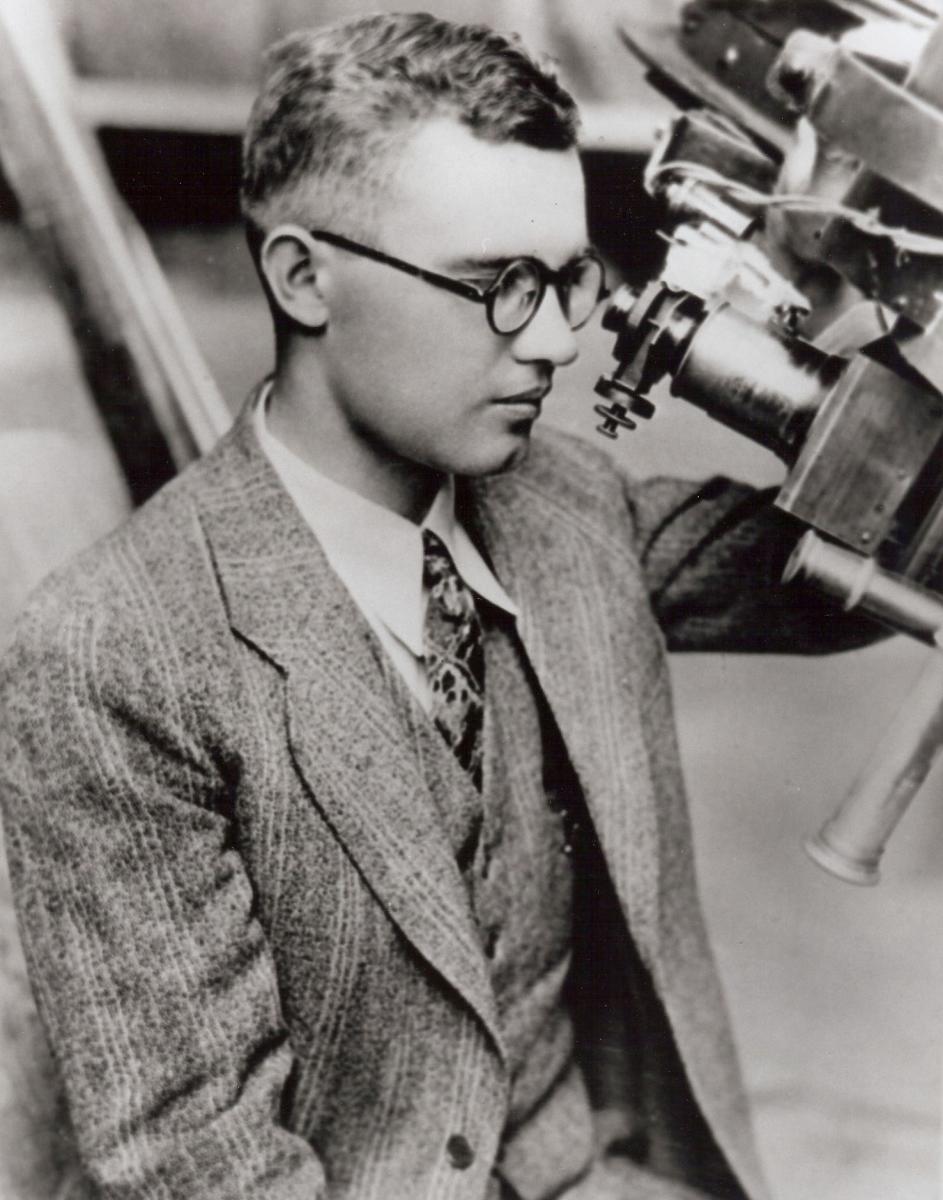
So, the reader was treated to more on Kansas farm boy, Clyde Tombaugh, the discoverer of Pluto. However, in Byers’s hands, Clyde’s story was about as exciting as watching grain being threshed. I did feel for him when a sudden hailstorm took out the crop that was supposed to pay for college, and he showed incredible perseverance producing handmade lenses until they were perfect. But again, Pluto and Clyde alone were not enough to carry this tale.

Vesto Slipher, the Lowells, and a few other real people were sprinkled in to help ground the story. There was a technical edge that was interesting without being too tedious even if one has not studied the math and science required for space exploration. The era during which the novel took place, 1928 to 1930, lent some curious appeal as far as social allowances, customs, clothing, and the looming Great Depression.

But it still was not enough to make this the type of story one can hardly wait to return to. It took me three weeks to plow through it, and there were days when I left it untouched. Still, the writing was not horrible, and I’m no quitter. There were some well-turned phrases, but nothing that leapt off the page begging to be read.

Not even the washed-up boxer, Teddy, going through a painful divorce, who was in love with his beautiful secretary, Mary, who was slowly going mad, helped. Nor did the secretary’s older, gay brother, Hollis, who struggled to maintain his relationship with his younger, extremely rich partner. Not even Dick and Florrie, more megarich and brilliant people involved with work at Lowell Observatory, made for interesting reading. And then there was the poor sap, Alan, an astronomer, who named a comet after Florrie before he realized she had run away to marry Dick.

Let’s not forget Felix, the failure-to-please-daddy heir, who decided he wanted to be an amateur paleontologist, and his mother, whose name I’ve honestly forgotten in the three days since I finished the book. Their relationship was awkward, and how they connected with those already mentioned was clunky at best, superfluous at worst.

Alan married Mary; Clyde had a crush on her; Mary was hospitalized after attacking Alan; Hollis disappeared; I truly wished Dick, Florrie, Felix, and his Mama would, too; Teddy became Mary’s champion; Pluto was found but not in a satisfying, triumphant, end-of-the-book way; peripheral characters charmed and annoyed on cue; and Byers wrapped up stories of fictional characters with whom I forged no connection or caring. The narrative moved at the pace of a comet viewed with the naked eye.

What we had here, folks, was a Great Plains soap opera that read like grit blown in from the Dust Bowl to lodge in the corners of one’s mind, waiting to be swept out by the next interesting book.

I suspect Michael Byers attempted to recreate the thrill of discovering a new planet, which was no small thing. Unfortunately, when the novel was published in 2010, moon landings were and still are studied as history, the Space Shuttle program ended in 2011, and it had been twenty years since the Hubble Space Telescope was launched, and twelve years for the first piece of the International Space Station.

Perhaps it’s a shame that we no longer look to the stars with as much interest as we once did. God knows we are barely able to take care of things on Earth let alone what we would do if we ever achieved colonization somewhere in space. Still, what could have been a great story, even to someone like me who doesn’t follow astronomy closely, ended up fizzling out faster than a shooting star.

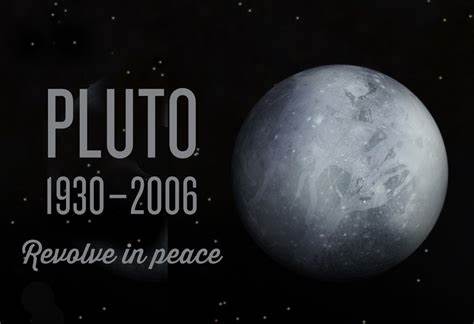
In the end, I’m glad Clyde Tombaugh never knew Pluto was demoted from being a planet.

Quotation Station

Shabbat Shalom to those who aren’t

afraid to make mistakes!

Let me know in the comments how you turned mistakes into art this past week.


The Artist’s Corner – Visionary Editor, Kori Frazier Morgan

Prior to meeting Kori Frazier Morgan, I heard her name mentioned several times by fellow writer, Don Ake. Then I had the pleasure of hearing her speak at the writing group Don facilitates, The Write Stuff. She was quite professional and pleasant. I, however, wasn’t in the right place to receive what she talked about. Finally, at the annual Christmas party hosted by The Write Stuff, Don insisted that I sit down next to Kori and talk with her. He even cleared a chair beside her so we could speak uninterrupted face to face. Well, all I know is that I can only avoid so many divine appointments before the lightning bolt successfully strikes through my thick skull. Kori was exactly what my novel needed, and I am so thankful to God for her. She’s also what I needed, and she came along at just the right time. Take a moment to meet this marvelous woman through her interview.

Welcome to the Artist’s Corner. Tell me a little bit about yourself.

I’m Kori Frazier Morgan. I grew up in Kent, Ohio and now live in rural northeast Ohio with my husband, Curtis, who is a machinist and craftsman. We have three pets—two cats, Anastasia and Moe, and Gus, a basset/beagle mix. I hold a B.A. in creative writing and professional writing from Ohio Northern University and a Master of Fine Arts in fiction writing from West Virginia University. Aside from reading and writing, I enjoy long-distance cycling, watching movies, seeing live theatre, and listening to vinyl.

How did your work experience contribute to your desire to write?

I have been blessed to pretty much work in some area of the writing field since graduating from college in 2007. I have created educational content, taught writing classes, and worked as a copywriter and content developer. Even when I worked in retail, it was at a bookstore, so I was still operating within the writing world. All my jobs have helped me get better at writing and learn new things.

Have you always wanted to be a writer? When did you develop your love of writing?

I have enjoyed making up stories and writing them down since I was a kid, but I didn’t start to really think seriously about writing as a career until eighth grade, when I found out that creative writing was something you could study in college. Up until then, I just thought it was a cool hobby. I was blessed to have some wonderful teachers in middle school and high school who helped me develop my talents. I worked on the newspaper staff, took acting and communications classes, and loved being in AP English and history courses, where writing essays was a big part of the class.

Have you ever worked as a freelance writer?

All the time. Every day. In 2012, I left academia to pursue freelance writing full time. I returned to the classroom for a few years to teach at a career college and later worked in marketing, but I can’t say I’ve ever totally left the freelance world. Now I run a small business (more on that later) and freelancing is a big part of my life.

What genre do you write?

I have primarily written fiction in the past, but I am now working on a collection of flash nonfiction essays. I also run a weekly blog, Creativity Matters, as part of my business, Inkling Creative Strategies.

To which writing communities do you belong?

I am a member of The Habit, a worldwide community of Christian writers. We work together to study writing, encourage each other, and help each other to become proficient in our craft. The fellowship at The Habit is extraordinary. People care not just about helping you write excellent work, but about you as an individual. We take writing classes, share our writing on a forum, and have virtual writing time on Zoom, where we hang out and work on our projects.

More in our immediate area, I’m part of A Writer’s Life NEO and The Write Stuff, groups based in the Akron/Canton area that meet monthly to critique members’ work. You can either bring something to share or just read and comment. It’s a very low-key, informal way to get some feedback on your writing and The Write Stuff goes out to eat afterward.

Who or what influences your writing?

I am a big fan of music and film. I listen to music while I write and try to put together playlists that help shape what I’m working on. My novel-in-stories, The Goodbye-Love Generation, is heavily based on my dad’s experiences as a member of the Northeast Ohio music scene around the time of the Kent State shootings in 1970, and I have a whole Spotify playlist devoted to the songs that are in the background of the story. When I’m not writing, I enjoy listening to everything from classical to classic country to hymns to Metallica.

My favorite movie is The Shawshank Redemption, which I’ve seen an obscene number of times. I think it is the perfect film for writers to study to learn about narration, character development, foreshadowing, and just how to deliver a satisfying story in general.

How have your favorite authors and/or books shaped your writing?

My favorite author is Flannery O’Connor, and my favorite book is her novel, Wise Blood. I love that she is a Christian author who is not afraid to look at the darkness of the human heart. All of her characters have to face the question of what we are to do with Jesus Christ and His death and resurrection on our behalf, but she does so in a way that resists sentimentality. Many of the stories conclude in a way that is open-ended, leaving room to speculate about what their answer might be. I’m not sure exactly how her work has directly impacted my writing. I just know it has.

What’s your dream goal as a writer?

I want my books to get to as many people as possible whose lives will be impacted by them.

Which authors/genres do you enjoy reading?

I like literary fiction, memoir, and books about theology and spirituality that will help me grow in my faith. I also love studying the Bible. It is God’s inspired Word and contains everything I need to learn more about Him and receive His direction for my life.

What are you reading right now?

I am reading The Door on Half-Bald Hill, a novel by Helena Sorensen. Helena is a member of The Rabbit Room, an organization I support that provides encouragement and edification for Christian artists of all kinds.

What have you published and where?

I have published two books: Bone China Girls, a poetry chapbook, and The Goodbye-Love Generation, both through my independent imprint, Bezalel Media. Numerous individual pieces have also appeared in literary journals such as Shenandoah, SN Review, Switchback, Rubbertop Review, Blanket Sea, Up the Staircase Quarterly, and more.

Describe your journey to publication.

I have been writing professionally for more than 15 years, and the landscape of publishing has changed tremendously in that time. I am an independent author and do the majority of the work to publish and promote my work. During my MFA program in the late ‘00s, we were told that self-publishing was not a legitimate way to publishing a book and that going that route would destroy your credibility. As a result, even as time passed and it became more accepted and prevalent, I was reluctant to pursue publishing my own work.

Things changed after my chapbook, Bone China Girls, was still being rejected after five years. The book recounts the true story of the tragic death of a sixteen-year-old girl in the mid-’60s at the hands of teens and children in her neighborhood, and I felt that it commented on issues such as sexual abuse, bullying, and violence against women that were widely discussed and that I could provide insight into. I decided to publish the chapbook myself because I saw it as an urgent matter. The book’s message was important, and I simply couldn’t wait around for the gatekeepers to tell me I could share it.

I am an independent author and I enjoy publishing my own books. As a marketer and editor with a desktop publishing background, I have the majority of the skills necessary to do the work on my own. I would certainly not recommend this path to everyone—there are some truly hideous books out there that have resulted from authors taking on the responsibility when they are not equipped to handle being the entirety of their publication team. You have to be able to do it professionally in order to be taken seriously.

Have you faced any challenges with writing and/or publishing?

I have struggled with superimposing my own will on my work—trying to make my writing do something that, within the context of a particular project, it is simply not able to do. The Goodbye-Love Generation was like this. I had an agent turn it down when I was finishing grad school because it was a novel composed of short stories and not a traditional novel. As a result, I assumed there was something wrong with that format and spent ten years trying to make it work as a novel or abandoning it for periods of time because I was so frustrated.

Eventually, I realized that I had it right the first time. It was supposed to be a collection of interconnected stories. The fragmented nature of the story fits the characters’ own fragmented perception of the world and themselves. No other format would work to tell this story. Instead of just working with what I had, I let one person’s opinion dictate what I did with my book for ten years. You have to believe in your vision for your writing even if it isn’t what the powers that be seem to want.

Are there any comparative titles to your work(s)?

I am a big fan of two other authors who have written fiction about the Kent State tragedy. Sabrina Fedel has a book called Leaving Kent State that addresses the year leading up to the shootings from the perspective of a high school senior dealing with a friend who returns from Vietnam with PTSD and a debilitating injury. I was also thrilled to receive an endorsement for my book from the fabulous Rita Dragonette, whose novel The Fourteenth of September impacted my revisions. The book is about a college student in the ROTC nursing program who secretly becomes involved with an anti-war group on campus and is caught between her family’s traditional conservative values and her growing feelings that the Vietnam War is wrong.

Describe your research process.

I like to get immersed in places. When I was researching The Goodbye-Love Generation, I felt it was necessary to get the reader out of Kent for some of the stories and move away from the politically charged narrative of the shootings. I can’t remember exactly how it happened, but some thread or another of my Google searching led me to Chippewa Lake Park, a now-defunct amusement park that played an active role in giving local musicians exposure back in the ‘60s and ‘70s. It found its way into two stories in the book. That wasn’t something I planned on, but I think it brought an element of innocence to a story that is otherwise very violent and full of loss.

I also wrote some of the book at a cafe in downtown Kent across the street from the former site of J.B.’s, the bar where my fictional band, The Purple Orange, performs in the book. Downtown Kent is very different now than it was in the ‘70s but being able to imagine the characters there really informed how I described the setting.

Tell me about your newest business venture.

Inkling Creative Strategies is an author services company that offers editing, project development, consulting, typesetting and interior book design, mentorship, and more. My inspiration is the Inklings, the writing society that J.R.R. Tolkien, C.S. Lewis, and other writers at Oxford started to encourage each other in their work. My goal is to help writers reach their full creative potential so they can impact and inspire readers. We have been in operation for almost two years, and in that time, authors have released books, completed manuscripts, developed short stories, and started blogs. It’s been awesome to see how it’s developed!

Where can one find you on the Internet?

You can visit my website to learn more about Inkling Creative Strategies. On my website, I offer free writing tools, including workbooks and checklists, as well as the opportunity to schedule a free Zoom consultation.

For more information about my book, visit The Goodbye-Love Generation.

You can also find me on Instagram @inklingcreativestrategies.

What advice can you offer for someone seeking an editor?

I think an ideal editor balances being knowledgeable about the English language and creative writing with understanding the author’s vision. It isn’t about being correct all the time—it’s about collaborating with the writer to make their work exactly what they want it to be. Editing has to be an ego-free process, and you can’t be married to the rules. You need to show the author grace in terms of helping them execute their ideas. I would strongly advise writers to not take on an editor who is rigid and not willing to collaborate.

What’s your dream job as an editor?

I would love to see an author I work with just totally blow up with their work—get tons of readers and attention, and maybe even become a hit nationally. Not because Inkling might get some credit for that, or that even I would, but because I would have accomplished my mission of helping someone reach their full creative potential.

Where do you see yourself in the world of writing in ten years?

I would love to see Inkling grow enough that I can partner with other editors who share my vision. I also, of course, hope that I will continue to write and publish work that will make an impact on readers, whatever that looks like. I also fantasize about The Goodbye-Love Generation being made into an Amazon or Netflix limited series.

Those are great goals and dreams. Wishing you all the best in your pursuits!