Is It Ever Too Late?

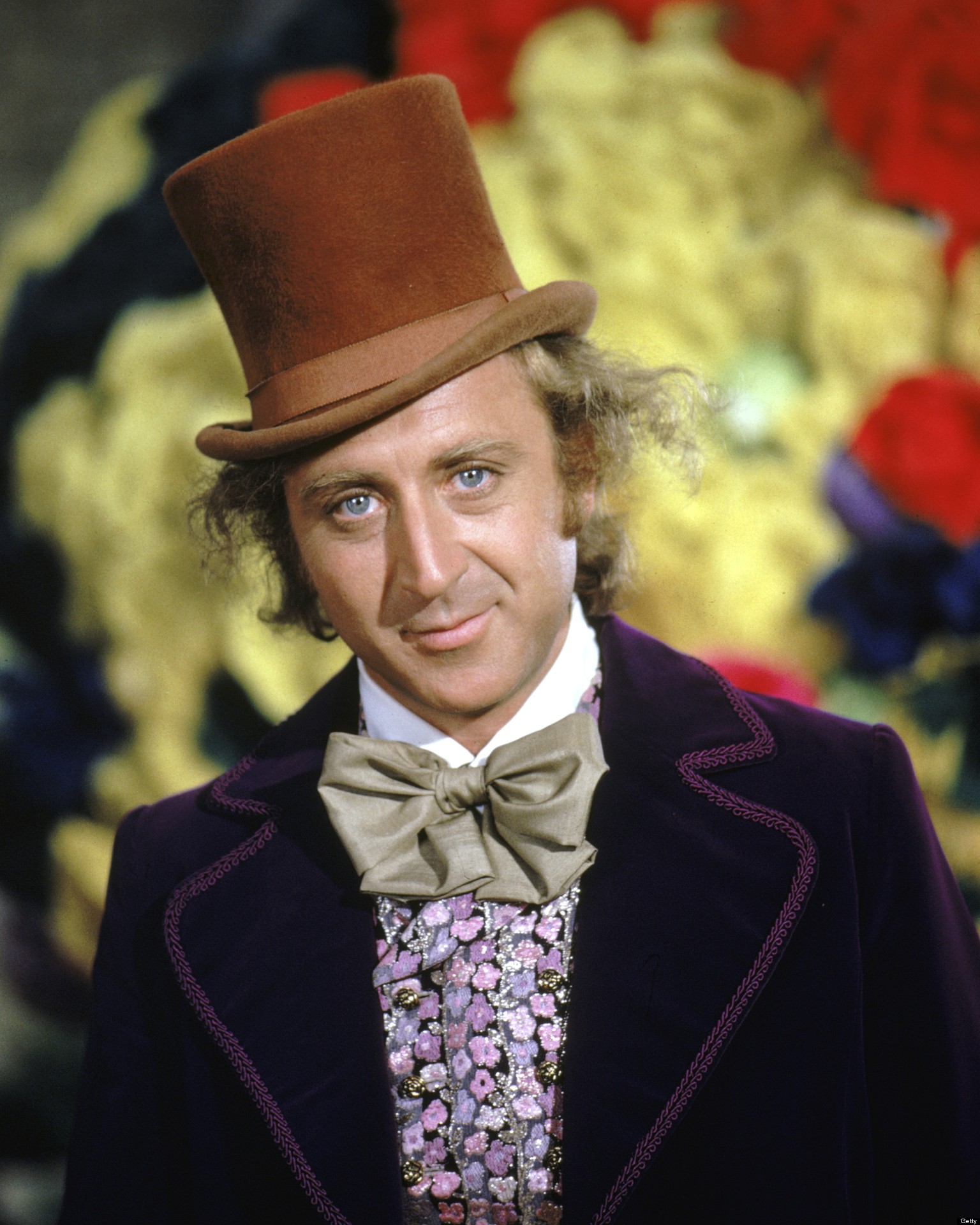
Gene Wilder as Willy Wonka in 'Willy Wonka & The Chocolate Factory'

When I heard that Gene Wilder passed away a week ago Sunday, I was saddened to know that a small piece of my childhood had faded away like the edges of a watercolor painting. Goodbye, Willy Wonka. Laid to rest are the magical, mythical qualities that made Gene Wilder the wonderful actor he was. I also felt that I had missed an opportunity. It’s my own fault for not acting upon it, but I made the common error of believing I had all the time in the world. Allow me to explain.

Two years ago, I read Mr. Wilder’s novel, My French Whore. It’s a beautiful, bittersweet tale of love and loss set during World War I. I often wondered about the loss portion of the story. Did it mirror Mr. Wilder’s own loss in life, specifically that of his wife, Gilda Radner? In the story, it’s the male protagonist who is lost. Maybe Mr. Wilder would rather it had been him so that Gilda could have gone on living. He had a wonderful, twenty five year marriage to his wife, Karen, so perhaps I’m reading too much into the tale.

All this to say that I wanted to contact Mr. Wilder and ask him to write a sequel, one in which the two main characters find each other again. It would be possible based on the nature of the tale. Mr. Wilder was creative and imaginative: he could have rescued the protagonists from the fire and made it believable. But I missed my chance, and now it’s too late.

I’m familiar with many of the arguments writers offer for ending their stories on a sad note or sometimes with a gut punch to the reader. As long as the story is well-written, the event is believable and not just for shock value, and it fits with the rest of the story, character arcs, etc., then I can accept a sad ending. There are some, however, that have left me reeling.

For instance, The Time Traveler’s Wife. I read it once, and once was enough. The novel still haunts me to this day. I went so far as to pen a letter to Audrey Niffenegger begging her to write a sequel that pulls the lives of her protagonists back from the black and bitter ending she gave them. After the torturous lives they led, why did she have to end her novel the way she did? As an author creating people and situations, she could have opted for a better ending if not a Pollyanna one.

Then there is The Mercy of Thin Air by Ronlyn Domingue, The Girl in the Green Glass Mirror by Elizabeth McGregor, and The Piano Tuner by Daniel Mason. These books live in a locked chest in my house because that is the only way I can contain my emotions regarding them so great are the effects they had on me. If you think I’m exaggerating, after my mother read The Piano Tuner at my suggestion, she called to chew me out for not warning her. To this day she describes her experience with the ending as having the air knocked out of her lungs.

These books are so well written and so heartrending. Why do we do this to ourselves as readers? The question made me re-examine my own novel, The Secrets of Dr. John Welles. Did I infuse painful accounts into the storyline that will make a reader sit stunned long after the last page has been read? Will I leave him/her with feeling as if he/she just buried a good friend for whom he/she will mourn all the while knowing it’s a fictional character? Personally, I question whether the loss of the character was counterbalanced by the fact that they led a good long life on the pages of the novel. If so, it’s easier to let them go.

In the world of Dr. John Welles, where I have complete control, some would argue that if I leave readers feeling as if they’ve had their heart torn out, then I’ve done a good job of writing. I’m not so sure I would agree. Others would say that’s just how life is: people live and die, get over it. I must admit that I don’t have the answers to the questions I’ve posed regarding the handling of characters’ lives and the endings of novels. I also know I’m not the only person who feels this way, and in this small fact, I take some comfort.

Without giving away the ending to my novel, I believe I have done a good job of dealing with characters and events. However, if one day I receive a letter from a reader who praises my writing while begging for a remedy to their grief and pain, I will seriously consider what I can do to ease the situation.


Who is in Your Details?

God Is In The Details by Mauricio Raffin

God Is In The Details by Mauricio Raffin

Today’s post counts as two entries in The Weight of Words and one for Research Road. It also stresses the importance of thoroughly editing and researching your work as well as finding a good editor. We’ve all made mistakes. I have received tactful comments from followers pointing out errors I’ve made. It’s easy to correct a blog post even after the fact, but what about my novel? I don’t live in fear of discovering an error post publication…oh, wait—I do.

I can’t tell you how many times my mother has said, “What difference does it make if you’re not 100% accurate? The common reader won’t know if you’re right or wrong.” To which I explained that I would know. Then there is the historian or well-read person who may read my novel and nail me for incorrectly portrayed facts. I’m not talking about the creative license we employ when placing our fictional characters in real periods of history or an entire reimagining of historical events such as the Germans winning World War II. I’m talking about modern words and phrases ending up in the mouths of characters from an earlier century and inaccurately portrayed artifacts, architecture, places, etc. due to lazy research.

A book I finished recently had two such errors. The first was the spelling of the word carcase/carcass. About thirty years ago, I read Dorothy L. Sayers’s novel Have His Carcase. It was part of a trio of Sayers’s books gifted to people who made a donation to the local PBS station. The announcer kept mispronouncing carcase the way one would say car case. How embarrassing. Years went by before I stumbled across the spelling carcass, which, by the way, is the only spelling Word recognizes as correct. I assumed it was another instance of American English vs. British English. What I discovered after reading several definitions for both spelling variations, is that carcase is the older, often consider archaic, of the two spellings although both are acceptable. Why is this important? The author of the aforementioned book used the word in the diary of a Carthusian monk from 1535, but she spelled it carcass. As soon as my eyes fell across the word, I was jolted out of the story to ponder whether the mistake was mine or hers. True, most people would have let it go, but for historical accuracy, well, I’ll leave it up to you to decide.

Small sidebar: When I checked writing forums for the correct spelling of carcase/carcass, Dorothy L. Sayers’s novel, Have His Carcase, was referenced at least once on every site as the example for the spelling carcase.

I was much less forgiving toward the second mistake. Another character, also from 1535, mentioned seeing a nine-branched menorah used in the second temple of Israel. Did you catch that? Talk about being shocked right out of the story. All my research on the subject verified what I already knew to be true: menorahs used in the temple of Israel have seven branches. The most reliable source of this information is the Bible. I don’t doubt that the candelabra people see the most and the one with which they are familiar is the nine-branched version known as a chanukkiah used in celebration of Chanukkah. The terms are used interchangeably and incorrectly. However, the two items are absolutely not the same thing.

My thoughts on the subject ranged from disappointment toward the author to wondering if the editor was too young to care about such facts or not interested in verifying them. Several years ago a self-published author gave the advice that you should research your history to the nth degree because your readers will trust that what you have written is true. That advice is what prompted me to research my own novel in minute detail. At one point, I had a fellow author/history buff tracing World War II troop movements to ensure I had placed my protagonist with a unit that had actually ended up in a battle I needed to feature.

Perhaps I sound like a fanatic. Even Andy Weir, author of The Martian, admitted to minor mistakes pointed out by other brilliant scientists, the type of knowledge the common reader wouldn’t possess. There may even be mistakes in my own novel. I sincerely hope someone catches them before it goes to printing. Still, I cannot stress enough that the writing and research of your work in progress begins with you. Beta readers and editors are essential to the process, but there is no excuse for a lazy author.

In closing, I’ll point to the title of this post as my final comment on the importance of using the correct words/phrases and conducting research. You’ve probably heard the devil is in the details and the older, slightly more common phrase, God is in the details. The first means that mistakes are usually made in the small details of a project. Usually it is a caution to pay attention to avoid failure. The second means that attention paid to small things has big rewards, or that details are important. Who is guiding your writing efforts?

Welcome to my Author Blog

Welcome to my author blog, Friend. I am so pleased you found me.

I’ve been hanging out here for several years with an amazing group of followers. It is because of them that my blog is going strong, and I want to take this opportunity to say, “Thank You!”

The overall purpose of my blog is to familiarize you with my writing. I enjoy creating novels as well as interesting and informative blog posts. In between all the writing, I am currently seeking representation for my manuscript.

Following me is quite easy. Just click the +Follow button hovering in the bottom right-hand corner of the screen or take advantage of the sign-up directly on the Home page. In addition to my blog, there are various ways for us to become better acquainted. I can be found on Facebook, Twitter, and Goodreads.

I sincerely hope you’ll join us. I look forward to getting to know you better.

HL Gibson, Author

What I Like About Being an American

What I Like About Being an AmericanI developed an interest in Indian cooking after watching the movie The Lunchbox. The main character, Ila, infused her cooking with beautiful, artistic expression in the form of spices. I enjoyed watching her hands move as she seasoned her culinary creations without the benefit of measuring spoons. Her spice box caught my attention and held my interest.

I mentioned this to a former co-worker, Bina, who is Indian. She was surprised that I enjoyed the movie, and we had a lovely discussion on Indian food. She suggested the movie The Hundred Foot Journey which further fueled my desire to learn Indian cooking. Bina invited me and three co-workers to her home for an introduction to the world of Indian cuisine.

One of the first things she explained was masala. I assumed masala was a set combination of spices used in a particular recipe. I had seen garam masala and madras masala in markets selling exotic foods. However, like curry, masala changes depending on the country and regions within said country. Bina didn’t own anything among her spices bottled and labeled masala. What she had were individual spices that she knew how to blend perfectly without measuring to create the flavor the recipe required.

Still, I didn’t quite understand masala, but I kept Bina’s comments and instructions in mind, specifically when she said she has a dessert masala, a chicken masala, and a vegetable masala. I Googled a few Indian recipes and tried them. They were good, and many of the spices Bina owns and uses were featured, but something was missing. My desire to cook Indian food was stifled by a concept I wasn’t grasping. I took a break from pursuing it and kept making recipes with which I am familiar.

One day I decided to make chili for dinner. When it came time to season the chili, jars were opened and contents sprinkled over the simmering pot until the quantity on the surface looked right and I stirred them in. A little tasting, a few more dashes of this or that, and I allowed the chili to simmer for a while. I always taste again before it’s completely cooked just to see if the flavors are balanced and add anything as needed. That’s when it hit me: the combination of spices I used was my chili masala which I return to every time I make it. I know how chili should taste to me, but I’m sure if I visited Texas or other chili-making regions of America, I’d experience other spice combinations.

I laughed to myself as my favorite seasoning combination for chicken came to mind. Then I realized I had been on the cusp of understanding the beautiful concept of masala several years ago when I attempted to swap ground ginger for fresh. The ground variety tastes savory and what I describe as classically American. Think Thanksgiving. But the recipe I was making needed the lemony zestiness of fresh ginger, that classically Asian flavor, because I was cooking a Chinese dish. Herbs de Provence is another example of a spice combination that will reflect the nuances of the person cooking with it. Just like masala, there are some spices that will always appear in the mix, but people love to alter it based on their preferences or just to add a dash of mystery.

What I Like About Being an American 2What I learned about masala, about seasoning food in general, is why I like being an American. Where else can you experience a merging of cultures that bring amazing culinary skills from their own countries so that everyone can enjoy them in one place? The great American melting pot starts in our kitchens and ends with the united flavors of America. I have returned to Indian cooking, and while I use the spices to which Bina introduced me, I suspect that my masala may not taste exactly like what she would expect. But that’s okay.

Baring My Writer’s Soul – Part 17

Writer's Soul 17If you’re like me, you have to build up to writing, ease into it. To wake up and start writing is like jumping out of bed and going to work without coffee.   There are people who can do this; God bless their perky morning souls. I approach things a little differently by creating a positive work environment and attitude for myself. This is achieved with a cup of hot tea and reading my Bible. The simple activity sets the stage for the rest of my writing day.

Then I take a few minutes to mentally organize and deep breathe. I rid myself of negative thoughts and focus on the positive. As a writer, one of the most negative things I encounter is writer’s block. I can feel the ideas in my head, but I just can’t get them out. I accomplish this by acknowledging that I’m not truly blocked. Rather, I’m giving in to fears, doubts, and insecurities. Being able to say this makes the fears, doubts, and insecurities manageable, and I can move on. Also, I stop guilting myself for what I may or may not be as a writer, and I stop playing the comparison game. Once I’ve dealt with these issues, I’m free to write.

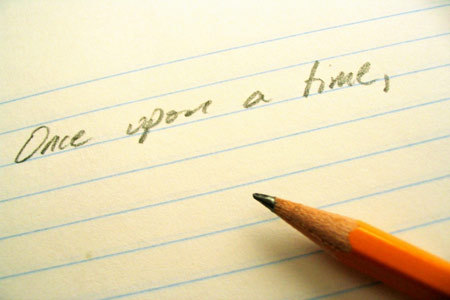
One of the most important things I’ve learned since I took up writing is to keep my equipment simple. All I need to create literary brilliance is a single subject notebook and a pencil. I choose a pencil over a pen because they make noise as they move across the paper. This light scratching is satisfying to my brain and is proof writing efforts. I see and hear my progress. Another technique that helps with this process is to sometimes write on lightly textured paper such as a sketch pad.

I write in capital letters. It took some getting used to, but by doing so, the process slows down my writing and focuses my attention at the same time. My ideas actually flow better. As new ideas pop into my head, I write them in the margins of my notebook.

One of the hardest things to conform to is a writing schedule. You would think making your own hours would be bliss, but I find as my own boss, sometimes I have the tendency to not take my writing seriously. I become lax beyond the point of flexible, and my writing suffers. When I set a schedule and stick with it, choosing the time of day that works best for me, I am more productive. Of course, I allow for emergencies in my life and some flexibility, but I don’t allow myself to get too far off the schedule I created.

As for social media, it took me a while to learn to not be controlled by it. Author platforms are good, but when you spend all your time maintaining them, you’re not writing. Not to mention the rising stats are addictive, and the minute you tell yourself you’ll only be on a minute, you’ve wasted thirty minutes playing. Remember: writers write; they don’t build reputations on what they’re going to do. Resolve this issue by scheduling the time you’ll spend maintaining your social media, and again, stick to it.

Another trick I use to nudge my writing along is the daily word goal. It’s effective, but I learned that when I write what needs to be written, completing a scene or story in fewer words, I still consider myself successful. In other words, I write until I’m finished. I’ve been surprised how long or short a handwritten portion turns out to be when typed. Coming short of the goal isn’t failure as long as I’m writing.

That’s when I reward myself with chocolate, a cup of tea or coffee, pleasure reading, napping, calling a friend, cooking, taking a walk. I warn against using social media or television as a reward because they lure one away from focusing.

Also, I do not punish myself for not meeting my writing goal. There are already too many negative thoughts bombarding my head, negative influences toward my writing from outside, and my resistance will pounce on these to keep me from writing. The goal is writing. The quantity is negotiable.

I keep one main project to work on, usually my novel, and resist the urge to put too many irons in the writing fire. However, I also maintain a notebook of other writing projects I’d like to work on in case I need to switch things up. Sometimes I need a project while waiting for a response to a research question or if my main project becomes heavy and I need a small break. Alternative writing includes journaling, blog posts, letter writing, flash fiction, and short stories. I use caution when setting aside my main writing project for a period of time, making sure it’s for a valid reason such as research, time to think and/or reflect, or major upheavals in my life. I know when I truly need a break and when I’m just sloughing off.

In short, I found what worked for me. Good writing habits take time to establish, so I never quit. I carry a notebook with me everywhere, have one in every room of my house, and write on the run. If I mess up, I start again. My resistance battles me along the way, but I am stronger. Resistance tells me these methods are weird, lame, and ineffective. I do them anyhow.

The easiest thing I do for my writing is be present. I simply put myself in a chair at the table with a pencil and paper. Then I made this process enjoyable by scouting out the best location in my home where I can be the most productive and tailored it to my needs with music, silence, windows, shade, snacks, and beverages. Sometimes I change locations to keep from stagnating.

One of my writing jump starts is to write twenty different words on index cards (the first twenty that come to mind or twenty things that interest me), turn them upside down, take one from top of stack, and free write for ten minutes. I do this for twenty days as a warm up and repeat as needed until I trust myself to jump into my writing day without assistance.

Another is my list of ten. In three minutes, I write down a list of ten things I did yesterday. In ten minutes, I free write about one of the things I did on my list. If nothing grabs me, I choose number three. A month of this particular warmup helped me set healthy routines. Keep in mind that these simple exercises are like mental stretching. No athlete competes without first stretching. True, it can be boring, it isn’t pretty, but it does massage your brain into creative mode.

I never forget good ole visual or audible writing prompts. Some of my best writing has been jumpstarted by a picture or piece of music. The funny things is, when I went looking for a pretty picture to write about or music to put me in the writing mood, I couldn’t find anything. Then there are pictures I wouldn’t have looked at twice and music that crossed my path that flashed a story through my brain so quickly I knew I had to put it down on paper. Don’t discount any source of inspiration.

Making myself accountable to others is effective for meeting my writing goals. I chose a writing buddy who will encourage me to stick to my goals and help me address why I might not be. I’m careful not to compare what I am doing to what my buddy is doing, and I don’t swap work with them. My buddy should have a different writing buddy to help manage his writing goals. In that vein of thought, choose wisely with whom you share your writing. He or she should be able to provide constructive feedback because poorly given feedback can knock you off your focus.

Based on my own personal experience, I don’t read writing books while I’m writing, especially the how to variety and those on writing style. I find them to be distracting because I try to incorporate all the wonderful new ideas I’m reading into my writing, and they don’t all fit. They don’t all belong, and they can hamper my writing if I’m not careful.

Most of what I learned about creating a writing life came from Heather Sellers’s book Page After Page. Some of it came from other inspirational sources. I’d love to hear what works for you and your writing, your process, and your thoughts on what I’ve written. Remember, feedback is what we authors live for.

If Only…

One modifier I see and hear used improperly quite often is only. A simple trick to remember how to use it is to place only closest to the word or phrase it modifies. True, you can shift only throughout a sentence, but by doing so, and not paying attention to where it lands, you may actually be saying something you didn’t intend. Consider the following sentences:

Only Ralph plays the guitar in our band.

Ralph only plays the guitar in our band.

Ralph plays only the guitar in our band.

Ralph plays the guitar only in our band.

In the first sentence, Ralph alone plays the guitar in the band. In the second, Ralph plays the guitar in the band rather than using it for some other activity. In the third, the guitar is the sole instrument Ralph plays. In the fourth, Ralph’s talent on the guitar is reserved for one band.

If Only

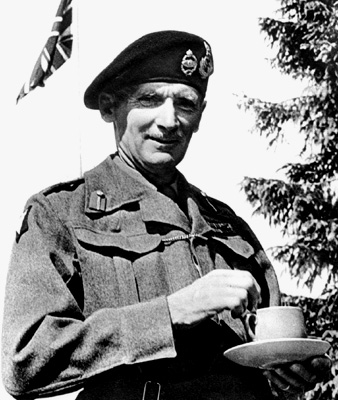
It’s only a cup of tea, Omar.

The most recent place I encountered the improper placement of only was in Omar Bradley’s autobiography, A Soldier’s Story. The sentence that prompted this post reads, “If only Monty would take a chance and attack without insisting upon an overwhelming preponderance in force, we might use those two remaining corps to reinforce our lower thrust into the Rhine.”

Monty was a rather arrogant fellow and a good tactician, however, I doubt even he would attack the German’s alone. Of course, I could be wrong about that, but I suspect what General Bradley meant was, “If Monty would only take a chance and attack without insisting upon an overwhelming preponderance in force, we might use those two remaining corps to reinforce our lower thrust into the Rhine.”

In either case, we won the war against evil in 1945. The war against the improper placement of the word only rages on.

Taking Stock of the Situation

Taking Stock of the Situation 1The summer of 1929 held a world of promise for young John Welles. He was succeeding brilliantly at the University of Maryland, had made two lifelong friends in Sam Feldman and Claude Willoughby, and the once competitive relationship he had with Garland Griffin turned into a romantic one unlike anything John ever imagined.

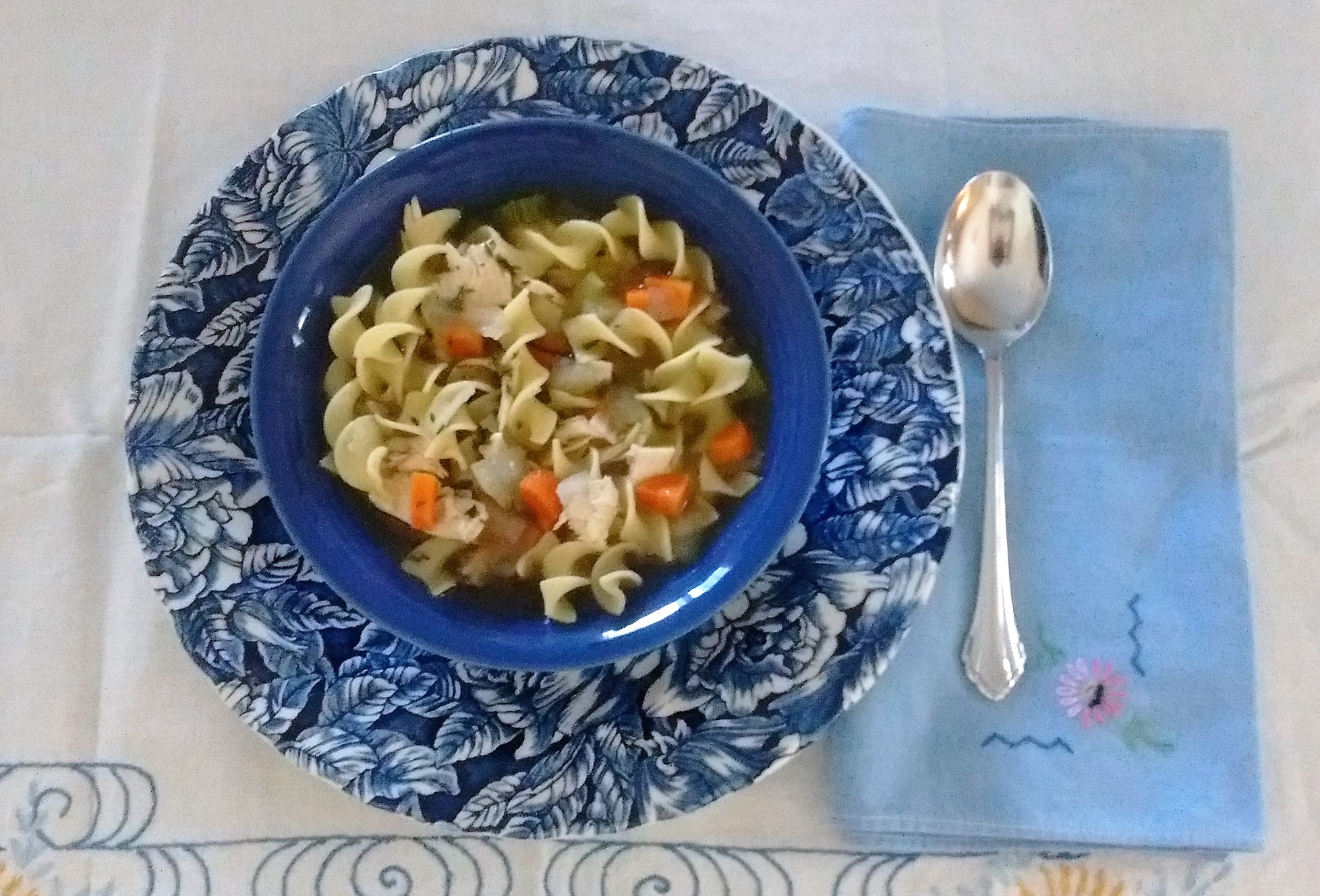
The opportunity to pamper the young woman who was swiftly becoming the love of his life occurred a few days after their visit to Garland’s home. An unexpected cold kept Garland away from John for a few days, and when he could stand it no longer, he took a crock of chicken soup to her.

Lucia, the sassy cook who works for John’s Aunt Prudence and keeps her on her toes, made the recipe for chicken noodle soup Sam’s mother, Gladys Feldman, gave her. Per Mrs. Feldman, Jewish chicken soup cured everything. Unfortunately, neither Lucia nor Gladys could predict how Garland’s secret would crash down upon John’s world, a secret for which there was no remedy.

The recipe I had in mind for the above-mentioned scene actually starts with the post Winner, Winner, Chicken Dinner. This recipe provides the carcass you’ll need for the stock that is the base of the soup. I highly recommend using this particular carcass as the seasoning from that recipe tastes amazing in the soup.

Chicken Stock:

1 roasted chicken carcass

2 T olive oil

12 c water

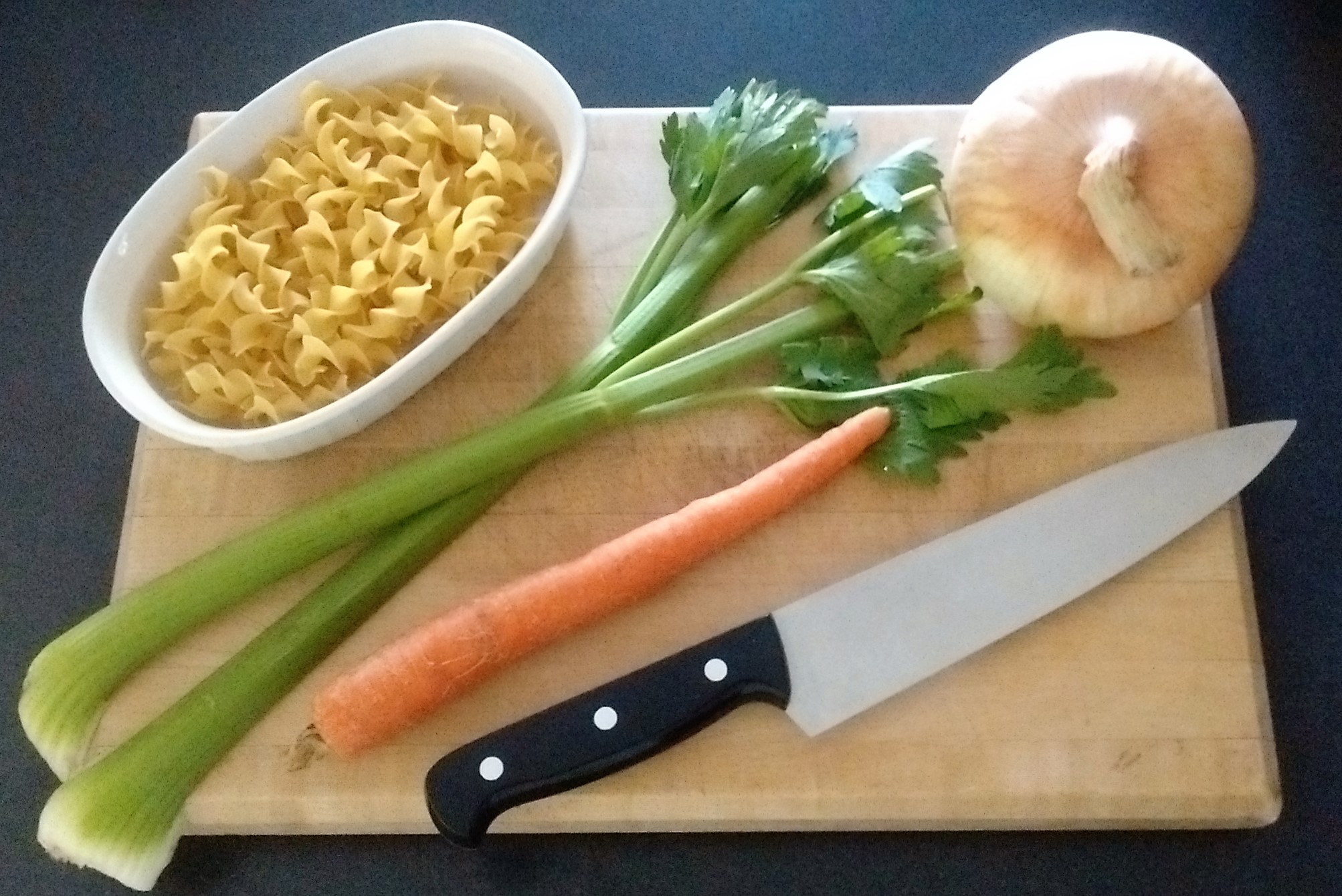
1 medium carrot

1 medium celery stalk

1/2 medium Vidalia onion

1 t thyme leaves

1 bay leaf

1 t quad-colored whole peppercorns

Remove the meat from the chicken carcass and reserve it for the soup. Break up the carcass into several pieces using a large knife or kitchen scissors. Heat the olive oil in a Dutch oven or stock pot to medium heat and brown the carcass pieces on all sides. Be sure to scrape any browned tidbits from the bottom of the pot and occasionally turn the pieces.

Peel the vegetables and coarsely chop them. Add the water, vegetables, and seasonings to the pot, and bring to a simmer. Do not let the stock boil. Reduce the heat to low and continue to simmer, occasionally skimming any scum off the surface of the stock using a large spoon. Adjust the heat as necessary to keep the stock at a simmer until the flavors have melded, about 1 – 1 ½ hours.

Remove and discard the pieces of chicken carcass. Pour the stock through a wire mesh strainer placed over a large crock or bowl. Do not save the vegetables for the soup as the flavor has gone into the stock. The stock can be cooled to room temperature and stored in an airtight container in the refrigerator for three days or frozen for one month.

Or you can pour the stock into a six quart pot and proceed with making soup.

Chicken Noodle Soup:

Reserved chicken meat

2 medium carrots

2 medium celery stalks

1/2 medium Vidalia onion

1 t sea salt

1 t thyme leaves

Freshly ground quad-colored peppercorns to taste

2 c dried egg noodles

Bring the stock to a simmer over medium-high heat. Peel and dice the vegetables to a medium dice. Add them and the seasonings to the pot and stir thoroughly. Return to a simmer then reduce the heat to medium low. Simmer until the vegetables are tender, about twenty minutes.

In a separate pot, bring water to a boil. Add the noodles and cook until al dente. Drain them in a colander. Do not cook the noodles in the stock or they will become mushy and your stock pasty.

Shred the reserved chicken meat into small pieces. You’ll need about 2 c for the soup. Save any extra for another use.

Once the vegetables are tender, add the shredded chicken and drained noodles to the stock. Stir thoroughly and return to a simmer. Cook about five minutes to meld the flavors. Season with salt and pepper as needed.

Enjoy!

Taking Stock of the Situation 2

Winner, Winner, Chicken Dinner

Winner, Winner Chicken Dinner 2Hugh Griffin is on the cusp of a secret that will change the path of John Welles’s life forever. The unspoken shared knowledge exists between Hugh and his daughter, Garland, who John loves dearly. The once competitive pair has become quite close although for different reasons. Their relationship reaches its pinnacle in the summer of 1929 when she invites him to her home to visit her father, Hugh.

The retired Lutheran pastor welcomes his daughter and her boyfriend with abundant graciousness. Hugh is the type of man who lives a simple life with excellence. His cooking is homey, delicious, and prepared with love. For the special meal, he takes a little extra time with the otherwise ordinary dish of roasted chicken.

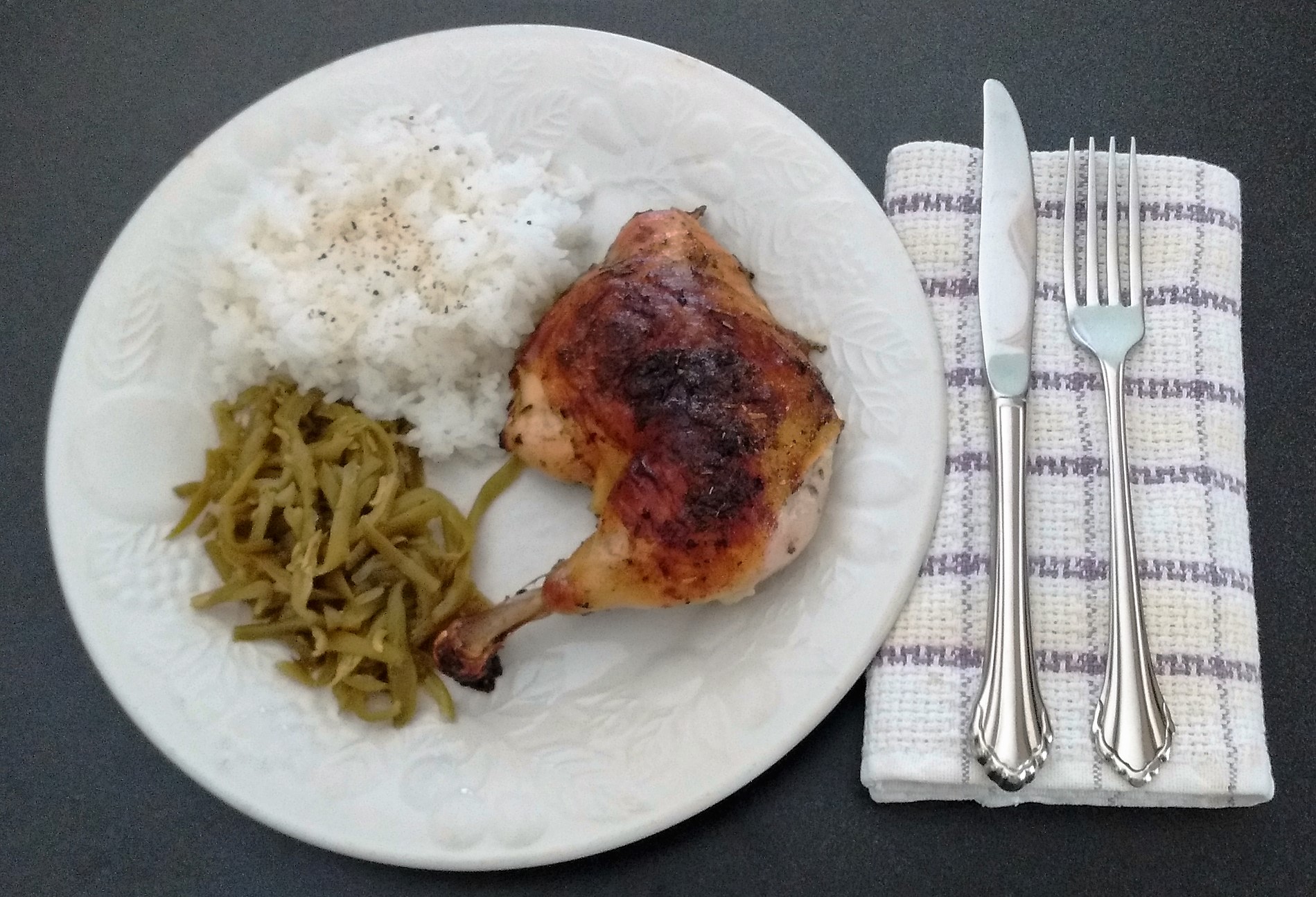
The following recipe is the one I had in mind for Hugh to prepare when John and Garland visited. The extra steps of spatchcocking and marinating the chicken are simple and go a long way to making the humble roast chicken juicy and tender. Besides, half the fun of spatchcocking a chicken is saying the word spatchcock. While I could describe this process to you, it’s much simpler to direct you to a website on Spatchcocking a Chicken. Once you’ve spatchcocked your chicken, proceed with the following recipe.

1 4-pound chicken, spatchcocked

Marinade:

2 c buttermilk

¼ c plus 2 T olive oil

4 cloves garlic, pressed

1 T ground peppercorns (I used quad-colored peppercorns)

1 T sea salt

2 T rosemary

1 T honey

Mix the buttermilk, ¼ c olive oil, garlic, pepper, sea salt, rosemary, and honey in a bowl. Whisk thoroughly. Pour the mixture over the spatchcocked chicken in a baking dish to be covered with plastic wrap or place the marinade and chicken in a freezer bag and seal tightly. Refrigerate overnight or up to two days.

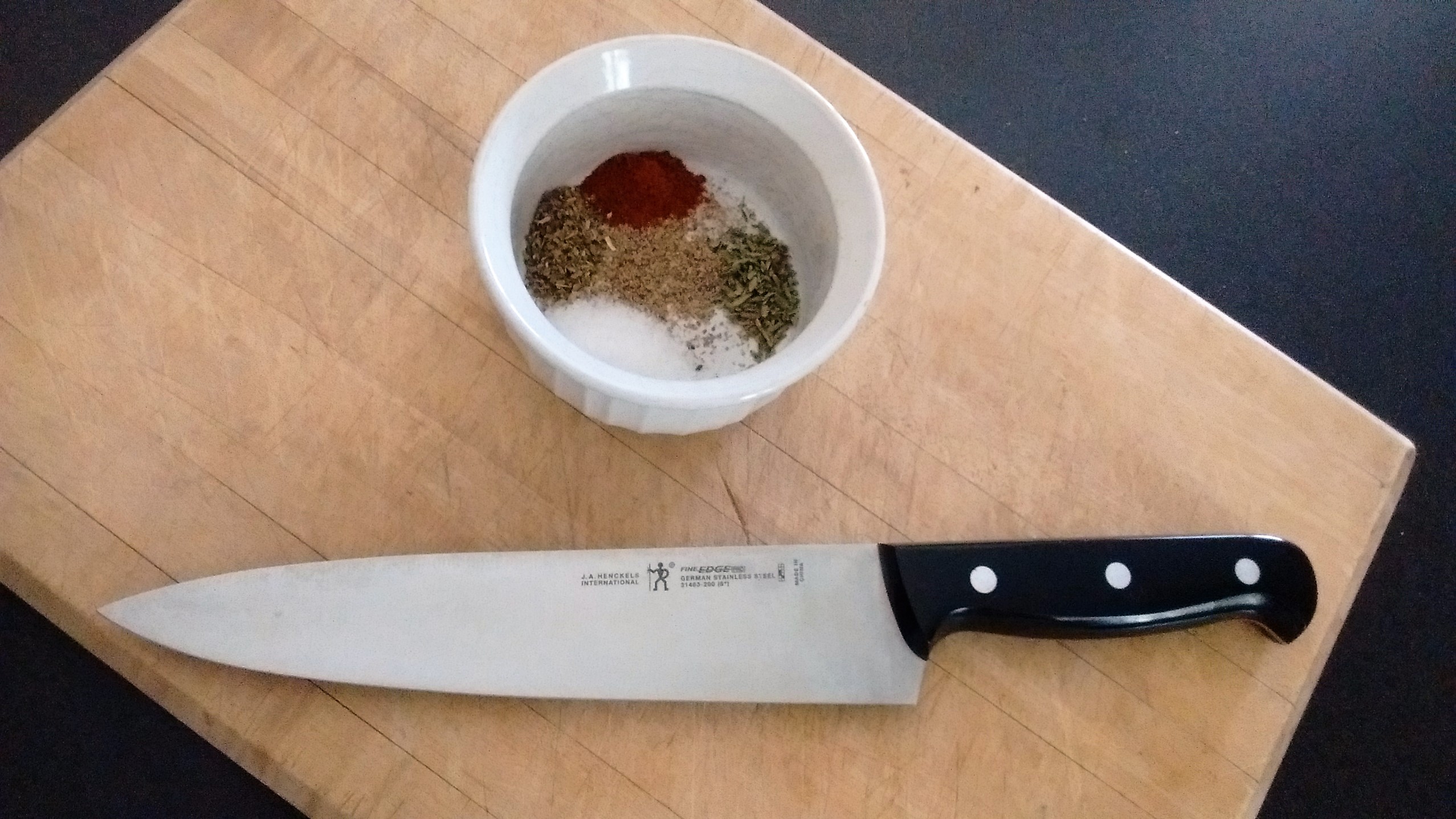
Preheat the oven to 400° F. Remove the chicken from the marinade and place on a rack so the excess can drip off. Prepare the seasonings mixture.

Seasonings Mixture:

6 T unsalted butter, cold and cut into six squaresWinner, Winner Chicken Dinner 1

1 t sea salt

¼ t oregano

¼ t thyme

¼ t paprika

¼ t ground peppercorns (Again, I used the quad-colored variety)

Combine the spices and salt. Dip one side of the cold squares of butter in the seasoning mixture and shove four beneath the skin across the breast of the chicken and one each beneath the skin over the thigh/drumstick area. Drizzle the chicken with remaining 2 T olive oil and sprinkle any remaining seasoning mixture across the skin of the chicken.

Place the chicken breast side up in a roasting pan or baking dish. Tuck the wing tips beneath the chicken. Roast for 45 minutes then reduce heat to 325° F. Baste the chicken and continue roasting until well browned and until juices run clear when chicken is pierced where leg joins thigh, about another 20 minutes.  Baste again when done roasting.

Place chicken on a carving board and allow it to rest for 10 minutes before cutting into serving pieces. Place a portion on each of four plates, and drizzle each serving with pan juices.

Enjoy!

Now You See Me

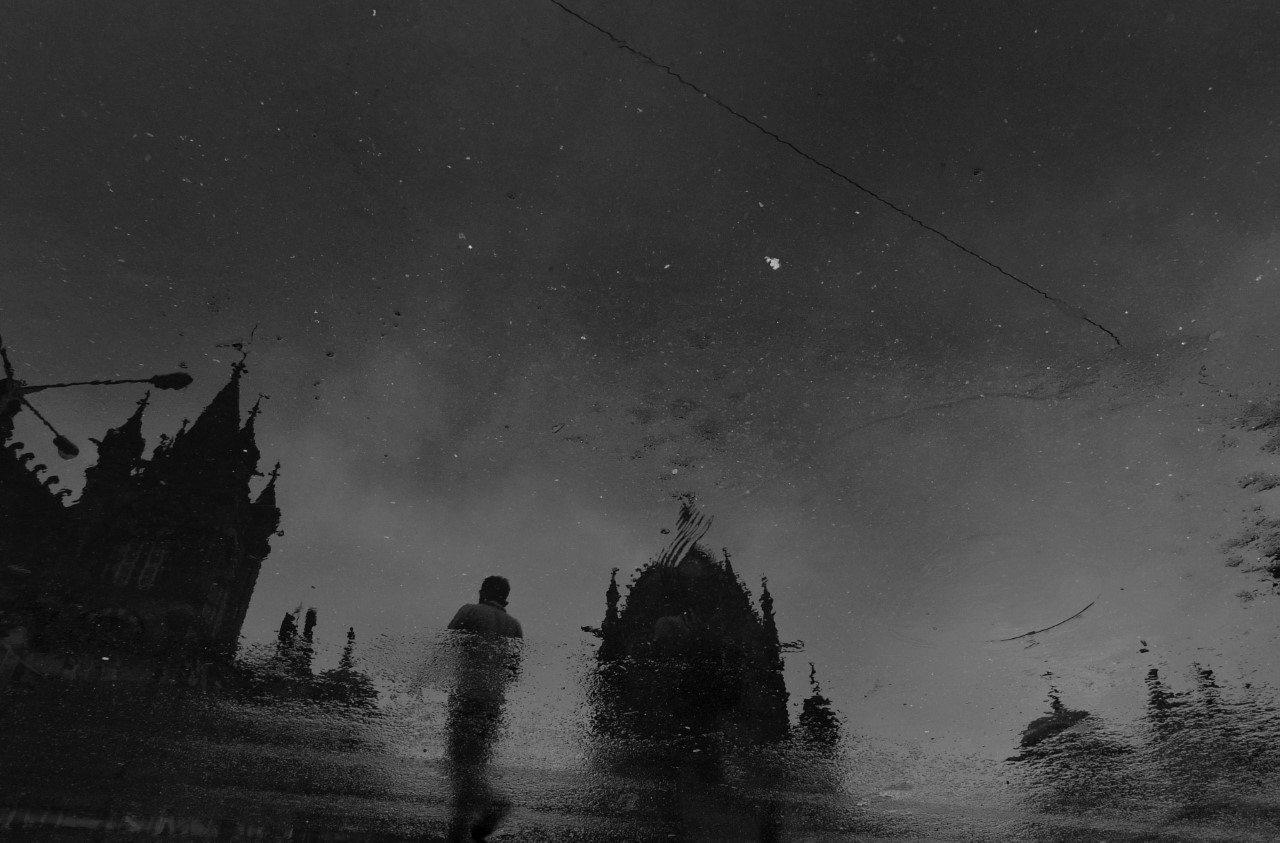
Thank you to my dear friend, Irfan Nabi, for supplying the amazing photo inspiration for the flash fiction below.  The moment I saw his picture, a story began to form in my head.  In this case, it’s a love story told in reverse that circles back on itself.  I hope you enjoy it.

Now You See Me

Monsoon RainsWithout looking at him, she watched him walk away. A pause in the rain provided the perfect opportunity to see his reflection slip out of her life. To watch him walk away from all they had been together. Away from her.

His words lingered in her ears. The reverberation of a church bell signaling doom. So beautiful, so mournful. She goaded him to say more just to keep him in her presence if only for a moment longer. She begged him to stop shouting, her own admissions used against her. He never would have said a word, but she could not let it go.

She confessed her insecurities to him. Her age, his youth. Her wisdom, his beauty. How could they be compatible? He never mentioned it to her. Never once broached the subject she barely kept suppressed beneath a façade soothed by external remedies. Lotion, powder, blush. Her known deception extended to the roots of her colored hair.

Love came easily to them. To him. He never saw the relaxed state of her body, the body given to her after three children and years of an unhappy marriage. She could not relax inside, and that, too, he pretended not to notice.

They dined at her apartment. He cooked for her delicacies she had only dreamt of, fed her with his hands. Nothing measured, everything given in excess. Spices and friendship blended perfectly to satisfy all hunger and thirst for life. Soulmates.

Another invitation to coffee. He called her on her cell; she wondered how he obtained her number. They talked for hours like close confidants before she even said yes. Where to meet? He knew just the place. Knew she would love it. And she did.

A chance meeting outside the building where he worked. He insisted she join him and his friend for lunch. She declined with a head tilt and a smile, and instantly missed him for some strange reason. When he caught up to her, she believed his explanation about the friend excusing himself.

Introduced by a mutual friend at a party celebrating someone’s birthday, they found themselves with glasses of champagne in hand. Standing about, chatting. Nervous laughter preceded the invitation to leave, to seek quiet and coffee. It was just coffee, but she enjoyed herself more than she had in years. His lively conversation cheered her in this country where she did not live.

She stayed with a friend already working in the country. Together they located a suitable apartment while she decided what she wanted to do with her life. Right then, all she wanted to do was breathe. Days turned into weeks turned into months.

Divorce finally prompted her to flee, to seek the freedom she craved and the happiness she deserved. She left behind grown children with the assurance to return and the promise of souvenirs. Okay, maybe grown but not mature. All three saw her off at the airport with hugs and kisses but not tears because they knew she would return to them. What could an exotic country hold for her, provide her with, when they were her very existence?

– – – – –

He turned to look at her one last time, imploring eyes willed her to lift her head. But his reflection had already slipped beyond the edge of the puddle, and she did not see.

Masking the Truth

Clove Gum 2Everything seemed peaceful for Dr. John Welles in August of 1952. Despite a lifetime of dealing with secrets, whether keeping them for the sake of a loved one or generating secrets of his own, Dr. Welles believed he had finally found sanctuary in the hills of West Virginia. But it wasn’t to be.

By helping Bea Turner, who had become quite dear to him, John made a deal with the representatives of evil itself: the Ku Klux Klan. In his naiveté, he underestimated how truly wicked the Klan was and promised a favor in return to be fulfilled at the Klan leader’s whim. The day the favor was called in set John on his most destructive path so far. He turned to alcohol as a stabilizing factor in his downward spiraling life, yet he was unable to retain any sort of control. Alcohol claimed Dr. Welles for its own, and by submitting to the influence, he continued to lose what was dear to him.

One way the doctor kept people from discovering his alcoholism was to chew strong clove gum. Although I never mentioned brands, I always had Adams Clove Gum in mind for John when masking his drinking. He wouldn’t have been the first to do so.

Clove gum was first manufactured by the Thomas Adams Company in 1914. After working as a photographer and glassmaker, Adams tried his hand at inventing. The only thing he invented of any worth was achieved in the 1850s. While working as a secretary to the Mexican President, Antonio López de Santa Anna, the pair attempted the business venture of using chicle as a cheap alternative to expensive rubber tires. After a year of trying, the project was abandoned, and Adams eventually realized he could use chicle to produce a better type of chewing gum. He formed a company that by the late-1880s was making gum sold across the country.

In 1899, Thomas Adams became part of a new company called American Chicle Company which merged the six largest American chewing gum manufacturers. He remained a member on its board of directors until 1905 when he died. American Chicle Company was renamed Adams in 1997, and The Adams Company has since been acquired by Cadbury. Today it is known as Cadbury Adams. Cadbury Adams continues to use the same packaging used in 1914 to capitalize on the nostalgia factor, and the formula has remained essentially the same as well.

Commercial production of gum dates only to the mid-1800s making clove gum one of the oldest, continuously sold flavored gums on the market. It was especially popular in the Prohibition era, when people believed that they could cover up the scent of alcohol on their breath by chewing it.

Every few years, Adams Clove Gum makes an appearance on the market and is scooped up by longtime fans ensuring that candy and gum sellers run out quickly. The Internet helps when looking for new suppliers, however, my recent tour around the Internet didn’t reveal any sources at the moment.

While many young people today haven’t heard of clove gum, among its devotees, Thomas Adams will forever be remembered as the father of the modern day chewing gum industry.