Suits Me to a Tea

suits-me-to-a-teaI remember the first time someone asked me if I wanted regular tea or sweet tea. I was a teenager on vacation with my parents in North Carolina. I thought the best thing that would happen to me that week was endless basking in the sun and swimming in the ocean. Who knew that a counter person working the register at McDonald’s could bring such happiness to a Northerner from Ohio? Even better, the delicious beverage was served at every restaurant we visited during that trip. My family had discovered sweet tea and drank it by the gallons that week. We even purchased large cups of sweet tea to drink on the way home. The restaurant wasn’t out of sight before it was consumed.

Flash forward a couple of years to the advent of sweet tea reaching McDonald’s in Ohio and other restaurants as well. We Northerners were elated, but we had a few things to learn: keep your sweet tea refrigerated so it doesn’t grow bacteria and don’t try to pass off that junk in the beverage machines as sweet tea.

All this to say that sweet tea factored in to my novel, The Secrets of Dr. John Welles, the first time John met Sam Feldman and Claude Willoughby at the University of Maryland. John had been invited to visit Sam’s home along with Claude. While he instantly liked amiable worrier, Sam, John’s initial opinion of Claude was reserved at best. Claude sneaked bourbon into the sweet tea without John’s knowledge. When John took a large swallow, he choked on the presence of the strong alcohol much to Claude’s entertainment. The conversation that followed would either make or break their tentative relationship.

There are many recipes out there for sweet tea and the history is quite enjoyable to read. I had no idea that iced green tea was the original favorite. The following recipe is the one I had in mind when I wrote the above-mentioned scene. Of course, you can always put a splash of bourbon in yours; just remember to warn your guests first.

Sweet Tea

¾ c sugar (I use raw)

¾ c water

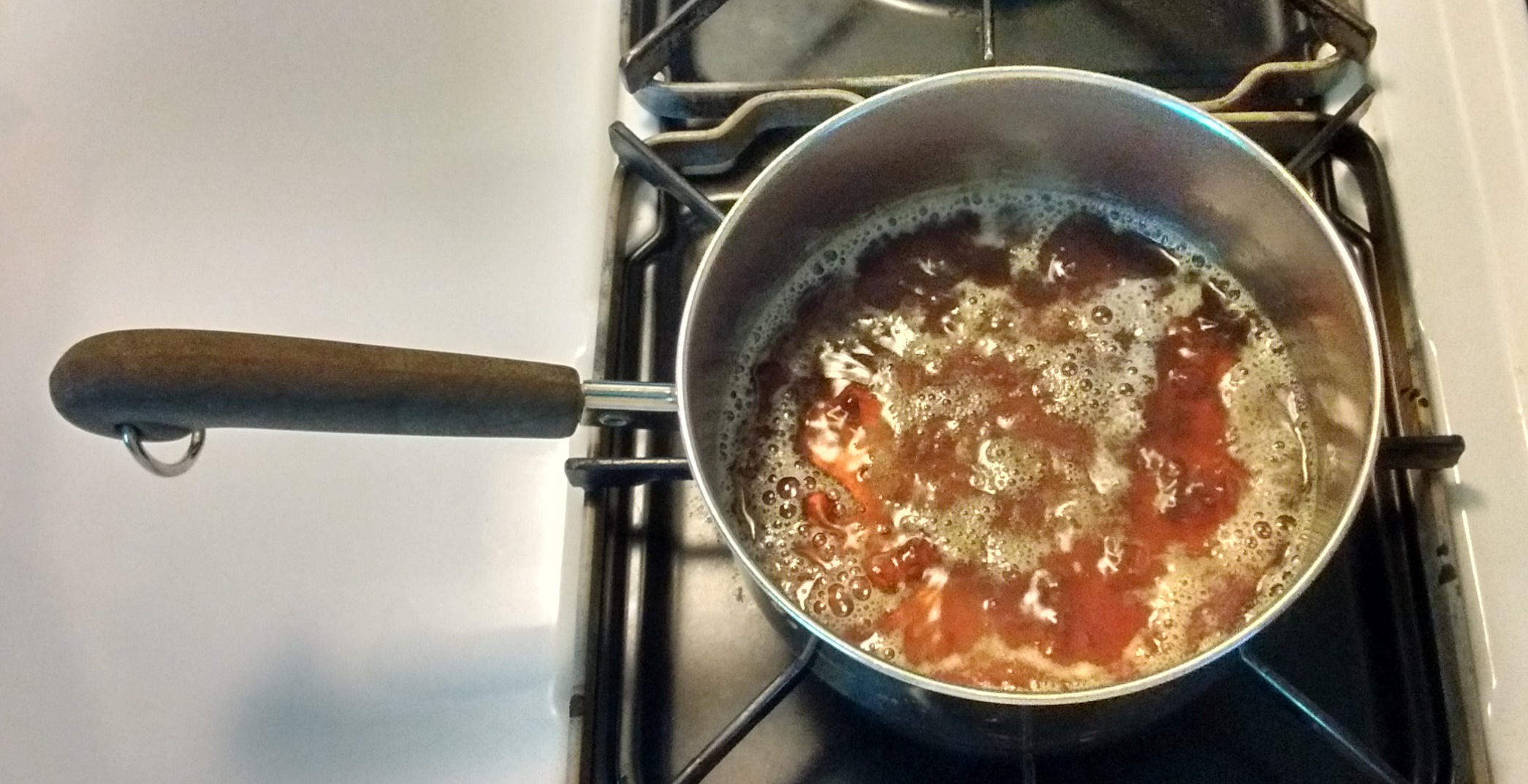
suits-me-to-a-tea-2Place the sugar and water in a saucepan, stir thoroughly, and bring to a boil over medium heat. Boil the mixture for seven minutes, stirring occasionally. Keep an eye on the heat so the syrup doesn’t scorch. You should attain a gentle, rolling boil. Remove from the heat, and set aside to cool.

10 cups water, divided

6 regular-sized tea black tea bags

1 pinch baking soda

Ice

Lemon slices (optional)

In another saucepan, bring three cups of water to a boil. Remove the pot from the range and place on a trivet. Add tea bags and baking soda, and steep for six minutes. Do not squeeze the tea bags when removing. Add the simple syrup and stir. Allow to cool to room temperature.

When the tea/syrup mixture has cooled, pour into a pitcher and add the remaining seven of cups water. Serve over ice with lemon slices if desired.

Enjoy!

No Bad Apples

no-bad-applesToday’s post falls into the category of Research Road, however, the information I discovered didn’t make it into my novel, The Secrets of Dr. John Welles, or more correctly, it was removed. The reason for this underscores my admonition to always check your facts. Whether you’re writing historical fiction or fantasy with factual details familiar to the known world, it’s important to present the particulars accurately.

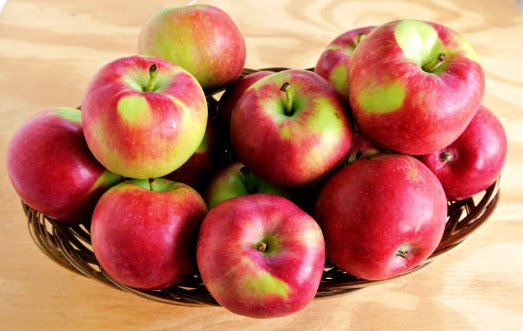
In an effort to entice potential readers once my novel is published, I have familiarized them with characters and situations through the food I featured in the story. Recipes for these meals can be found in Edible Fiction. Last week, I wrote a post for an apple pie eaten in a scene relaying Dr. Welles’s first trip into the town where he decided to spend his later years. For this particular pie, I chose to use Paula Red apples. They are among my favorite pie apples because they have an old fashioned flavor and become sauce-like when baked. I thought a little history on the heirloom apple would make for an interesting blog post, and that’s when I learned my mistake.

According to several websites devoted to antique apples, Paula Reds were discovered as a seedling in Sparta, Michigan in 1960 by Lewis Arrends. The apple, named for Arrends’s wife Pauline, was a happy accident that appears to have descended from the humble McIntosh. Why is this important you ask? Because the scene in which a Paula Red apple pie is eaten by Dr. Welles took place in 1958, two years before their discovery and ten years before they hit the market. Perhaps my favorite apple wasn’t as vintage as I first believed.

There are those, my mother among them, who will argue that this is a minor detail, one that wouldn’t be discovered by the casual reader. But as I’ve stated before, I’m not a casual reader or writer, and these details are important. How can I expect my readers to have faith in what I say if I don’t conduct thorough research? (Who is in Your Details?)

I know readers are expected to suspend some belief at times and trust their favorite writers, yet I can’t allow that one person who could nail me on the facts to be disappointed any more than I could tell blatant lies. Obsessed with the facts? I think so! In closing, I hope that another writer will benefit from the information presented about Paula Red apples. At the very least, I hope I’ve prompted writers to check their facts.

By the way, if you want a great recipe for an apple pie, check out the post All-American Goodbye.

Is It Ever Too Late?

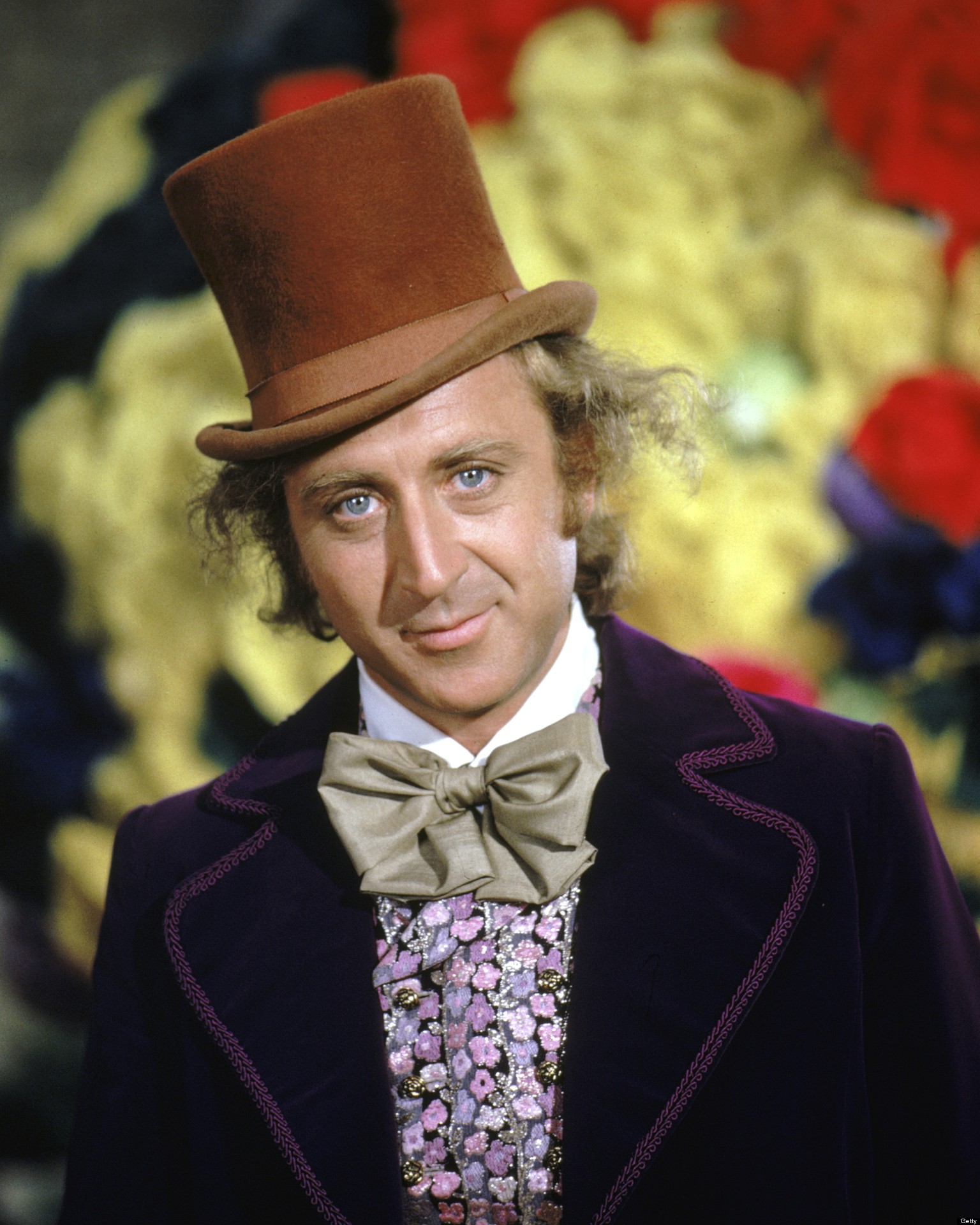
Gene Wilder as Willy Wonka in 'Willy Wonka & The Chocolate Factory'

When I heard that Gene Wilder passed away a week ago Sunday, I was saddened to know that a small piece of my childhood had faded away like the edges of a watercolor painting. Goodbye, Willy Wonka. Laid to rest are the magical, mythical qualities that made Gene Wilder the wonderful actor he was. I also felt that I had missed an opportunity. It’s my own fault for not acting upon it, but I made the common error of believing I had all the time in the world. Allow me to explain.

Two years ago, I read Mr. Wilder’s novel, My French Whore. It’s a beautiful, bittersweet tale of love and loss set during World War I. I often wondered about the loss portion of the story. Did it mirror Mr. Wilder’s own loss in life, specifically that of his wife, Gilda Radner? In the story, it’s the male protagonist who is lost. Maybe Mr. Wilder would rather it had been him so that Gilda could have gone on living. He had a wonderful, twenty five year marriage to his wife, Karen, so perhaps I’m reading too much into the tale.

All this to say that I wanted to contact Mr. Wilder and ask him to write a sequel, one in which the two main characters find each other again. It would be possible based on the nature of the tale. Mr. Wilder was creative and imaginative: he could have rescued the protagonists from the fire and made it believable. But I missed my chance, and now it’s too late.

I’m familiar with many of the arguments writers offer for ending their stories on a sad note or sometimes with a gut punch to the reader. As long as the story is well-written, the event is believable and not just for shock value, and it fits with the rest of the story, character arcs, etc., then I can accept a sad ending. There are some, however, that have left me reeling.

For instance, The Time Traveler’s Wife. I read it once, and once was enough. The novel still haunts me to this day. I went so far as to pen a letter to Audrey Niffenegger begging her to write a sequel that pulls the lives of her protagonists back from the black and bitter ending she gave them. After the torturous lives they led, why did she have to end her novel the way she did? As an author creating people and situations, she could have opted for a better ending if not a Pollyanna one.

Then there is The Mercy of Thin Air by Ronlyn Domingue, The Girl in the Green Glass Mirror by Elizabeth McGregor, and The Piano Tuner by Daniel Mason. These books live in a locked chest in my house because that is the only way I can contain my emotions regarding them so great are the effects they had on me. If you think I’m exaggerating, after my mother read The Piano Tuner at my suggestion, she called to chew me out for not warning her. To this day she describes her experience with the ending as having the air knocked out of her lungs.

These books are so well written and so heartrending. Why do we do this to ourselves as readers? The question made me re-examine my own novel, The Secrets of Dr. John Welles. Did I infuse painful accounts into the storyline that will make a reader sit stunned long after the last page has been read? Will I leave him/her with feeling as if he/she just buried a good friend for whom he/she will mourn all the while knowing it’s a fictional character? Personally, I question whether the loss of the character was counterbalanced by the fact that they led a good long life on the pages of the novel. If so, it’s easier to let them go.

In the world of Dr. John Welles, where I have complete control, some would argue that if I leave readers feeling as if they’ve had their heart torn out, then I’ve done a good job of writing. I’m not so sure I would agree. Others would say that’s just how life is: people live and die, get over it. I must admit that I don’t have the answers to the questions I’ve posed regarding the handling of characters’ lives and the endings of novels. I also know I’m not the only person who feels this way, and in this small fact, I take some comfort.

Without giving away the ending to my novel, I believe I have done a good job of dealing with characters and events. However, if one day I receive a letter from a reader who praises my writing while begging for a remedy to their grief and pain, I will seriously consider what I can do to ease the situation.

Who is in Your Details?

God Is In The Details by Mauricio Raffin

God Is In The Details by Mauricio Raffin

Today’s post counts as two entries in The Weight of Words and one for Research Road. It also stresses the importance of thoroughly editing and researching your work as well as finding a good editor. We’ve all made mistakes. I have received tactful comments from followers pointing out errors I’ve made. It’s easy to correct a blog post even after the fact, but what about my novel? I don’t live in fear of discovering an error post publication…oh, wait—I do.

I can’t tell you how many times my mother has said, “What difference does it make if you’re not 100% accurate? The common reader won’t know if you’re right or wrong.” To which I explained that I would know. Then there is the historian or well-read person who may read my novel and nail me for incorrectly portrayed facts. I’m not talking about the creative license we employ when placing our fictional characters in real periods of history or an entire reimagining of historical events such as the Germans winning World War II. I’m talking about modern words and phrases ending up in the mouths of characters from an earlier century and inaccurately portrayed artifacts, architecture, places, etc. due to lazy research.

A book I finished recently had two such errors. The first was the spelling of the word carcase/carcass. About thirty years ago, I read Dorothy L. Sayers’s novel Have His Carcase. It was part of a trio of Sayers’s books gifted to people who made a donation to the local PBS station. The announcer kept mispronouncing carcase the way one would say car case. How embarrassing. Years went by before I stumbled across the spelling carcass, which, by the way, is the only spelling Word recognizes as correct. I assumed it was another instance of American English vs. British English. What I discovered after reading several definitions for both spelling variations, is that carcase is the older, often consider archaic, of the two spellings although both are acceptable. Why is this important? The author of the aforementioned book used the word in the diary of a Carthusian monk from 1535, but she spelled it carcass. As soon as my eyes fell across the word, I was jolted out of the story to ponder whether the mistake was mine or hers. True, most people would have let it go, but for historical accuracy, well, I’ll leave it up to you to decide.

Small sidebar: When I checked writing forums for the correct spelling of carcase/carcass, Dorothy L. Sayers’s novel, Have His Carcase, was referenced at least once on every site as the example for the spelling carcase.

I was much less forgiving toward the second mistake. Another character, also from 1535, mentioned seeing a nine-branched menorah used in the second temple of Israel. Did you catch that? Talk about being shocked right out of the story. All my research on the subject verified what I already knew to be true: menorahs used in the temple of Israel have seven branches. The most reliable source of this information is the Bible. I don’t doubt that the candelabra people see the most and the one with which they are familiar is the nine-branched version known as a chanukkiah used in celebration of Chanukkah. The terms are used interchangeably and incorrectly. However, the two items are absolutely not the same thing.

My thoughts on the subject ranged from disappointment toward the author to wondering if the editor was too young to care about such facts or not interested in verifying them. Several years ago a self-published author gave the advice that you should research your history to the nth degree because your readers will trust that what you have written is true. That advice is what prompted me to research my own novel in minute detail. At one point, I had a fellow author/history buff tracing World War II troop movements to ensure I had placed my protagonist with a unit that had actually ended up in a battle I needed to feature.

Perhaps I sound like a fanatic. Even Andy Weir, author of The Martian, admitted to minor mistakes pointed out by other brilliant scientists, the type of knowledge the common reader wouldn’t possess. There may even be mistakes in my own novel. I sincerely hope someone catches them before it goes to printing. Still, I cannot stress enough that the writing and research of your work in progress begins with you. Beta readers and editors are essential to the process, but there is no excuse for a lazy author.

In closing, I’ll point to the title of this post as my final comment on the importance of using the correct words/phrases and conducting research. You’ve probably heard the devil is in the details and the older, slightly more common phrase, God is in the details. The first means that mistakes are usually made in the small details of a project. Usually it is a caution to pay attention to avoid failure. The second means that attention paid to small things has big rewards, or that details are important. Who is guiding your writing efforts?

Welcome to my Author Blog

Welcome to my author blog, Friend. I am so pleased you found me.

I’ve been hanging out here for several years with an amazing group of followers. It is because of them that my blog is going strong, and I want to take this opportunity to say, “Thank You!”

The overall purpose of my blog is to familiarize you with my writing. I enjoy creating novels as well as interesting and informative blog posts. In between all the writing, I am currently seeking representation for my manuscript.

Following me is quite easy. Just click the +Follow button hovering in the bottom right-hand corner of the screen or take advantage of the sign-up directly on the Home page. In addition to my blog, there are various ways for us to become better acquainted. I can be found on Facebook, Twitter, and Goodreads.

I sincerely hope you’ll join us. I look forward to getting to know you better.

HL Gibson, Author

Baring My Writer’s Soul – Part 17

Writer's Soul 17If you’re like me, you have to build up to writing, ease into it. To wake up and start writing is like jumping out of bed and going to work without coffee.   There are people who can do this; God bless their perky morning souls. I approach things a little differently by creating a positive work environment and attitude for myself. This is achieved with a cup of hot tea and reading my Bible. The simple activity sets the stage for the rest of my writing day.

Then I take a few minutes to mentally organize and deep breathe. I rid myself of negative thoughts and focus on the positive. As a writer, one of the most negative things I encounter is writer’s block. I can feel the ideas in my head, but I just can’t get them out. I accomplish this by acknowledging that I’m not truly blocked. Rather, I’m giving in to fears, doubts, and insecurities. Being able to say this makes the fears, doubts, and insecurities manageable, and I can move on. Also, I stop guilting myself for what I may or may not be as a writer, and I stop playing the comparison game. Once I’ve dealt with these issues, I’m free to write.

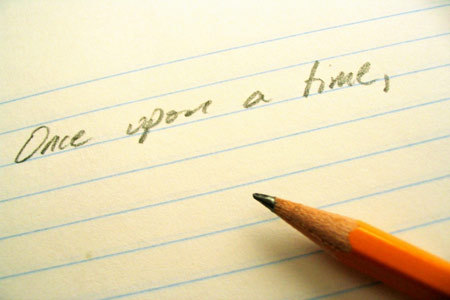
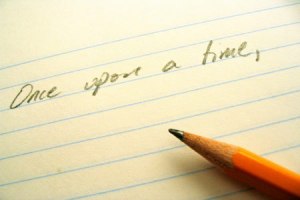
One of the most important things I’ve learned since I took up writing is to keep my equipment simple. All I need to create literary brilliance is a single subject notebook and a pencil. I choose a pencil over a pen because they make noise as they move across the paper. This light scratching is satisfying to my brain and is proof writing efforts. I see and hear my progress. Another technique that helps with this process is to sometimes write on lightly textured paper such as a sketch pad.

I write in capital letters. It took some getting used to, but by doing so, the process slows down my writing and focuses my attention at the same time. My ideas actually flow better. As new ideas pop into my head, I write them in the margins of my notebook.

One of the hardest things to conform to is a writing schedule. You would think making your own hours would be bliss, but I find as my own boss, sometimes I have the tendency to not take my writing seriously. I become lax beyond the point of flexible, and my writing suffers. When I set a schedule and stick with it, choosing the time of day that works best for me, I am more productive. Of course, I allow for emergencies in my life and some flexibility, but I don’t allow myself to get too far off the schedule I created.

As for social media, it took me a while to learn to not be controlled by it. Author platforms are good, but when you spend all your time maintaining them, you’re not writing. Not to mention the rising stats are addictive, and the minute you tell yourself you’ll only be on a minute, you’ve wasted thirty minutes playing. Remember: writers write; they don’t build reputations on what they’re going to do. Resolve this issue by scheduling the time you’ll spend maintaining your social media, and again, stick to it.

Another trick I use to nudge my writing along is the daily word goal. It’s effective, but I learned that when I write what needs to be written, completing a scene or story in fewer words, I still consider myself successful. In other words, I write until I’m finished. I’ve been surprised how long or short a handwritten portion turns out to be when typed. Coming short of the goal isn’t failure as long as I’m writing.

That’s when I reward myself with chocolate, a cup of tea or coffee, pleasure reading, napping, calling a friend, cooking, taking a walk. I warn against using social media or television as a reward because they lure one away from focusing.

Also, I do not punish myself for not meeting my writing goal. There are already too many negative thoughts bombarding my head, negative influences toward my writing from outside, and my resistance will pounce on these to keep me from writing. The goal is writing. The quantity is negotiable.

I keep one main project to work on, usually my novel, and resist the urge to put too many irons in the writing fire. However, I also maintain a notebook of other writing projects I’d like to work on in case I need to switch things up. Sometimes I need a project while waiting for a response to a research question or if my main project becomes heavy and I need a small break. Alternative writing includes journaling, blog posts, letter writing, flash fiction, and short stories. I use caution when setting aside my main writing project for a period of time, making sure it’s for a valid reason such as research, time to think and/or reflect, or major upheavals in my life. I know when I truly need a break and when I’m just sloughing off.

In short, I found what worked for me. Good writing habits take time to establish, so I never quit. I carry a notebook with me everywhere, have one in every room of my house, and write on the run. If I mess up, I start again. My resistance battles me along the way, but I am stronger. Resistance tells me these methods are weird, lame, and ineffective. I do them anyhow.

The easiest thing I do for my writing is be present. I simply put myself in a chair at the table with a pencil and paper. Then I made this process enjoyable by scouting out the best location in my home where I can be the most productive and tailored it to my needs with music, silence, windows, shade, snacks, and beverages. Sometimes I change locations to keep from stagnating.

One of my writing jump starts is to write twenty different words on index cards (the first twenty that come to mind or twenty things that interest me), turn them upside down, take one from top of stack, and free write for ten minutes. I do this for twenty days as a warm up and repeat as needed until I trust myself to jump into my writing day without assistance.

Another is my list of ten. In three minutes, I write down a list of ten things I did yesterday. In ten minutes, I free write about one of the things I did on my list. If nothing grabs me, I choose number three. A month of this particular warmup helped me set healthy routines. Keep in mind that these simple exercises are like mental stretching. No athlete competes without first stretching. True, it can be boring, it isn’t pretty, but it does massage your brain into creative mode.

I never forget good ole visual or audible writing prompts. Some of my best writing has been jumpstarted by a picture or piece of music. The funny things is, when I went looking for a pretty picture to write about or music to put me in the writing mood, I couldn’t find anything. Then there are pictures I wouldn’t have looked at twice and music that crossed my path that flashed a story through my brain so quickly I knew I had to put it down on paper. Don’t discount any source of inspiration.

Making myself accountable to others is effective for meeting my writing goals. I chose a writing buddy who will encourage me to stick to my goals and help me address why I might not be. I’m careful not to compare what I am doing to what my buddy is doing, and I don’t swap work with them. My buddy should have a different writing buddy to help manage his writing goals. In that vein of thought, choose wisely with whom you share your writing. He or she should be able to provide constructive feedback because poorly given feedback can knock you off your focus.

Based on my own personal experience, I don’t read writing books while I’m writing, especially the how to variety and those on writing style. I find them to be distracting because I try to incorporate all the wonderful new ideas I’m reading into my writing, and they don’t all fit. They don’t all belong, and they can hamper my writing if I’m not careful.

Most of what I learned about creating a writing life came from Heather Sellers’s book Page After Page. Some of it came from other inspirational sources. I’d love to hear what works for you and your writing, your process, and your thoughts on what I’ve written. Remember, feedback is what we authors live for.

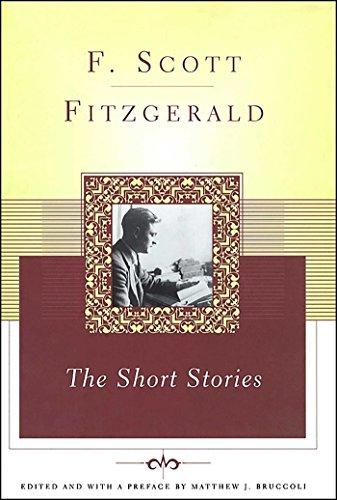
F. Scott Fitzgerald – The Short Stories

F. Scott Fitzgerald The Short StoriesAnyone who knows me knows I adore reading. And for those who don’t know me, it won’t take much time spent in my presence, whether in real life or via social media, to discover this. Recently, I’ve been reading the short stories of F. Scott Fitzgerald. I assigned this task to myself as part of the research for my new novel. My goal was to gain a better understanding of Fitzgerald through his writing first, and then I would tackle books of literary commentary as well as biographies of the man, the author, and his life.

I’m not sure where to begin with my review of Fitzgerald’s short stories because I must admit it isn’t favorable in the least. I must also confess my amazement that he earned the money he did during the era in which he wrote. This is especially astounding considering how small the payment is among literary journals today. According to the Dollar Times inflation calculator, four thousand dollars for “At Your Age” in 1929 would be like earning $55, 327.48 in 2016. The section notes prior to the story state this was his “top story price.” I interpret that as price per story and not salary for the year. Please correct me if I’m wrong, but either way, Fitzgerald was simply not that good an author.

If you read one short story, you’ve read them all and his novels as well. Beautiful, indifferent debutantes who pick up and drop men like they’re choosing and discarding shoes; rich ambitious fellas, possibly a football hero, who undoubtedly attended/will attend either Princeton, Yale, or Harvard; a sprinkling of drunks, some hopeless, some loveable; endless comparisons between the North and the South or America and Europe; and the ambitious pursuit of money, fame, and power over, and over, and over again. The most unforgivable crime Fitzgerald committed in this reader’s eyes was to cannibalize his own short stories for the sake of his novels. Worse was the fact that his agent, editors, and publishers allowed him to get away with this.

Ridiculous and cliché are the two words that came to mind the most as I read Fitzgerald. The scenarios portrayed were outlandish and unbelievable, and I’m not counting “The Diamond as Big as the Ritz” when I say this. Why anyone, even fictional, would tolerate the behavior depicted among the characters is beyond me. I tried to keep in mind that attitudes and actions were different in the ’20s and ’30s, but my opinion of the situation often deteriorated to how stupid can one person be and how much longer before he/she quits putting up with this garbage? Perhaps this was common behavior among the rich and lovesick back then. I honestly couldn’t say.

None of Fitzgerald’s stories were memorable. As I looked back through the book, I tried to recall the storylines and characters by the title alone but ended up cheating and reading the section notes. The only exception was “The Curious Case of Benjamin Button,” and that was because it had been made into a movie. So, I’m left wondering who decides what makes a piece of literature a classic. The death of the author, the passing of time, the payment received, popularity with the audience at the time of publication, being made into a movie, or some combination thereof? I shudder to think how the last four delineators will make classics of some of the drivel being produced today.

I don’t know what percentage of readers would stand with me in my assessment of Fitzgerald’s writing. Hopefully, I’ll find the commentaries and biographies more interesting. From what I already know about him, I believe if he had consumed less alcohol and been more content to hone his craft than pursue fame and fortune, he would have moved beyond his narrow world, experienced life to a greater degree, and found something new to write about. In the end, I’ll give Fitzgerald credit for leaving writers a good lesson even though he failed to learn it himself.

Tools of the Trade

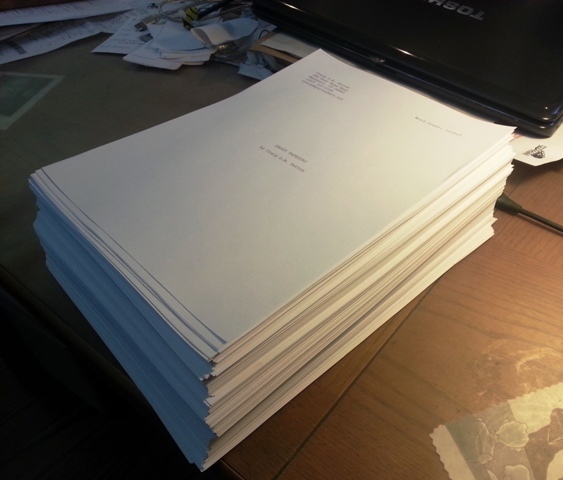
Tools of the TradeAt this month’s Critique Group, a fellow writer said that he thought he’d done everything correctly when writing his novel only to find that it had to be double spaced with one-inch margins, Times New Roman 12 point, starting a third of the way down the page—

“Wait, wait, wait,” I said when I noticed panic widening the eyes of another new member. “What you’re talking about is a manuscript submission copy.”

We had a discussion on how to write a story and touched on plotting versus pantsing, writing by hand versus typing on a laptop, etc. The first point I want to make is just write the story. As Will Shetterly said, “It is better to write a bad first draft than to write no first draft at all.” I’m also fond of “Write your first draft with your heart. Re-write with your head.” There are many such encouraging quotes, but I’m sure you understand what I’m saying. Get that story written.

With that being said, the second point and true purpose of this post is to offer another resource where new writers can find the information they require to turn their manuscripts into acceptable submission copies. I’m all about giving back the information I discovered and/or processes I learned.

These steps are for formatting a novel:

  1. Set 1″ margins on all sides.
  2. Prepare a title page with your name and contact information in the upper left-hand corner of the page (some sources say include the word count here), title in ALL CAPS about one-third of the way down the page, skip a line, followed with a novel by, skip a line, and your name.
  3. Don’t number the title page. Begin numbering (1) with the first page of the text of the manuscript, usually the introduction, prologue, or chapter one.
  4. Use a header on each page, including your last name, the title of your novel in ALL CAPS, and the page number. Remember to make the font of the header match the font of your manuscript.
  5. Start each new chapter on its own page, one-third of the way down the page.
  6. The chapter number and chapter title should be in all caps, separated by two hyphens: CHAPTER 1—THE BODY.
  7. Begin the body of the chapter four to six lines below the chapter title.
  8. Indent fives spaces for each new paragraph.
  9. Double-space the entire text.
  10. Use a standard font, 12-point type. Times New Roman, Arial, or Courier is fine.
  11. Alignment should be to the left, not justified. The right edges will not be uniform.
  12. Indicate scene breaks with a blank line and five centered dashes or number signs.
  13. End your manuscript with the five centered dashes or number signs or simply type THE END.
  14. Use 20-lb. bond paper.

The guidelines for a manuscript submission copy may vary a titch based on which websites you reference and/or who you talk to. The steps presented above are the basics and will ensure that your manuscript doesn’t get rejected because it is sloppy.

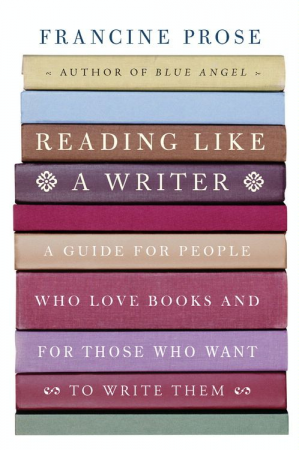
Reading Like a Writer by Francine Prose

I first spied Francine Prose’s book, Reading Like a Writer, while shelving at my former job. I sneaked a few moments to read the first few pages and Reading Like a Writerinstantly fell in love. The sentence that resonated with me, “Like most–maybe all–writers, I learned to write by writing and, by example, by reading books,” combined with, “Long before the idea of a writer’s conference was a glimmer in anyone’s eye, writers learned by reading the work of their predecessors,” confirmed for me that I had found a kindred spirit. Her passion for reading and writing and the process of learning by indulging in both was the best piece of advice I had ever heard. Mrs. Prose’s comments awakened in me what I always believed to be true: great writing is an organic process that comes from creating beyond outlines and plot-pointed structures with perfect character arcs.

Great writing begins with close reading and follows with careful consideration for every word that will become a sentence, which will become a paragraph. This isn’t to say that Mrs. Prose or I believe writing should be utter chaos without any structure, but I trust if one applied her approach to their own writing, he or she would see amazing growth in how they create characters, employ narration and dialogue, and present details and gestures.

Woven throughout the book are examples from great writers that will back up what Mrs. Prose is teaching. You don’t need to be familiar with these authors or their works to appreciate them. Another reviewer I read proclaimed his dislike for Mrs. Prose’s book because he didn’t know any of the referenced works. I suspect he thought Mrs. Prose was being pretentious; I encourage you not to be intimidated by her knowledge but rather delve into the suggested reading list as soon as possible.

Another aspect of the book that appealed to me is Mrs. Prose’s admission that while there are rules in writing for the express purpose of guiding us, rules are, essentially, meant to be broken. And if you’re brave enough to ride off the reservation of writing rules, make sure you’re breaking them brilliantly.

Regardless of your preferred writing style or approach thereof, I highly recommend reading Francine Prose’s book. I would be truly surprised if you didn’t take away something positive from the experience.

Spread the Love

One of my earliest memories of butter includes sitting on the carpet in the kindergarten classroom, all of us in a large circle, passing a massive canning jar from person to person as we shook the sealed jar full of whipping cream as hard as our little arms could manage. We’d been told that this would produce butter. I remember my skepticism, but since I loved butter, I gladly took part and watched the magic unfold.

It’s funny how many of my food memories are attached to my Grandma Smith, but I believe her kitchen is where I developed my love of butter.Butter versus Margarine There was something different about the sunshine yellow block that sat in her cut glass butter dish. It was lighter, sweeter than the golden-colored sticks of ‘butter’ we used at home. As a young child, any yellow, creamy substance that one spread on toast or crackers was referred to as butter. My mother provided the explanation of the difference, and I learned the definition of margarine. It wouldn’t be until decades later that I learned what an evil substance margarine is, but I digress.

Grandma Smith would bring me packets of real butter from restaurants where she had dined. Nothing against my mother, but she used margarine for years until I finally convinced her to switch. Glory be–my taste buds rejoiced and food became so much tastier.

Where is all this leading you ask? To my novel, The Secrets of Dr. John Welles, of course. I’ve already established that as an author, I love to feed my fictional characters. Twice I reference butter specifically, once in conjunction with biscuits and again with cornbread, but what I want my readers to understand without mentioning it every time is that butter is my fictional characters’ ingredient of choice when it comes to cooking and baking.

As I wrote the scenes involving food and envisioned the preparation, butter was always in the picture, sitting in a crock or dish, just within reach of the experienced hands that would lovingly incorporate it into the recipe. I’ll spare you the debate on the health benefits of butter versus margarine and simply say don’t fear butter and all things in moderation.

To sum up this post, I made butter with my son because I wanted him to experience how easy and fun it is. The added step of washing the butter is new for me based on research for this post. The instructions for this activity follow. I highly recommend doing this with your kids because the memories you’ll make are priceless.

Enjoy!

Homemade Butter

2 c whipping cream (Raw cream from grass-fed cows is recommended, but store bought organic will work as well. This quantity will yield approximately ½ c of butter.)

sea salt

I used a stand mixer with a wire attachment for this process and chilled the bowl and wire attachment prior to using.

Pour the cream into your mixing bowl, filling the bowl halfway so it does not overflow as air is whipped into the cream. Mix on a medium-low speed to prevent splashing. As the cream thickens, you can turn it up to medium.

This process should take about 15 minutes but can vary depending on how much cream you are using and what type if mixer you have. Whipped cream will develop first. When the whipped cream begins to deflate, watch closely as your mixture can rapidly change to butter. To prevent splashing, cover the bowl with a lightly dampened tea towel.

When the butter begins to clump and stick to the whisk, it is done mixing. Pour the mixture through a fine strainer to separate the solids, butter, from the liquids, buttermilk. If you want it to last for more than a few days, you need to wash the butter. This will remove as much buttermilk as possible to keep the butter from going rancid. Put the butter back in your mixing bowl and cover with clean, cold water.

Use a large spoon to press the butter into the sides of the bowl. The water will become cloudy as the buttermilk is removed from the butter. Pour off the cloudy water and add more fresh. You can repeat this process until the water stays clear. Stir in a large pinch of amount of sea salt for every ½ c of butter.

Store in refrigerator or at room temperature if you will use it within a week or two.