Who’s Your Momma?

Shirley Tedesco has her hands full with eight children ranging in age from five to sixteen, but she loves being a mother. She’s also very practical about the whole endeavor and readily distributes hugs or spanks as needed to keep her brood of eight angels/hoodlums in line. In the chapter of my novel, The Tedescos, titled “Soul Food,” Shirley is feeling like less of a mother than she normally does. Her husband, Joe, knows she’s experiencing a bout of the blues, and his heart breaks for her. Joe springs into action with a Mother’s Day celebration sure to lift Shirley’s spirits and quite possibly earn him some points.

While writing, I knew that Mother’s Day had been established long before the year during which my novel took place, but the research provided some interesting history with which I’d like to honor mothers everywhere.

One of the earliest examples of celebrating mothers came about with the Christian festival known as “Mothering Sunday.” This holiday fell on the fourth Sunday during Lent, and it was once a major tradition in England and parts of Europe. Faithful church attenders would return to their “mother church” (the main church nearest their home) for a special service.

Over time, Mothering Sunday became a more secular holiday. Children began presenting their mother’s with small tokens of appreciation or flowers. This custom started to fade in popularity, but it eventually merged with the American version of honoring mothers, Mother’s Day, in the 1930s and 1940s.

In America, the origins of Mother’s Day date back to the 19th century. Prior to the Civil War, Ann Reeves Jarvis, a resident of West Virginia, helped start the “Mother’s Day Work Clubs” in an effort to teach proper childcare to local women. Later, the clubs served as a unifying force in areas of the country still divided by the Civil War. In 1868, Jarvis promoted reconciliation between mothers of Union and Confederate soldiers by organizing “Mothers’ Friendship Day.”

Julia Ward Howe, an abolitionist and suffragette, also provided an important aspect to what would become the modern Mother’s Day. In 1870, Howe wrote the “Mother’s Day Proclamation.” Her call to action asked mothers to unite in promoting world peace. In 1873, she campaigned for a “Mother’s Peace Day” to be celebrated every June 2.

Anna Jarvis, daughter of Ann Reeves Jarvis, was instrumental in promoting the official Mother’s Day holiday in the 1900s. After her mother’s death in 1905, Anna Jarvis regarded Mother’s Day as a way of honoring the sacrifices mothers made for their children.

John Wanamaker, a Philadelphia department store owner, provided financial backing for Anna Jarvis allowing her to organize the first official Mother’s Day celebration in 1908 at a Methodist church in Grafton, West Virginia. Thousands of people also attended a Mother’s Day event at one of Wanamaker’s retail stores in Philadelphia.

Anna Jarvis, who never married or had children, started a massive letter writing campaign to newspapers and influential politicians in an effort to have Mother’s Day added to the national calendar. By 1912, many states, towns, and churches had adopted Mother’s Day as an annual holiday, and Anna Jarvis established the Mother’s Day International Association to assist with promoting her cause. Her perseverance paid off in 1914 when President Woodrow Wilson signed a measure to officially establish the second Sunday in May as Mother’s Day.

There is no set way to honor and celebrate mothers and motherhood. My experience has been that small, private celebrations or those grounded in faith touch a mother’s heart the most. It isn’t about what you can give to and/or do for your mother; it’s about maintaining the relationship throughout the year, and then taking one special day a year to say an extra “I love you.”


The Buzz About Last Names

Making the last name of the family in my novel, The Tedescos, plural was quite easy. I simply added an S to their name when speaking or writing about the entire clan. And then I assigned one character the last name Roberts and decided to write about his family as well. Time to apply “The Joneses Rule.”

Of course this isn’t the official title of the grammar rule; it’s just my way of remembering that when I make a last name ending in S plural, I add –es. The AP Stylebook, The Chicago Manual of Style, the Cambridge Guide to English Usage, Garner’s Modern American Usage as well as many grammar websites agree with this practice.

Then there is the annoying little pronunciation rule that pops up every now and then. If a last name ending in S sounds like a Z, as in Jones, one shouldn’t add the –es. A trick to determining this is to place your hand on your throat, say the name aloud, and see if you can feel your throat buzzing. Really? We’re supposed to trust proper grammar to the buzzing in our throats? This is made doubly ridiculous because sites that uphold this rule still say that Jones should be Joneses when making the name plural.

Here’s my advice: play it safe by trashing the buzzing rule, be consistent in your writing, and add –es to any last name ending in S. Regional dialects pronounce names differently, and it’s too difficult to pin down whether a name is ending in an S sound or a Z sound.

The Luxury of Chocolate

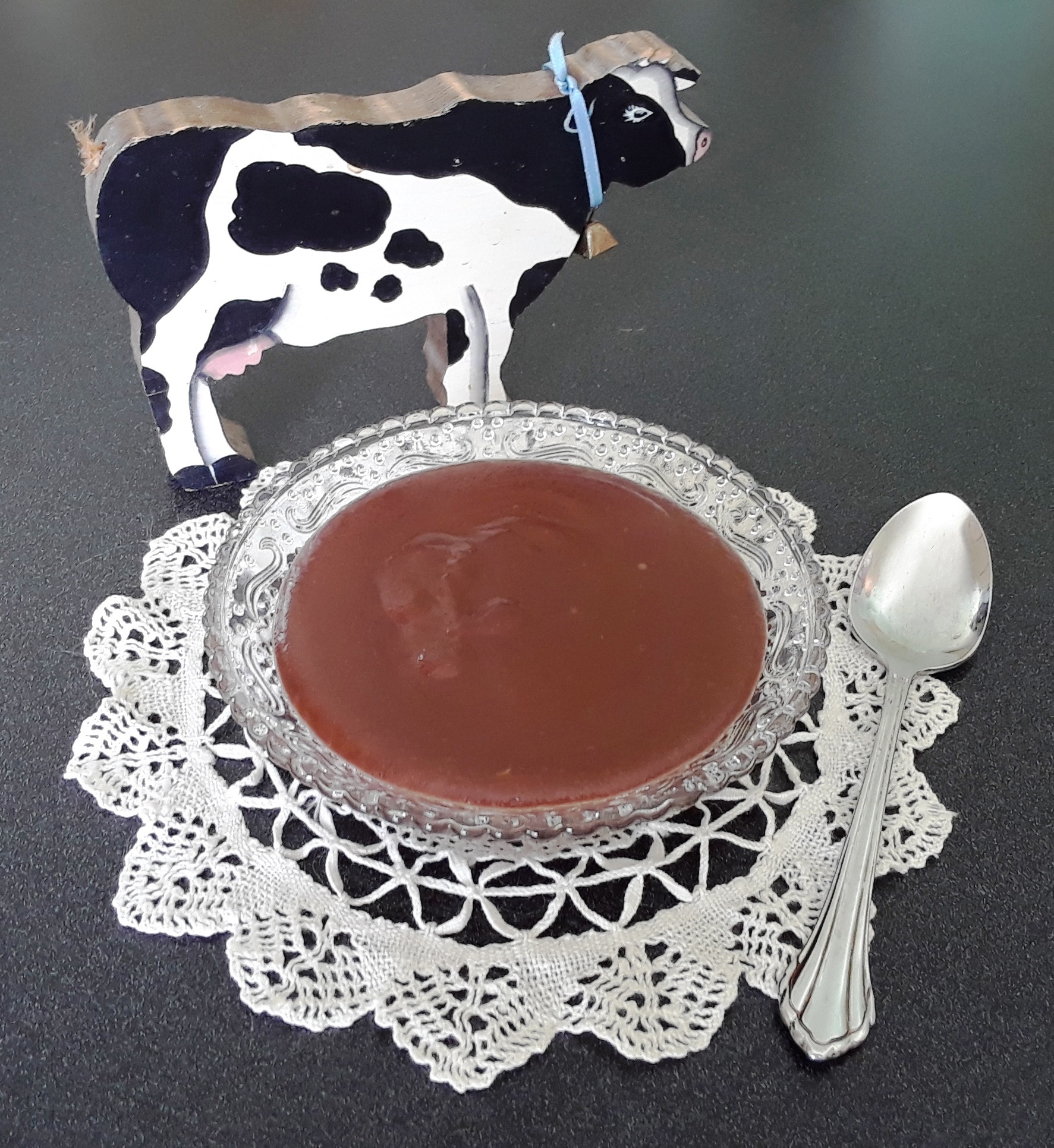
Chocolate ranks high among all the comfort foods in which one can indulge. It’s even better when it’s incorporated into a homemade recipe lovingly prepared by Grandma’s hands. And while chocolate in all its many forms is delicious, I do believe there isn’t anything that can’t be made better by eating homemade chocolate pudding.

Grandma Josephine Tedesco believes in love as the main ingredient in everything she makes for her grandkids. And even though Grandma’s mind isn’t always in the present, when it comes to cooking or baking, she’s as sharp as Gordon Ramsay’s knives. The following recipe for chocolate pudding is the one I had in mind when writing about pudding in my novel, The Tedescos. It’s absolutely decadent and just the sort of dessert Grandma Josephine would proudly serve. It’s simple, elegant, and a little bit of chocolate heaven.

Grandma Josephine’s Chocolate Pudding

2 ¼ c whole milk

½ cup sugar (I used raw sugar for a deep, rich flavor)

Pinch of sea salt

1/4 c unsweetened cocoa powder

2 T cornstarch

2 large egg yolks

1 large egg

5 oz. semisweet chocolate, finely chopped or in chips

2 T unsalted butter

2 t vanilla

STEP ONE: Whisk the cornstarch, cocoa, and ¼ c of the sugar in a mixing bowl. Add ¼ c of milk, and whisk until it’s smooth. Set aside.

STEP TWO: In a medium bowl, thoroughly whisk the whole egg with the two egg yolks. Set aside.

STEP THREE: Combine the remaining 2 cups of milk, ¼ c of sugar, and the sea salt in a medium saucepan. Bring the mixture to a boil over medium heat. Stir constantly to dissolve the sugar. When the mixture in the saucepan comes to a boil, reduce the heat and stir in the mixture from Step One. Once the two are thoroughly combined, bring the mixture to a boil over medium heat, whisking constantly. Do this for about two minutes or until the pudding is thick enough to coat the back of a spoon.

STEP FOUR: Reduce the heat to low under the pudding and gradually whisk about ½ c of the hot pudding into the egg mixture from Step Two until thoroughly combined. Pour the egg/pudding combination back into the saucepan taking care to scrape out the bowl. Cook the pudding over medium heat, whisking constantly, until a soft boil is achieved, about two minutes.

STEP FIVE:  Remove the pudding from the heat and add the semi-sweet chocolate, butter, and vanilla. Stir until the butter and chocolate are melted and the pudding is smooth. Pour the pudding into six dessert dishes or ramekins that hold about 6 ounces each. A piece of plastic wrap placed directly on the surface of the pudding will keep a skin from forming. Refrigerate the pudding until chilled.

Serve with whipped cream and/or chopped peanuts if desired.

Enjoy!

La Cucina Povera

In the chapter of my novel, The Tedescos, titled “Soul Food,” the family attends church on Mother’s Day with their good friends, The Robertses. After the service, the Tedesco Clan is invited to attend a meal in the church fellowship hall. The men and boys prepared the meal they will serve to the mothers to honor them. Much of the food the Tedescos encounter is familiar, but one dish in particular initiates a conversation between Joe Jr. and Tabitha and Tonya Roberts and results in the explanation of ‘la cucina povera.’

The Italian phrase literally means the poor kitchen, and it is a style of cooking familiar among the lower classes (think peasants) of a particular society. Often, peasants had to cook with whatever they had on hand whether it came from the kitchen or the farm. The ‘poor kitchen’ can be found in every society. The great thing about this concept is that some really delicious recipes emerged from the simple, high-quality ingredients that were available.

Attempting to cook in the style of ‘la cucina povera’ may earn you a laugh especially from an older person who lived through the war in Italy. They may refuse to acknowledge ‘the poor kitchen’ style and argue that it was simply the preparation of the food they had on hand. Americans, with all their varied food choices and easy access to said food, have a tendency to romanticize a style of cooking that was a part of basic survival. Still, I can think of several recipes in which my family indulges that found their way into my writing because of my love to feed people whether real or imagined. Many cookbooks featuring this style of food have been published, and I highly recommend you try one or two meals from them if you’ve never encountered peasant cooking.

Beans and cornbread, cabbage and noodles, and soup made from some combination of vegetables are the types of peasant food I grew up with. I never knew that what we ate was considered to be from ‘the poor kitchen’ because the adults who prepared it for me cooked with love and made everything taste wonderful. Delicious, simple food is usually the tastiest, and in the end, that’s really what it’s all about. What does your family enjoy from ‘la cucina povera?’

Ancient Canine Proverb

Sister Mary Agnes is a peripheral character in my novel, The Tedescos, but she is one of importance as she lends emotional and spiritual support to the Tedesco Family. In a chapter where she and Shirley Tedesco are at the hospital waiting for a very important outcome, the nun asks Shirley if they should go check on the men meaning Joe and his friends. Shirley replies, “Nah, let sleeping dogs lie.” The phrase means to avoid interfering in a situation that is currently stable, and Shirley certainly didn’t want Joe and company hovering around and mucking things up.

The expression is based on the observation that dogs are often unpredictable when they are startled awake. What started out as a warning about the risk of waking a potentially dangerous animal became metaphorical. The ‘leave well enough alone’ proverb has evolved from the days of Geoffrey Chaucer (“It is nought good a slepyng hound to wake.” – Troilus and Criseyde, circa 1380) and John Heywood (“It is euill waking of the slepyng dog.” – A Dialogue Prouerbes English Tongue, 1546) into more modern versions including ‘if it ain’t broke, don’t fix it.’

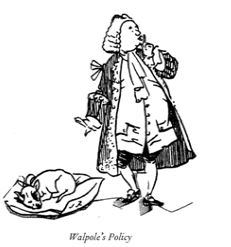
There is also a legend that credits 18th century British politician Sir Robert Walpole with the proverb, claiming that it was also his motto. Apparently, the saying does not appear in Walpole’s published writings nor does record exist of him ever saying it. Perhaps he applied some version of the phrase to his political policy, but that’s as far as he and the phrase go although a lovely little cartoon of Sir Robert exists based on the proverb.

As serious as this explanation sounds, Joe and his buddies wouldn’t have responded as a vicious dog would, but their presence still wasn’t required by the ladies.

Evolution of the Hamburg Steak

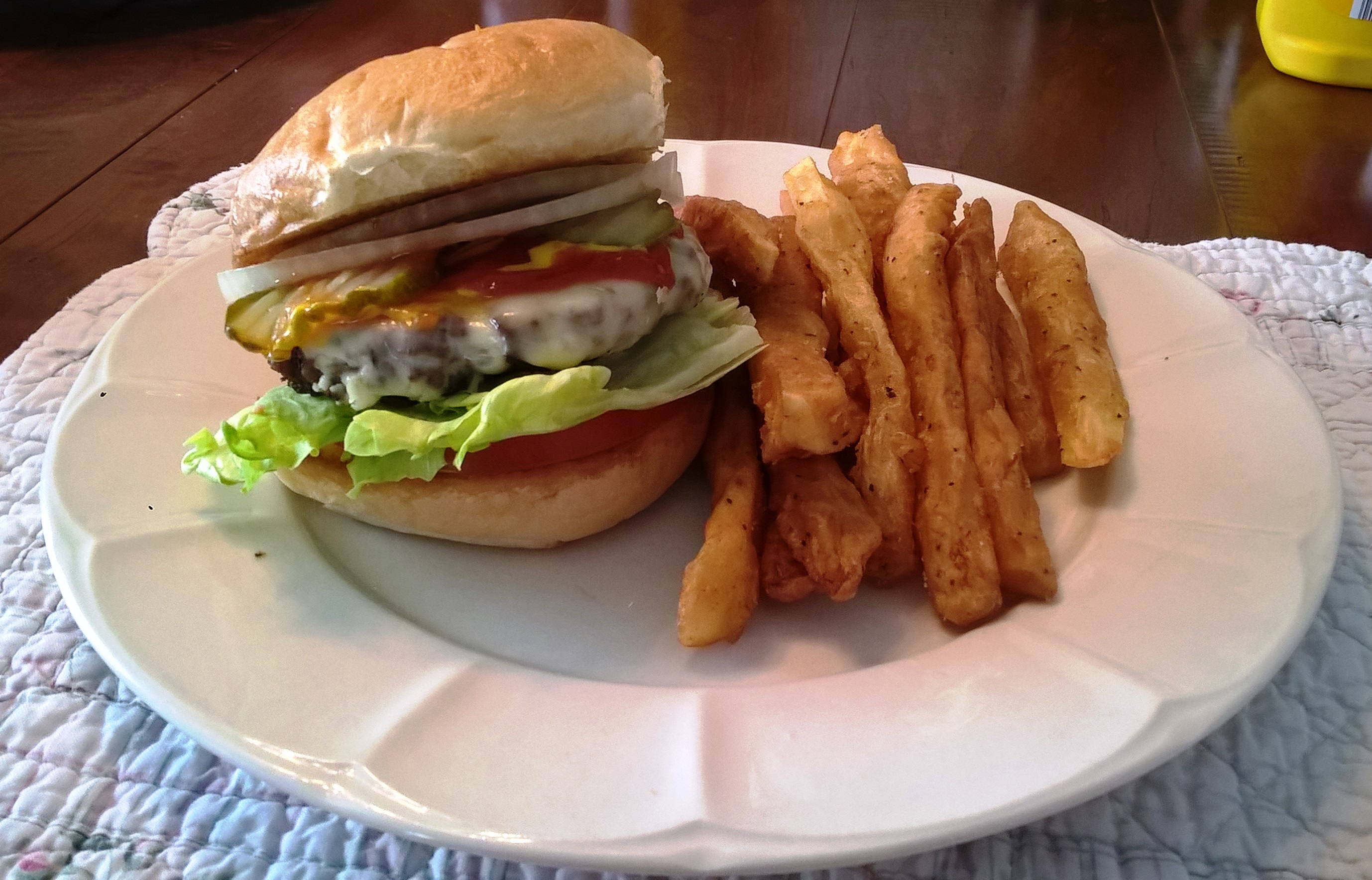
The all-American classic hamburger has is origins in a dish called the Hamburg Steak. It arrived on our sunny shores in the hands of German immigrants in the nineteenth century. These facts are of no importance whatsoever to Joe Tedesco as he takes in the mounds of perfectly grilled hamburgers Charlie Rollins and Graham Silver serve during their all-guy, neighborhood party. Joe just wants to get his hands on a couple burgers before you can say, “Pass the ketchup.”

To make sure Joe’s dining experience is memorable, Charlie and Graham season the ground chuck before grilling. I let the fellas borrow my own special blend of spices for the above-mentioned scene. It’s what I call my ‘burger masala.’ Read here (What I Like About Being an American) to discover how the seasoning recipe came to be, and then you’ll understand why an exact recipe doesn’t exist.

To feed my family and parents, I used the quantities below, but again, it’s alterable based on how many you need to serve. The variety of cheese and whether or not you use seeded buns is also up to you.

Classic Grilled Hamburgers

2 lbs. 80/20 ground chuck

6 bakery fresh hamburger buns

Butter

6 slices of cheese

Worcestershire sauce

Sea salt

Black pepper (I used ground quad-colored peppercorns)

Garlic powder

Hot Hungarian paprika

Raw sugar

Ketchup, mayonnaise, mustard, pickles, onions, lettuce or any desired topping

I started with two one-pound portions of ground chuck. I like the 80/20 blend that gives flavor and juiciness. I find that ground chuck has a ‘grain pattern’ to it much like a whole steak. Cutting across this pattern ensures that the ground chuck stays together when pattying.

Cut the 2 lbs. ground chuck across the ‘grain pattern’ into six equal portions. Place the cut side down on a cutting board and gently press down from the center with the flat of your hand. While pressing the ground chuck into a thinner dimension, shape it into a round patty with the fingers of your other hand. I prefer 4 ½ inch hamburger patties. Remember, starting with a patty larger than your bun will guarantee you end up with a hamburger that covers the bun after cooking.

Place the hamburger patties on a platter and liberally douse with Worcestershire sauce. Sprinkle them with a hearty pinch of raw sugar. Season the hamburgers to your taste preference with the garlic powder, salt, pepper, and paprika. Cover and place in the refrigerator for at least an hour. Give the hamburgers enough time to reach room temperature before grilling.

Heat a grill to high heat and cook the hamburgers to preferred doneness, flipping once to keep them from burning. Don’t press the hamburgers with a spatula while cooking. You want the juices to stay in your meat. Add slices of cheese to the hamburgers and allow it to melt. Remove the hamburgers to a platter, place them in an oven on warm, and allow them to rest.

Slice your hamburger buns if necessary. Spread each side with butter and toast them in a skillet or on a griddle until golden brown. Place the cheesy hamburgers on the toasted buns, add your favorite toppings, and enjoy!

Monkey Business

Ava Maria Tedesco is a tender-hearted girl of thirteen. While she knows that stuffed animals aren’t real, she can’t quite help but extend to them the same compassion she showers on animals, people in need of prayer, sometimes her siblings, and always her parents, Grandma Josephine, and Sister Mary Agnes. One of Ava’s favorite stuffed animals is Mr. Monkey. Unfortunately for Ava, her older sister, Katherine, knows this. Katherine only meant to kidnap Mr. Monkey for a short time to torment her younger sister, but when she hides the rubber-face stuffed toy in their mother’s dryer, all does not end well.

I based Ava Maria’s favorite stuffed toy on one I had as a child. In fact, Freddie is still packed away in my basement with all my other childhood stuffed toys even as I type. I don’t know where I obtained Freddie or how that came to be his name. I just remember being fascinated by his rubbery face, hands (one of which holds a banana), and little white shoes. Even before I can remember, one of Freddie’s shoes somehow became slightly detached from his hairy legs and had to be safety pinned in place.

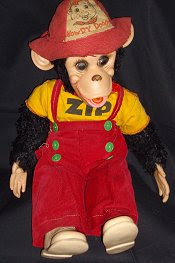
When I researched the doll for my novel, The Tedescos, I came across pictures of the one I had as well as one with the word Zip on the front of his yellow shirt. The Zip doll was the representation of the actual chimpanzee, Zippy, who was a television star in the 1950s. Zippy had been discovered by Bob “Buffalo Bob” Smith of Howdy Doody fame, and the chimp appeared on the show. Zippy also appeared on The Ed Sullivan Show, Captain Kangaroo, Gary Moore Show, and Jackie Gleason Show.

The Ruston Company made the Zip stuffed doll in response to Zippy’s popularity on Howdy Doody. Howdy Doody ran from 1947 until 1960, and while I have yet to find documentation supporting this fact, either The Rushton Company continued to produce the popular stuffed doll long into the 1970s (my childhood) or children took extremely good care of their toys. Another possibility allowing the doll to make it into the 1970s is what I call ‘the knock-off’ factor in which Zip lookalikes, such as the one I have, were produced well beyond the demise of the Howdy Doody show. Columbia appears on the tag of some of these dolls identifying them as made by another toy manufacturer.

My version of the rubber-faced monkey doll is apparently known as Mr. Bim, and he may or may not be holding a banana, have red suspenders or black pompom buttons, and have yellow or white fur representing a shirt. In 1984, Dakin produced an updated version of the Zip doll.

In addition to the stuffed monkey dolls I’ve described above, there are a whole host of monkeys in other colors of fur, with or without hats, some with different facial configurations, and more. So while my Freddie and Ava Maria’s Mr. Monkey might not be original Zip dolls, they are no less loved.

Devilishly Delicious

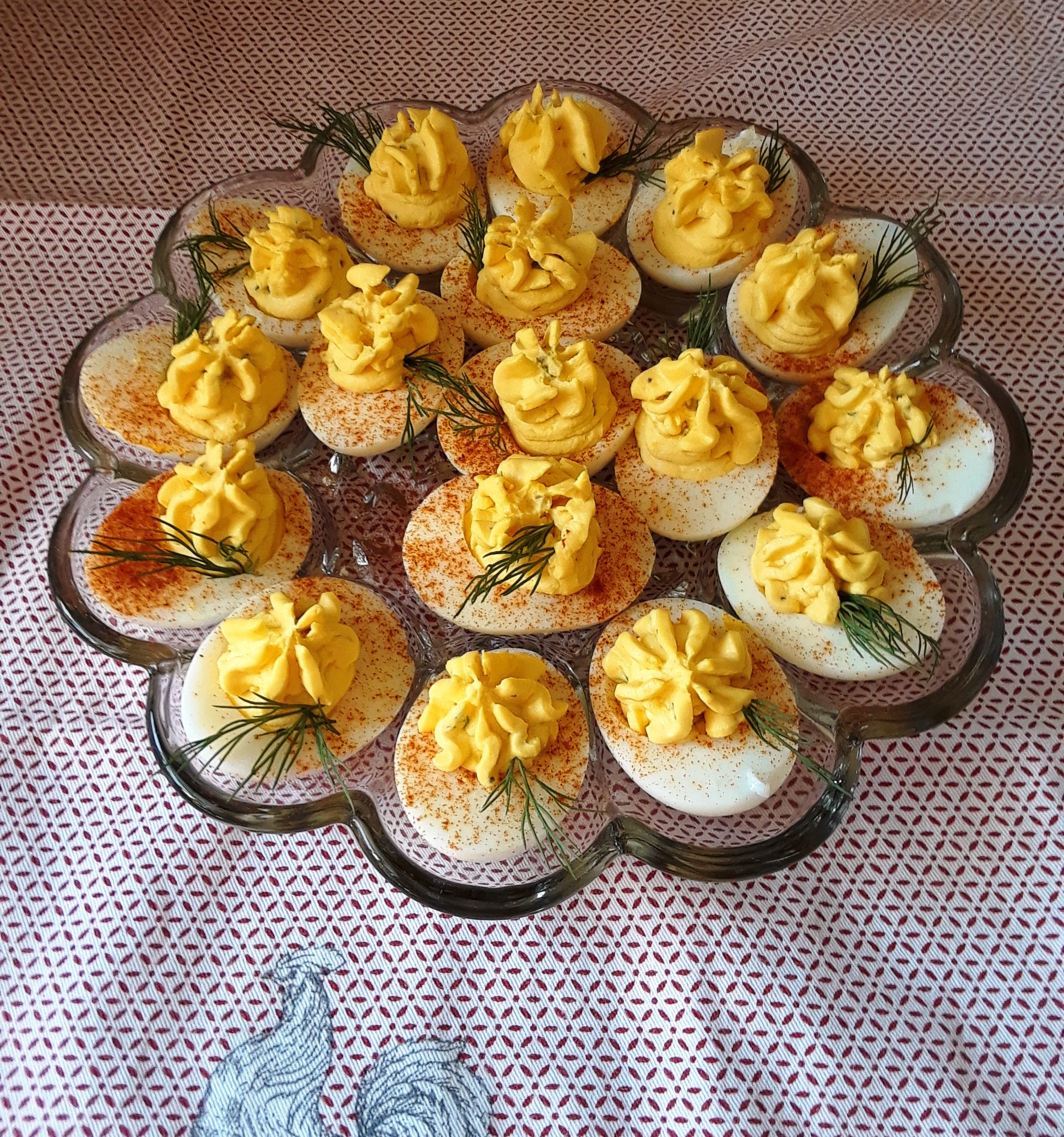
No wimpy hors d’oeuvres are the order of the day where Joe Tedesco is concerned. He’s an Italian/American version of a meat-and-potatoes man if you traded pasta and sauce for meat and potatoes. When Joe receives an invitation to the new neighbors’ all-guy bash, he assumes he’ll be served something subpar. To make sure this doesn’t happen, and to guarantee he has something he likes to eat, Joe brings a tray of Shirley’s famous deviled eggs.

The following recipe for deviled eggs is the one I had in mind when writing the above-mentioned scene. While there are a lot of great recipes out there for deviled eggs, and some of them are quite flamboyant with unexpected ingredients, I find this recipe satisfies on both the taste scale and elegance factor.

Shirley Tedesco’s Famous Deviled Eggs

12 large eggs

¼ c mayonnaise

1 T unsalted butter, left at room temperature to soften

2 t yellow mustard

2 t Dijon mustard

3 T finely diced bread and butter pickle chips ***(see below)

2 T juice from bread and butter pickle chips

¼ t sea salt

¼ t black pepper (I used table grind)

3 – 4 hearty dashes of Tabasco sauce

2 T fresh dill, destemmed and chopped

Paprika for sprinkling

Fresh dill for garnish

Most recipes for deviled eggs will tell you not to use fresh eggs (only a day or two since laying) because despite an ice water bath, the shells will stick to the cooked eggs. You’ll end up with ragged deviled eggs. While this is true, please don’t use store-bought eggs if you can help it. They are low in nutrition and have been sitting around for far too long even for ease of use in deviled eggs. I suggest eggs from a local farmer that you allow to sit in your refrigerator for a couple of weeks. Trust me, this won’t hurt them.

Place the eggs in a single layer in a large pot. Fill the pot with enough cold water to be at least one inch over the eggs. Bring the water to a boil and reduce the heat to a soft rolling simmer. You don’t want the eggs banging around in the pot. Time the eggs for ten minutes. When they are done, drain the water from the pot and refill it with cold water until you are able to handle the eggs.

Peel the eggs and gently blot excess moisture and bits of shell with a paper towel. Set them on a plate until all are peeled. Chilling the eggs will firm them up even more and make them easier to handle, but you can proceed with deviling if necessary. Slice the eggs in half and carefully remove each half of yolk from the white. Set the whites on an egg tray or the dish on which you wish to serve them.

Place the yolks, mayo, butter, two mustards, diced pickles, pickle juice, salt, pepper, Tabasco, and dill in a glass mixing bowl. Mash the yolks with a fork, stirring them into the other ingredients until smooth, and then continue with a whisk. The mixture will have a chunky texture from the diced pickles. If you desire a smoother filling, you may transfer the mixture to a food processor and blend until completely smooth.

Use a rubber spatula to scrape the egg yolk filling into a pastry bag with a star or round tip big enough to allow the bits of pickle to pass. (You can also substitute a plastic storage bag with the corner cut or create a piping bag out of parchment paper.)

Sprinkle the whites of the egg with paprika. Pipe the egg filling in a spiral into the empty whites. Garnish each egg with a piece of fresh dill tucked into the egg where the filling meets the white. Chill in the refrigerator at least 30 minutes before serving.

Enjoy!

***When choosing sweetened pickled vegetables, there are many choices on the market. Unfortunately, most have high fructose corn syrup in them. Try a farmer’s market that sells products with recipes closer to home-canned goods. I’ve had great success in such stores.

Bad Medicine

One of the weirdest things I had to research for my novel, The Tedescos, was the song “Witch Doctor.” I checked first of all to make sure it had been released before my story took place. The song, performed by Ross Bagdasarian Sr., was released in 1958 by Liberty Records. Bagdasarian is better known by his stage name David Seville.

The song peaked at number one on the Billboard Top 100 and was considered a surprise hit on the chart. “Witch Doctor” became David Seville’s first number-one single and held this position for three weeks. The single sold over one million copies in the United States and finished at the number-four spot on Billboard for 1958.

The ridiculous song tells the story of a man in love with a woman who does not feel the same way about him. In an effort to secure her affections, the man visits a witch doctor for advice. The witch doctor replies with the now-famous refrain, “Oo ee oo aa aa ting tang walla walla bing bang.” This phrase is repeated throughout the song with the alternating endings of “bing bang” and “bang bang.”

And let me tell you, there is heated debate to this minor detail. Some people will sing every line of the witch doctor’s comments as “bing bang” while other sticklers for detail will insist upon singing it the correct way as “bing bang” the first time followed by “bang bang.” I actually watched the video of David Seville singing the song, my eyes narrowed in concentration to read his lips, just so I could settle the dispute.

The witch doctor’s voice is Bagdasarian’s own voice sped up to double speed. This technique was later used when Bagdasarian, as David Seville, created Alvin and the Chipmunks.

Grandma Josephine Tedesco borrows the witch doctor’s famous line when her youngest son, Danny, involves her in a crazy, money-making scheme. Because Grandma Josephine isn’t always aware of what she’s doing, she’s given a pass. However, Danny does not fare so well when his older brother, Joe, finds out he employed their mother in shady business.

Since I don’t want to be the only one with this annoying lyric stuck in my head, I have provided a link to Ross Bagdasarian/David Seville singing “Witch Doctor” on The Ed Sullivan Show.

Nice to Meat You

Joe Tedesco likes his neighbors… as long as they keep the grass mowed and don’t throw loud parties. These standards, to which Joe himself conforms, are most definitely kept by the new neighbors, and yet they still cannot win over Joe to liking them. In a last ditch effort to secure the head of the Tedesco Clan’s friendship, they invite Joe and all the men from the neighborhood over for a party.

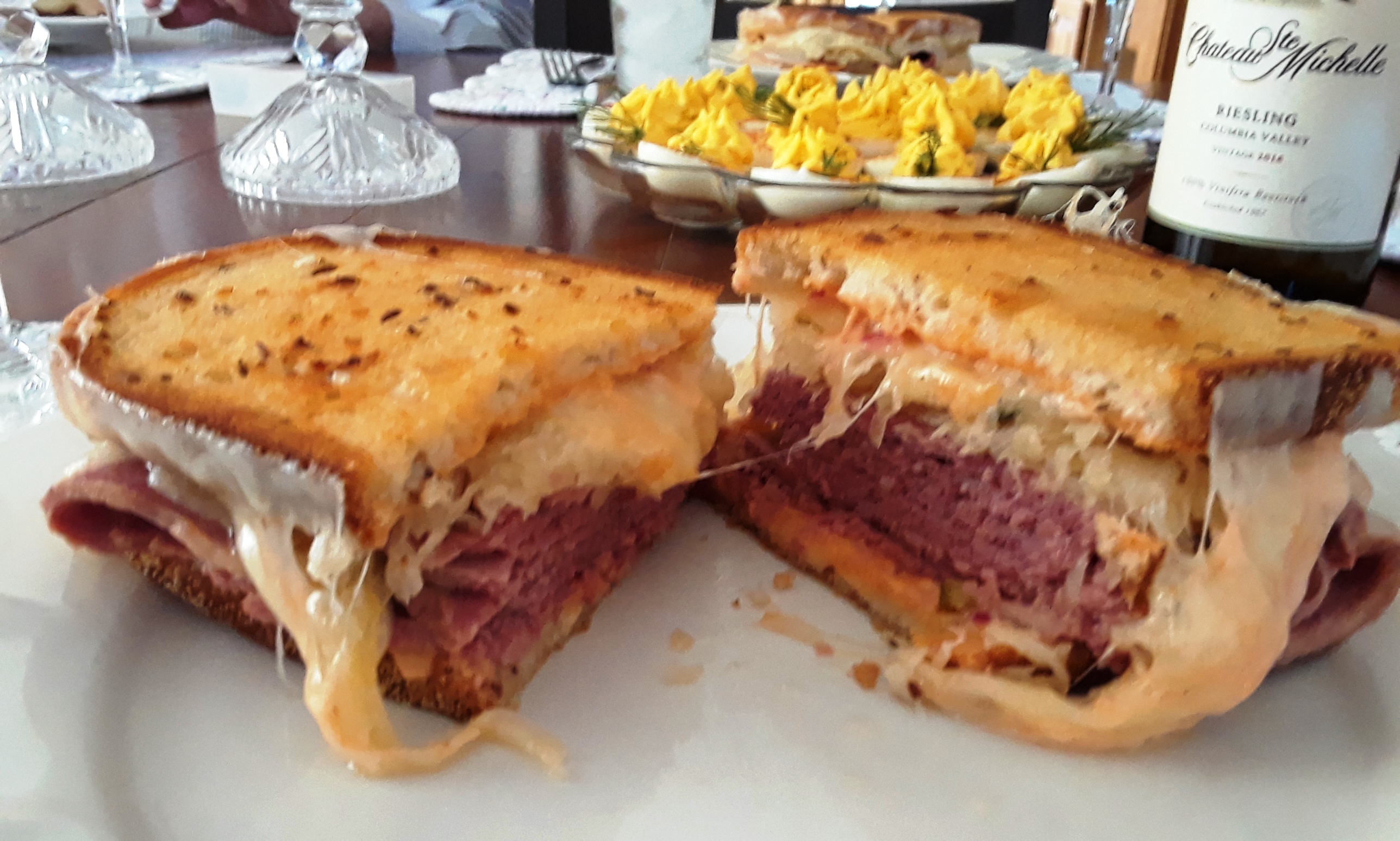
The new neighbors are clever and know the way to Joe’s heart is through is stomach. The menu they plan is spectacular and includes the following recipe for classic Reuben sandwiches. These babies are mammoth and worth every savory, saucy bite, so don’t skimp on the corned beef.

Classic Reuben Sandwich

2 lbs. quality corned beef, thick sliced

1 pound Swiss cheese

12 slices Jewish Rye

16 oz. jar of sauerkraut

1 McIntosh apple, peeled and diced

1 – 2 T brown sugar

¾ c apple juice

Salt and Pepper to taste

Unsalted butter, softened


Russian Dressing

½ c mayonnaise

2 T ketchup

3 T finely diced bread and butter pickle chips ***(see below)

2 t finely diced red onion

1 clove finely minced garlic

¼ t sea salt

3 – 4 hearty dashes Tabasco sauce

Whisk all ingredients together in a bowl, cover, and chill in the refrigerator. The dressing lasts for three days stored in this fashion. I recommend making the dressing at least one day in advance to give the flavors time to meld.


To prepare the sauerkraut:

Empty the jar of sauerkraut into a colander and press out any remaining juice. Place the drained sauerkraut in a saucepan with the apple, brown sugar, apple juice, and salt and pepper to taste. Bring to a boil and reduce heat to low. Simmer until the apple is tender. Turn off the heat, cover, and leave on the stove until needed for sandwich assembly.


Preheat the oven to 350° F. I opt for thick slices of corned beef because I find it keeps the sandwiches from sliding around on the bread.

Create a foil packet and place the corned beef inside. Place the packet on a cookie sheet with edges. Add 3 T of water to the packet and seal the meat inside. Put the baking sheet with the foil packet on it in the oven and bake for 8 – 10 minutes.

While the meat bakes, spread one side of each slice of bread with softened butter and toast the buttered side in a cast iron skillet. Transfer the toasted pieces to a baking sheet with the buttered side down. Spread the Russian dressing on the untoasted sides facing up. On six of the bread slices, layer pieces of corned beef, making sure to drain any moisture, until the meat is evenly divided. You may need to fold your corned beef slices in half to make them fit. Place a hefty portion of well-drained sauerkraut on top of the corned beef. Top off with a slice of Swiss cheese. On the remaining six slices of bread, place another piece of Swiss cheese.

Pop the sandwiches into the oven and toast for three minutes or until the Swiss cheese melts.  Remove from the oven and match up the corned beef, Swiss, and sauerkraut side with its Swiss cheese only mate. Give a gentle press to hold it all together. You may wish to cut it in half. Serve immediately.

Enjoy!

***When choosing sweetened pickled vegetables, there are many choices on the market. Unfortunately, most have high fructose corn syrup in them. Try a farmer’s market that sells products with recipes closer to home-canned goods. I’ve had great success in such stores.