Tag Archives: Creator

Strike That Spark!
The eight days of Hanukkah celebration this year were amazing as we filled them with love, laughter, and light! Read any of my posts from the past week, and you’ll see what I’m talking about.
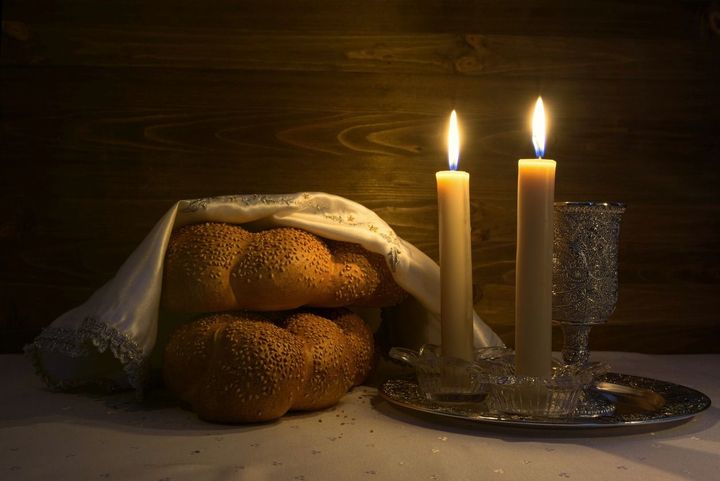
We also had the pleasure of extending our celebration an extra day when we dined with our dear friends, Doug and Jeanette Nelson, for Erev Shabbat. What a lovely evening that led to a most peaceful and restful day of attending services and coming home to relax.
Naturally, Havdalah followed, and as I extinguished the candle in the poured-out wine, I thought to myself, “Okay, what’s next?” Surely, I need to be baking bread, mulling wine, or at the very least, making a grocery list! But no, everything had come to a glorious, satisfying conclusion.
My husband and son were out of the house, so I sat down at my laptop and whiled away the time creating an ‘80s playlist on YouTube. It may sound like a terrible waste of time, but I love the memories that are attached to my favorite songs, and I dredged more than a few that night. Besides, music is the backdrop of my life for just about everything I do.
The next morning is when it really hit me that I was free to resume daily life. Allow me to rewind a bit at this point to say that I set aside my writing during Hanukkah because trying to maintain both would be impossible, and I was devoted to making Hanukkah great this year. We really needed the light and still do!
Permit me to go back even further to say that depending on when Hanukkah begins, my mother and I begin planning elaborate celebration about two to three weeks prior that require lots of shopping and preparation. Not that we mind because what follows is terrific, but I mention this because now that it’s over, I need to find a way to slip back into my good habits of writing.
I’ll start slowly with something easy like the “Thank You” notes I need to write. The little notes may not seem like much, but it’s important to express gratitude at every opportunity. I love to ponder mine for a moment to make sure I’m conveying my deep appreciation in the small space provided, using the very best words this writer can conjure to do so.
Then I dig deeper and write a blog post such as this one. It’s a great way to organize my thoughts into intelligent, interesting comments that I hope my followers will enjoy reading. There’s a story here but also tips for my writing friends on my method of jumpstarting the creative juices, tapping into my writing muse, etc.
As mentioned, music is an important part of my life but very much so when applied to my writing. Classical music wakes my brain and provides a general soundtrack, so to speak, until I reach the point where I’m ready to dig into my current WIP.
A specific inspirational playlist must be cued, preferably a long one, as I pull up the last two or three chapters of my WIP and the document titled Next Chapter Notes. I start by re-reading what I wrote, never assuming I remembered everything perfectly, and then I edit a titch and/or double check my notes to make sure I included everything in the past chapters before I set my face forward, open a black document, and place my fingers over the laptop keyboard.
Sometimes more notes come out, which will be transferred to the main note-keeping document, and sometimes the actual writing flows, whether as dialog or prose is anyone’s guess. In either case, I’ve successfully resumed writing.
Three to five cups of tea will be enjoyed during however long I give myself toward the day’s writing. I’ll complete a few chores when I need a physical and mental break. I graze until I need to make dinner. And mostly importantly, I thank Adonai for whatever amount of writing I achieved for the day.
I’ve written upward of a thousand words in one session that lasted an hour, and I’ve fought for a mere three hundred over the course of the entire day. Both are deserving of praise not because I did something miraculous but rather because I was afforded the opportunity to create in imitation of my Creator.
There are obstacles to overcome during this process (for me the biggest are guilt over not doing something I think might be more important than writing and playing on social media), but the understanding of what I’ve been given by Adonai, as mentioned above, and my dear husband (time to write without having to work an outside job) places me squarely back on track. I will not squander this precious gift.
And so, dear followers and writing friends, I offer this simple advice on how to relight the spark of your writing, or any task, and I bid you farewell as I return to my own endeavors.
Share this:

Quotation Station
Shabbat Shalom to all those imitating the Creator by making great art!

Let me know in the comments what
you created this past week.
Share this:

Quotation Station
Shabbat Shalom to all the creatives making great art by imitating the Creator!

In observing the Sabbath, one is both giving a gift to God and imitating Him.
~ Lauren F. Winner
Share this:

Mary Shelley’s Frankenstein
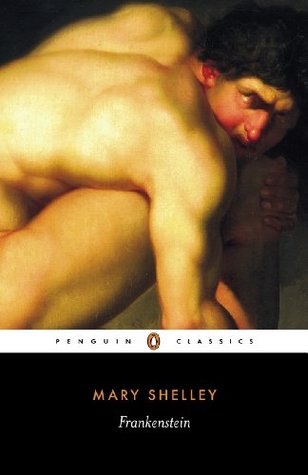 I recently read Mary Shelley’s Frankenstein as a requirement for my classic literature book club. It was my first time reading the book, and I looked forward to it. As I approached the story, I knew better than to compare it to the Boris Karloff version of the movie by the same title. I’ve only viewed portions of the movie, and from what I’ve seen, I’m pretty sure I didn’t miss anything.
Of course, there was the Kenneth Branagh version of Frankenstein that I watched years ago. I recall the movie seemed classier, and it had Mary Shelley’s name in the title, so perhaps it was more closely linked to her original tale. Prior to reading the novel, my only other experience with Frankenstein was during my senior English class in high school. The teacher mentioned that Mary Shelley wrote the story as part of a competition with her husband, Percy Bysshe Shelley, and friend, Lord Byron, to write a ghost story. From Mary Shelley’s efforts, the novel was born.
With all this build up, I launched expectantly into Shelley’s biography at the beginning of the book. She had an unfortunate life full of tragedy and was a husband stealing adulteress. I kept in mind that the last fact should have no bearing on her writing. I did, however, tuck away her comment that people often asked her how a young woman could have written such a tale. I didn’t find it difficult to believe that a young woman wrote the book; the novel gushed on and on with a relentless amount of filler. In tone and passion, it matched the sappiest of poorly written romance novels. Truly, Mary Shelley had written a horror novel.
I suspect Mary Shelley’s overinflated belief in her ability to write was influenced by her sphere of acquaintances. Her parents were prominent writers and philosophers (her mother died shortly after Mary’s birth but left behind quite a legacy), her husband and friend (Lord Byron) were well-known writers, so why not give it a whirl herself? I must admit that Frankenstein is the only work by Mary Shelley I’ve read, but based on what I encountered, I am not motivated in the least to seek out her other writings. Feminists everywhere are probably damning me right now.
Led around by the nose is the phrase that kept coming to mind as I read the book. Mary Shelley obviously had a point she wanted to make, but she didn’t allow her readers to arrive at this point on his or her own. Victor Frankenstein was meant to be disliked and the monster pitied. I believe her intent was to make us wonder who the real monster was.
I kept hoping that Mary Shelley would raise the Creator vs. Creation issue because I would have enjoyed arguing that subject as I read. After all, Victor Frankenstein as the imperfect Creator would have made for a wonderful debate. Instead, we’re given a pathetic, weak man who repeatedly saves his own life over those he claims to love. I still don’t know why he suddenly rejected his own creation. We’re expected to suspend belief and simply accept that he did.
As for the suspension of belief, prepare to do so over and over and over again. The most unforgiveable place I found this to be true was in the  creation of the monster. Mary Shelley didn’t do her research as far as I’m concerned. She didn’t provide any method of preservation or refrigeration for the body parts and briefly mentions decay. Still, we’re expected to believe that Frankenstein built a human in a rented room in the middle of town. She glosses over the part where the creature is brought to life by having Frankenstein refuse to tell Captain Walton how he did it to prevent the sailor from making the same mistake. As a writer, I know that’s a major faux pas. Perhaps it was more acceptable when Mary Shelley wrote.
It’s a toss-up who fluctuated more in character: Victor Frankenstein or The Monster. Frankenstein’s resolve wavered every time he decided he was going to deal with his creation, and right on cue someone he loved would die by the monster’s hands because Victor’s spinelessness reasserted itself yet again. It was dangerous to be loved by this man, and I do not buy into the belief that he was helpless to stop the monster’s rampage.
The monster was intelligent enough to grab clothes upon fleeing Frankenstein’s rooms, learn language and reading in about a year, quote Percy Bysshe Shelley, Lord Byron, and John Milton’s “Paradise Lost,” but couldn’t discern his own feelings or come up with better plans for inserting himself into society. From the last two incidents, we’re supposed to believe the monster was a victim.
And when, exactly, did Frankenstein’s creation become a monster? In my opinion, it was when he refused to extend the grace he sought from humanity. In his unjustifiable rage, he lashed out not only toward those whose company he sought, but he hurt innocent bystanders as well (ex: burning the cottage punished the owner when the creature was rejected by De Lacy, Felix, Agatha, and Safie.) I could not find him pitiable, and it was not his right to act accordingly.
I could continue with issues such as why the monster possessed supernatural strength, how the scenes were predictable, the presence of too many coincidences, and how the character arcs read more like character cliffs. Since I haven’t read what the feminists believe Mary Shelley’s intent was for her novel, I’ll not enter that debate.
Instead, I’ll sum it up with the question of what makes a classic. If shock value for the era in which a novel was written qualifies, then a certain book in fifty shades is destined to become a classic in about one hundred years. Or does a book become a classic by the fact that it was written by an anonymous author who turns out to be the opposite sex from what we expected? All this did for me was present Mary Shelley starring in the role of Victor Frankenstein. (If you’re going to write an opposite sex character, try to make them masculine or feminine as is required of said character.) Don’t forget popularity and sales; they lend high regard for a book in the opinion of many people these days.
I’m not sorry that I read Frankenstein because now I can say I know for myself, but I cannot recommend the book as either well-written or worthy of being called a classic.

 hl gibson, author