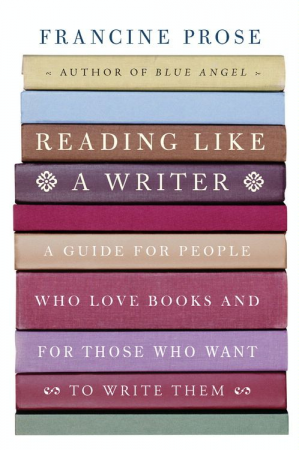
Reading Like a Writer by Francine Prose

I first spied Francine Prose’s book, Reading Like a Writer, while shelving at my former job. I sneaked a few moments to read the first few pages and Reading Like a Writerinstantly fell in love. The sentence that resonated with me, “Like most–maybe all–writers, I learned to write by writing and, by example, by reading books,” combined with, “Long before the idea of a writer’s conference was a glimmer in anyone’s eye, writers learned by reading the work of their predecessors,” confirmed for me that I had found a kindred spirit. Her passion for reading and writing and the process of learning by indulging in both was the best piece of advice I had ever heard. Mrs. Prose’s comments awakened in me what I always believed to be true: great writing is an organic process that comes from creating beyond outlines and plot-pointed structures with perfect character arcs.
Great writing begins with close reading and follows with careful consideration for every word that will become a sentence, which will become a paragraph. This isn’t to say that Mrs. Prose or I believe writing should be utter chaos without any structure, but I trust if one applied her approach to their own writing, he or she would see amazing growth in how they create characters, employ narration and dialogue, and present details and gestures.

Woven throughout the book are examples from great writers that will back up what Mrs. Prose is teaching. You don’t need to be familiar with these authors or their works to appreciate them. Another reviewer I read proclaimed his dislike for Mrs. Prose’s book because he didn’t know any of the referenced works. I suspect he thought Mrs. Prose was being pretentious; I encourage you not to be intimidated by her knowledge but rather delve into the suggested reading list as soon as possible.

Another aspect of the book that appealed to me is Mrs. Prose’s admission that while there are rules in writing for the express purpose of guiding us, rules are, essentially, meant to be broken. And if you’re brave enough to ride off the reservation of writing rules, make sure you’re breaking them brilliantly.

Regardless of your preferred writing style or approach thereof, I highly recommend reading Francine Prose’s book. I would be truly surprised if you didn’t take away something positive from the experience.

Description-A Writer’s Friend or Foe?

dearada_typepad_com_dear_ada_images_2008_01_15_experience_261_artFellow author Mark Tilbury tossed out a question that is often on my mind as a reader and writer. In his post, Have Books Lost Something With Their Lack of Description, Mark asks us our opinion on today’s style of writing.

We’ve all encountered the “massive blocks of descriptive prose” to which Mark refers. Sometimes they truly are too long, too irrelevant to the story, too purple, etc., etc. I have skimmed such passages in search of the storyline and/or dialog that would put me back in the story.

However, because we’re all friends and adults here, I’m going to say that I disagree with the notion that description is informative but unnecessary. I hear all the time that the reader shouldn’t be led around by the nose; he/she should be given the opportunity to imagine the story. As an avid reader, I can honestly say that I have never felt this way about descriptive writing. On the contrary, my imagination was enhanced and grew because of the description I read including that written about journeys and the passage of time.

The key is that writers need to learn the perfect balance between too much and enough, the fine line between well-written, well-placed prose versus that which is encumbering, unnecessary. This seems like a daunting task, but I believe it can be achieved by not reducing writing to a formulaic method. In doing so, authors will elevate writing back to the level of artistic recognition it deserves.

85806_Ashford_1_122_526lo_122_526loI have never read Stephen King’s book, On Writing, but I would have to agree that abundant description about a character’s acne would be tedious. If that acne-plagued character traveled by canal boat from Pennsylvania to Ohio, then I would love the benefit of description. I would look forward to a word picture painted by the author that draws me in to the sounds, smells, and sights of the trip. It would be a perfect place to introduce traveling companions, a time for the protagonist to reflect, an opportunity to build the tension that so deliciously moves the story forward.

Even if none of the above-mentioned suggestions occur, as a reader I would still enjoy the mental images of traveling with the character, and I believe an important part of the writing would be lost if these well-written descriptions didn’t occur. As Mark mentioned in his post, they are an art form unto themselves. Like all art, value thereof still resides in the eye of the beholder, or in this case, the reader. Well-written description can exist purely for the sake of entertainment.

I have to wonder if writing hasn’t gone the way of food preparation in that we no longer know how to linger over a book in the same way that we forego multiple course meals and choose to patronize fast-food restaurants. I read because I enjoy the slower pace, and while there is a place in my fa9bbdedb5103e7f31a0893eff84ed56reading diet for the occasional literary Big Mac, more often than not, I opt for the balanced meal of description, dialog, prose, and narrative.

Now I don’t want to start a fight with screenwriters because I truly do appreciate their craft. However, using what worked in an action-packed movie and applying it to writing has resulted in fast-paced novels written with the singular hope of being turned into a movie. This has diminished writing for some of us. This influence has led to the removal of poetry and painting (mental images) from writing resulting in flat, hollows stories. Let movies be movies, appreciate them for all that they are; and let books be books, treasures not to be rushed through.

Baring My Writer’s Soul – Part 6

untitled (8)I struggled a bit with chapter two of Page After Page because I couldn’t relate to the exact experiences Heather Sellers presented, and her advice seemed to contradict other things I’ve been told, most specifically regarding social media. While she didn’t address social media directly, what she proposed would require a noticeable change in how I handled the various aspects of my author platform.

Rather than allow my resistance to flare, I decided to go forward with closing the gap between my writing life and the rest of my life because I am a writer, plain and simple, whether or not I’m published, all the time, period. I’ll do this by drawing on all the positive writing and reading experiences, thus quelling my fears and doubts. This will be an ongoing process for me. At least I know how to seek out and find quality input.

As for conserving my energy to write, that’s going to require a step back from social media. What an unusual request when we live in an era that is all about social media. How can I build/grow/maintain my author platform if I’m not tweeting, posting, honking, and tooting my own horn, shouting, “Hey, look at me! See what I’m writing?” Whose advice do I take?

Let’s consider the point Ms. Sellers makes when she says that talking about writing all the time means you aren’t actually writing. That’s true. Then there are all the stats on social media to gauge how well we’re liked, or not, which can really make or break one’s confidence. I decided to trust Ms. Sellers and withdrew to a safe distance.

The first couple of days felt as if I didn’t have anything to do. I picked up my pen and wrote, and I listened to the voices of the characters in the book I’m reading, and I treated myself to two new writing books, and I read, and I wrote, and I scratched out what I had written, and I listened to the instruction presented in my new writing books, and I wrote some more.

The best part is I don’t have to tell you what I’m writing; that’s for me. What I will share with you is that Page After Page, Story Trumps Structure, and Fiction Writing Master Class have been phenomenal in breaking through my resistance and writer’s block.

The positive momentum kept me moving forward. In addition to my writing group, I joined a book group online and at the library, and I will be attending two “Meet Your Local Author” events. I know this is going to further enhance my writing because I’m all about the tactile experience.

Never fear, though. I shall not abandon my blog. I’m just tweaking the focus to build a community of reading, writing, interactive friends whose presence in my life goes far beyond that of just follower.

Write Happy!

My Love Affair With Books

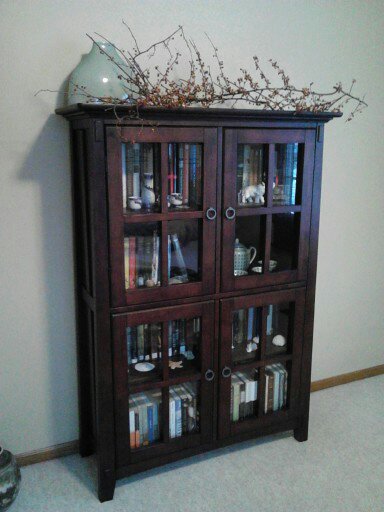
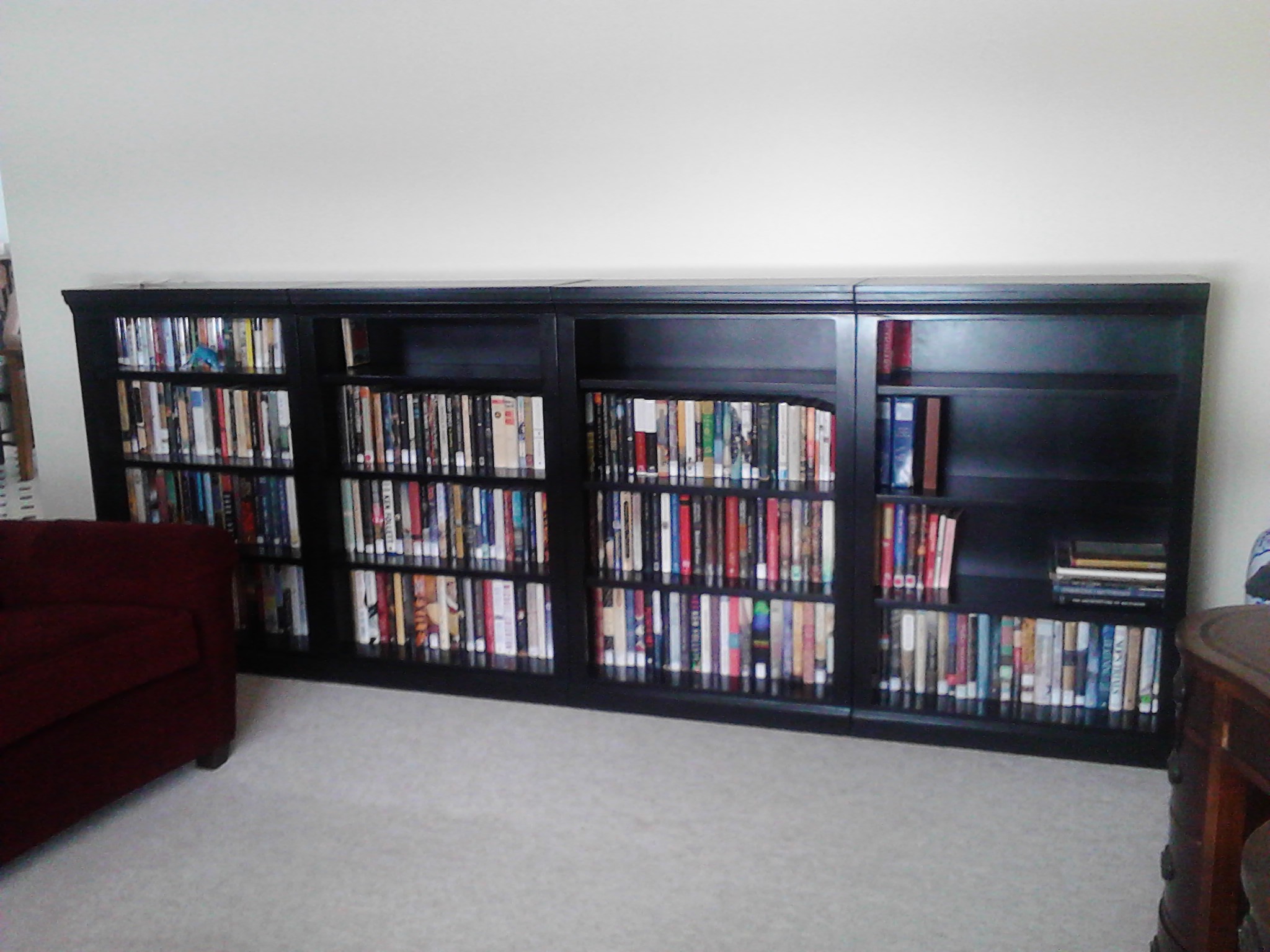
Bookcase of books I've already read.

Bookcase of books I’ve already read.

Long before I became a writer, I was a reader. I still am. I remember the exact moment my love affair with books began. My mother set the stage by taking me and my brother to the library and checking out the very best picture books. She always managed to find interesting stories combined with fabulous artwork. She read to us in a soft yet commanding voice, often in character, and her tone never condescended no matter how simple the story.

Mom further instilled my love of books when she started my own little library purchased from various book clubs listed in the back of children’s magazines. I still have my entire collection, and when I married, I inherited all of my husband’s childhood books. Score!

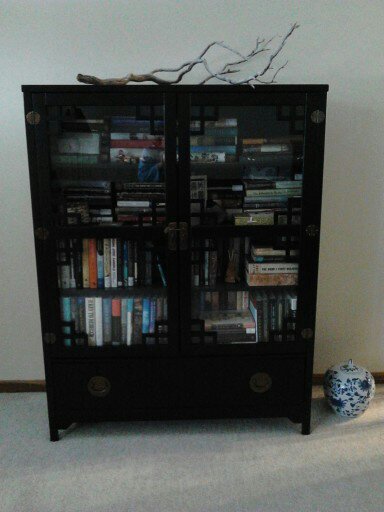
Newly acquired shelves to hold my growing collection.

Newly acquired shelves to hold my growing collection.

Still, it wasn’t until the third grade that I discovered for myself what a treasure a book truly is. My best friend at the time proposed a contest in which we would check out the same book during library time at school. Then we would race to see who could finish the book first. Our selection was Laura Ingalls Wilder’s Little House in the Big Woods. I trusted I would enjoy the book, but admittedly, my competitive side prompted me to read and win.

Determination to finish first meant that the book went with me to a sleepover at my cousins’ house. While all the other kids played football in the street, I stayed inside and read. In my defense, I wasn’t missing much; it was only football.

So many books, so little time.

So many books, so little time.

Something happened as I sat curled up on my aunt’s couch. The story opened up for me in a way that previous books never had. It’s not that I hadn’t read on my own prior to this or that other books weren’t as good. I remember the wonderful feeling I experienced when my imagination blended with visualizing the story in my head as I read the words on the page. Excitement almost distracted me when I realized how much I loved reading.

Literacy and Democracy

Reading and writing, like everything else, improve with practice. And, of course, if there are no young readers and writers, there will shortly be no older ones. Literacy will be dead, and democracy—which many believe goes hand in hand with it—will be dead as well. ~Margaret Atwood

Since I began working at the library, I have seen a decline in the quality of books for children and teenagers.  I have even witnessed a decline in the value of those being read by adults, and it shocks me.  There is very little worth in the written word lately.

My concern is that authors aren’t putting out their best work for the sake of their readers.  I find it hard to believe that some writers are actually proud of what they are producing.  Rather, it seems as if turning a quick buck is the goal.  Again, this is cause for concern.

As a writer, I lay this burden at my own feet first.  My goal is to write a book that will engage my potential audience.  I dream about my novel becoming a classic, but, at the very least, I want to give readers something to chew on mentally.  Even if I create a book that’s just a good story, I work to make sure it’s well written.

What we feed our minds is as important as what we feed our bodies.  I’ll admit that I love a good dessert as much as the next person.  However, even desserts come in varying degrees of quality.  Then again, so does much of what we eat to sustain ourselves.  What I mean is, a diet of garbage from fast food restaurants isn’t going to provide what our bodies need.  I could probably live a better life eating my mother’s homemade desserts all the time, not that I would.

The same is true with what we choose to read.  I can’t fill my mind with endless garbage and expect to increase my knowledge and/or awareness of the world around me.  Too much cotton candy for the brain will render me useless.  I’ll die without anything of value to read.  This is the point where someone will want to debate who assigns value to what is being written and read.

But just for a moment, let’s be logical.  A steady stream of unintelligent reading is harmful.  Like cotton candy, it’s fun for the moment, but it won’t sustain you.  Train your brain to crave the weightier reads the way you teach your body to desire healthy food.  I promise you, there are no negative side effects to nourishing your mind.

As for the link to democracy, even if someone lies to you about a situation, you will know better because you took the time to read and find out.  You will not be led around by the nose.  You’ll be mentally strong enough to meet their attempted deception head on.  You will understand what is being said to you.  What’s more, you’ll be prepared to fight back.

So I implore you:  seek out quality reading.  Treasure it and share it with the upcoming generations.  Write the very best you have to offer.  By providing worthy literature, poetry, screenplays, etc., you will leave a foundation for the youth.  In return, they will know how to take care of you in your golden years as well as prepare for the generation coming up under them.

Dripping Ink – Questions for Self-critique

The Writer Has the Last Word

It is my very great pleasure to share an article by Caroline Totten of The Greater Canton Writers’ Guild, Inc.  The following article was featured in the September newsletter.  Information regarding the Guild can be found at:  http://cantonwritersguild.org/

Dripping Ink by Caroline Totten

Questions for Self-critique

Do your demons imitate the gods by grabbing and holding attention? (Your demons are ideas that keep poking you in the eye. If the idea arouses laughter, tears, paranoia, fright, curiosity or indignation, etc., you have acquired a point of view, which may boil into a plot.)

Does the plot offer an opportunity to provide fresh insight into the theme? (Ideally, the plot begins with a distress signal in the middle of the story. The action is already in progress and tinged with an emotional element in the main character. Usually, the setting fits the character and supports the viewpoint.)

Is the character(s) consistent in the context of the plot? (Draw the emotional tone from your personal experience and place it in the persona of the protagonist, the main character. The conflict may be psychological, physical, or ideological, or a combination of these elements.)

Here are a few aspects of the reader/author relationship to keep in mind. By being a writer, or hoping to become one, your entire self becomes an instrument to observe and record human experience. When you extrapolate heartache, joy, fear, whatever, and put them into your character, you are actually putting the reader in touch with his emotions. (Numbness, repression, or suppression are emotional factors.)

Psychologically, mystery, or suspense stories excite the mind of the reader.

Horror stories, by a circuitous route, help the reader release his fear.

Adventure stories encourage bravery.

Love stories release hormones that tenderize the heart.

Fantasy encourages imagination by offering another way of perceiving the resolution of conflict even though at the outset, the reader may be looking for escape.

Humor may release attitudes that might otherwise be socially rude or crude.

Actually, stories that contain violence, corruption, and greed may contribute to the reduction of these elements and/or act as a catharsis for the reader.

Reading fiction is not an idle past time. Its factual component may differ from nonfiction, but the result is similar. The point of view alters the reader’s perceptions.   Effective writing heightens awareness of the subject by allowing the reader to participate in the physical and mental experience of the character. Most effective stories show the character in action. In some cases, “thinking” by the character rather than dialogue or confrontation may be the entrance into a story. The approach depends on the genre, your style, and editorial desires. (At times, magazine and book editors don’t know what they want until they see it.)