A First Good Day

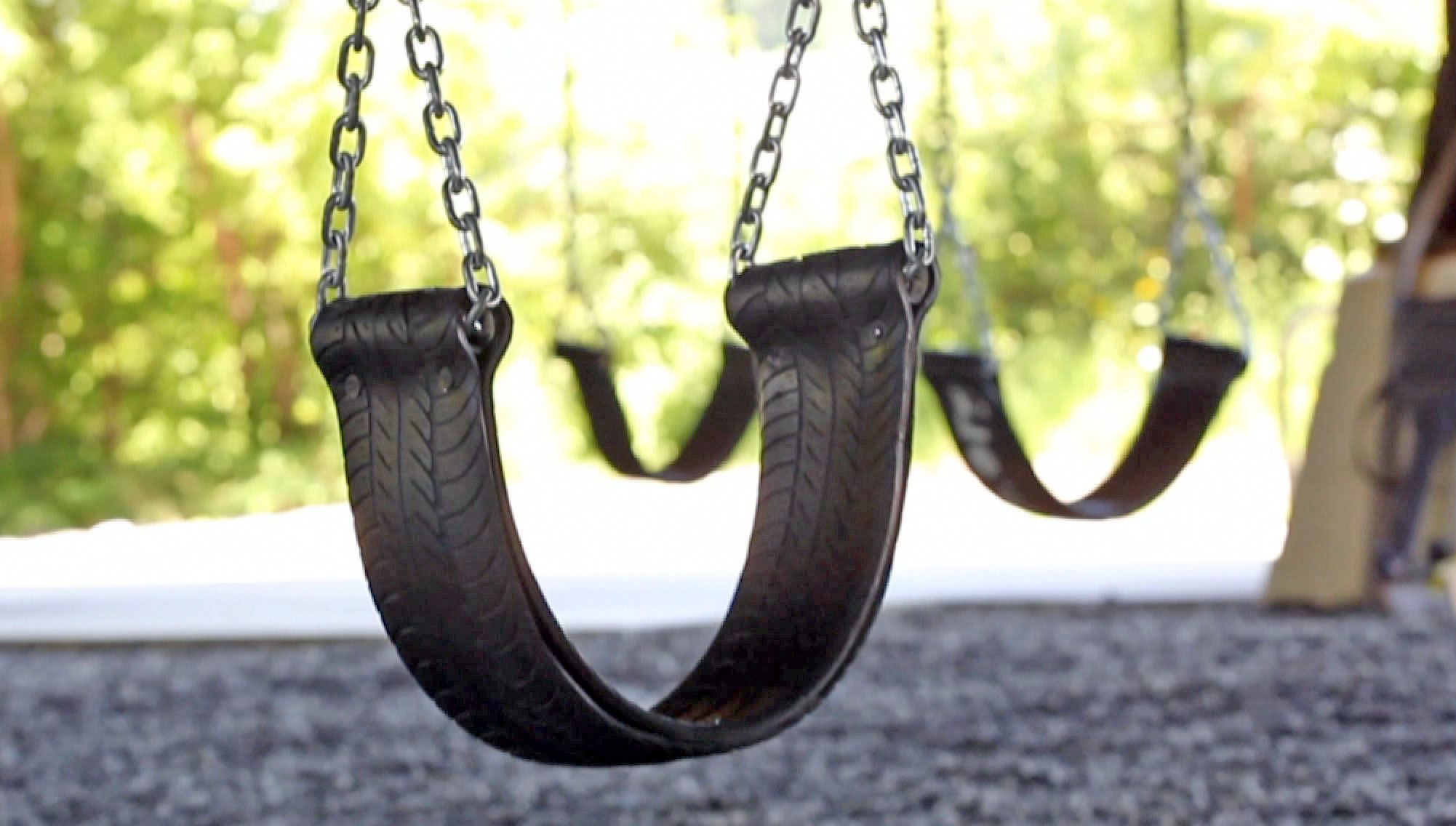
Some of the new swings are seen. A total of 11 new swings have been installed. SWINGPARK - The new swing park near the corner of East Brady and North Water Streets beneath the N. Holton St. Bridge on Wendesday, July 23, 2014, included newly designed swings that are a collaboration between the City of Milwaukee, the Brady Street BID #11, and the grassroots organization beintween (Òin betweenÓ). Beintween installed swings at the site in Fall 2012. When the swings fell into disrepair, they were removed by DPW in Fall 2013 as a safety precaution. The agencies worked together to redesign and rebuild the swings using recycled materials including rubber tires, metals and wood. A total of 11 new swings have been installed, including a set of baby swings and a metal swing that is ADA accessible. The cushioned ground beneath the swings has also been replaced with shredded rubber tires, and new lighting has been installed for a safer experience. Photo by Mike De Sisti / MDESISTI@JOURNALSENTINEL.COM

Angie sits on a swing, swaying gently and trying not to catch her skirt in the chains. Her flats are placed firmly on the shredded rubber mulch, the new favorite material to cushion falls at the playground. All around her children laugh and squeal, running from swings to slides, rock wall to climbing rope, sand box to wooden fort. Mothers cluster on benches in the shade of meager trees, some pushing a stroller with a drowsy baby back and forth, back and forth. A trickle of sweat slides between Angie’s shoulder blades.

She’s not sure where she fits in. Part of her identifies with the little girls playing house, carrying their baby dolls by the neck in the crook of their arms. They sequester themselves in the tower of the fort until the little boys invade wielding invisible lights sabers and threats of feeding the dolls to the Sarlacc. Angie has experience disrupting homes. As for the prom princess mall mavens, the only thing they have in common with Angie is the fact that they, too, have given birth.  She is smart enough to know that this alone does not make her a mother. There’s more to it. A lot more. Probably what these women sitting around the perimeter are doing. But she cannot tell what that something is.

Her eyes burn and drop to the toes of her scuffed black flats. Heat reddens her face as she imagines what these women would think if they knew how many miles she walked to wear the soles of her shoes thin, or how short her skirts were in comparison to her long navy blue one sweeping the surface of the playground. Fireworks of yellow, red, and orange flash behind Angie’s closed eyes. Sunlight caresses her cheeks with the warmth of a mother’s hands as she tilts her face upward. A woodpecker’s tap on her shoulder interrupts her solitude.

“Angie?”

“Yes, ma’am.”

Gloria Freshley stands to Angie’s right, clasping a briefcase handle in both hands. The social worker nods and gives her a head-to-toe once over.

“Very good. Remember what the judge said, okay?”

“This is not a reward for my good behavior, and the Mendenhalls are being generous by letting me see Chloe.”

“Exactly. Keep that in mind, and this will go smoothly.”

No mincing words with Gloria. Angie takes a breath to speak. Questions contort her face, but Gloria blinks slowly once in lieu of shaking her head. All the queries, arguments, and debates drift toward the thick clouds stacked across the sky.

“Here they come.”

Angie watches her three year-old daughter toddle between a man and a woman, her chubby hands held in one of their own. Their approach slows when the little girl navigates the concrete curb surrounding the playground, stops to watch the children play, and grabs a handful of sand to work between her palms. Mr. Mendenhall shares a smile with Chloe as he wipes her tiny hands with a handkerchief pulled from his back pocket. There’s something reassuring to Angie that her daughter lives with a man who still uses handkerchiefs. From beneath locks of long, brown hair, Mrs. Mendenhall’s eyes scan the playground. She’s a soldier on point acknowledging the enemy without giving herself away.

Indecision about the next twenty minutes muddles Angie’s thoughts. All she knows is that she doesn’t want to waste time thinking about her feelings. Analyzation comes later. For the next twenty minutes, earned by nineteen cocaine-free months, she will talk to Chloe and watch her play without touching her. She must remember to thank the Mendenhalls for taking care of Chloe and allowing this meeting. She must also remember to leave first. The last is her own stipulation, an old habit from her days on the streets to hide her true emotions.

Chloe staggers toward Angie who smiles at her daughter’s defiance to hold the Mendenhalls’ hands the last few yards. There are no words or expressions when Chloe totters past to explore the swings behind her mother. A bitten lip brings the taste of salt and rust; Angie’s mind scrambles to pin down a reaction to her daughter’s lack of recognition.

“Swings are her favorite,” Ted Mendenhall says to soften the blow.

“I should know that,” Angie replies.

“You do now,” Karen Mendenhall says.

The four adults sit at a picnic table. Their conversation contains praise for Chloe. No promises are given, no condemnation expressed. The offer to meet again in six months lightens the tension etched in the lines around everyone’s eyes except Chloe’s. She blows kisses over Ted Mendenhall’s shoulder as he carries her back to the car; his free hand holds his wife’s.

“That went well,” Gloria says. “I’ll call you a week before the next meeting to see where we are.”

Angie stands in the center of the playground trembling, unable to contain the smile aching her face. Suddenly, she realizes that she is the last to leave . Laughter and tears flow freely from the eighteen year-old as she enjoys the first good day she’s had in a long, long time.

Baring My Writer’s Soul – Part 17

Writer's Soul 17If you’re like me, you have to build up to writing, ease into it. To wake up and start writing is like jumping out of bed and going to work without coffee.   There are people who can do this; God bless their perky morning souls. I approach things a little differently by creating a positive work environment and attitude for myself. This is achieved with a cup of hot tea and reading my Bible. The simple activity sets the stage for the rest of my writing day.

Then I take a few minutes to mentally organize and deep breathe. I rid myself of negative thoughts and focus on the positive. As a writer, one of the most negative things I encounter is writer’s block. I can feel the ideas in my head, but I just can’t get them out. I accomplish this by acknowledging that I’m not truly blocked. Rather, I’m giving in to fears, doubts, and insecurities. Being able to say this makes the fears, doubts, and insecurities manageable, and I can move on. Also, I stop guilting myself for what I may or may not be as a writer, and I stop playing the comparison game. Once I’ve dealt with these issues, I’m free to write.

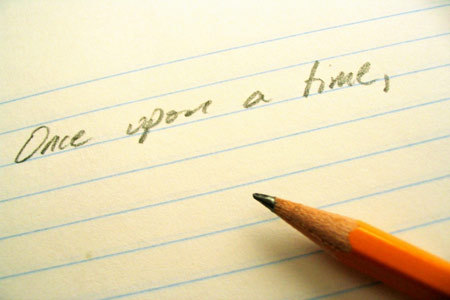
One of the most important things I’ve learned since I took up writing is to keep my equipment simple. All I need to create literary brilliance is a single subject notebook and a pencil. I choose a pencil over a pen because they make noise as they move across the paper. This light scratching is satisfying to my brain and is proof writing efforts. I see and hear my progress. Another technique that helps with this process is to sometimes write on lightly textured paper such as a sketch pad.

I write in capital letters. It took some getting used to, but by doing so, the process slows down my writing and focuses my attention at the same time. My ideas actually flow better. As new ideas pop into my head, I write them in the margins of my notebook.

One of the hardest things to conform to is a writing schedule. You would think making your own hours would be bliss, but I find as my own boss, sometimes I have the tendency to not take my writing seriously. I become lax beyond the point of flexible, and my writing suffers. When I set a schedule and stick with it, choosing the time of day that works best for me, I am more productive. Of course, I allow for emergencies in my life and some flexibility, but I don’t allow myself to get too far off the schedule I created.

As for social media, it took me a while to learn to not be controlled by it. Author platforms are good, but when you spend all your time maintaining them, you’re not writing. Not to mention the rising stats are addictive, and the minute you tell yourself you’ll only be on a minute, you’ve wasted thirty minutes playing. Remember: writers write; they don’t build reputations on what they’re going to do. Resolve this issue by scheduling the time you’ll spend maintaining your social media, and again, stick to it.

Another trick I use to nudge my writing along is the daily word goal. It’s effective, but I learned that when I write what needs to be written, completing a scene or story in fewer words, I still consider myself successful. In other words, I write until I’m finished. I’ve been surprised how long or short a handwritten portion turns out to be when typed. Coming short of the goal isn’t failure as long as I’m writing.

That’s when I reward myself with chocolate, a cup of tea or coffee, pleasure reading, napping, calling a friend, cooking, taking a walk. I warn against using social media or television as a reward because they lure one away from focusing.

Also, I do not punish myself for not meeting my writing goal. There are already too many negative thoughts bombarding my head, negative influences toward my writing from outside, and my resistance will pounce on these to keep me from writing. The goal is writing. The quantity is negotiable.

I keep one main project to work on, usually my novel, and resist the urge to put too many irons in the writing fire. However, I also maintain a notebook of other writing projects I’d like to work on in case I need to switch things up. Sometimes I need a project while waiting for a response to a research question or if my main project becomes heavy and I need a small break. Alternative writing includes journaling, blog posts, letter writing, flash fiction, and short stories. I use caution when setting aside my main writing project for a period of time, making sure it’s for a valid reason such as research, time to think and/or reflect, or major upheavals in my life. I know when I truly need a break and when I’m just sloughing off.

In short, I found what worked for me. Good writing habits take time to establish, so I never quit. I carry a notebook with me everywhere, have one in every room of my house, and write on the run. If I mess up, I start again. My resistance battles me along the way, but I am stronger. Resistance tells me these methods are weird, lame, and ineffective. I do them anyhow.

The easiest thing I do for my writing is be present. I simply put myself in a chair at the table with a pencil and paper. Then I made this process enjoyable by scouting out the best location in my home where I can be the most productive and tailored it to my needs with music, silence, windows, shade, snacks, and beverages. Sometimes I change locations to keep from stagnating.

One of my writing jump starts is to write twenty different words on index cards (the first twenty that come to mind or twenty things that interest me), turn them upside down, take one from top of stack, and free write for ten minutes. I do this for twenty days as a warm up and repeat as needed until I trust myself to jump into my writing day without assistance.

Another is my list of ten. In three minutes, I write down a list of ten things I did yesterday. In ten minutes, I free write about one of the things I did on my list. If nothing grabs me, I choose number three. A month of this particular warmup helped me set healthy routines. Keep in mind that these simple exercises are like mental stretching. No athlete competes without first stretching. True, it can be boring, it isn’t pretty, but it does massage your brain into creative mode.

I never forget good ole visual or audible writing prompts. Some of my best writing has been jumpstarted by a picture or piece of music. The funny things is, when I went looking for a pretty picture to write about or music to put me in the writing mood, I couldn’t find anything. Then there are pictures I wouldn’t have looked at twice and music that crossed my path that flashed a story through my brain so quickly I knew I had to put it down on paper. Don’t discount any source of inspiration.

Making myself accountable to others is effective for meeting my writing goals. I chose a writing buddy who will encourage me to stick to my goals and help me address why I might not be. I’m careful not to compare what I am doing to what my buddy is doing, and I don’t swap work with them. My buddy should have a different writing buddy to help manage his writing goals. In that vein of thought, choose wisely with whom you share your writing. He or she should be able to provide constructive feedback because poorly given feedback can knock you off your focus.

Based on my own personal experience, I don’t read writing books while I’m writing, especially the how to variety and those on writing style. I find them to be distracting because I try to incorporate all the wonderful new ideas I’m reading into my writing, and they don’t all fit. They don’t all belong, and they can hamper my writing if I’m not careful.

Most of what I learned about creating a writing life came from Heather Sellers’s book Page After Page. Some of it came from other inspirational sources. I’d love to hear what works for you and your writing, your process, and your thoughts on what I’ve written. Remember, feedback is what we authors live for.

F. Scott Fitzgerald – The Short Stories

F. Scott Fitzgerald The Short StoriesAnyone who knows me knows I adore reading. And for those who don’t know me, it won’t take much time spent in my presence, whether in real life or via social media, to discover this. Recently, I’ve been reading the short stories of F. Scott Fitzgerald. I assigned this task to myself as part of the research for my new novel. My goal was to gain a better understanding of Fitzgerald through his writing first, and then I would tackle books of literary commentary as well as biographies of the man, the author, and his life.

I’m not sure where to begin with my review of Fitzgerald’s short stories because I must admit it isn’t favorable in the least. I must also confess my amazement that he earned the money he did during the era in which he wrote. This is especially astounding considering how small the payment is among literary journals today. According to the Dollar Times inflation calculator, four thousand dollars for “At Your Age” in 1929 would be like earning $55, 327.48 in 2016. The section notes prior to the story state this was his “top story price.” I interpret that as price per story and not salary for the year. Please correct me if I’m wrong, but either way, Fitzgerald was simply not that good an author.

If you read one short story, you’ve read them all and his novels as well. Beautiful, indifferent debutantes who pick up and drop men like they’re choosing and discarding shoes; rich ambitious fellas, possibly a football hero, who undoubtedly attended/will attend either Princeton, Yale, or Harvard; a sprinkling of drunks, some hopeless, some loveable; endless comparisons between the North and the South or America and Europe; and the ambitious pursuit of money, fame, and power over, and over, and over again. The most unforgivable crime Fitzgerald committed in this reader’s eyes was to cannibalize his own short stories for the sake of his novels. Worse was the fact that his agent, editors, and publishers allowed him to get away with this.

Ridiculous and cliché are the two words that came to mind the most as I read Fitzgerald. The scenarios portrayed were outlandish and unbelievable, and I’m not counting “The Diamond as Big as the Ritz” when I say this. Why anyone, even fictional, would tolerate the behavior depicted among the characters is beyond me. I tried to keep in mind that attitudes and actions were different in the ’20s and ’30s, but my opinion of the situation often deteriorated to how stupid can one person be and how much longer before he/she quits putting up with this garbage? Perhaps this was common behavior among the rich and lovesick back then. I honestly couldn’t say.

None of Fitzgerald’s stories were memorable. As I looked back through the book, I tried to recall the storylines and characters by the title alone but ended up cheating and reading the section notes. The only exception was “The Curious Case of Benjamin Button,” and that was because it had been made into a movie. So, I’m left wondering who decides what makes a piece of literature a classic. The death of the author, the passing of time, the payment received, popularity with the audience at the time of publication, being made into a movie, or some combination thereof? I shudder to think how the last four delineators will make classics of some of the drivel being produced today.

I don’t know what percentage of readers would stand with me in my assessment of Fitzgerald’s writing. Hopefully, I’ll find the commentaries and biographies more interesting. From what I already know about him, I believe if he had consumed less alcohol and been more content to hone his craft than pursue fame and fortune, he would have moved beyond his narrow world, experienced life to a greater degree, and found something new to write about. In the end, I’ll give Fitzgerald credit for leaving writers a good lesson even though he failed to learn it himself.

Arrogance, Confidence, Faith

Monk 1Wade walked past the monk twice from about forty feet away. He didn’t make eye contact with the man but could tell from his stiff posture that he wished to be left alone. The park seemed like a curious place to encounter a monk until Wade thought that he probably enjoyed normal activities like regular people. What a stupid thought, he chastised himself. Normal, regular. He’s just a guy in a robe. Sure Wade wouldn’t run into him at the club, but—enough. Just go talk to the guy.

But first, Wade stood in the shade of a large oak tree and ground an old acorn cap into the grass with the heel of his boot. Casual, with hands in his pockets, he affected the pretense of seeing the monk for the first time. His performance met with tight lips and long sighs. Perhaps that’s how these religious types acted. Damn it, Wade, there you go again. Stereotyping when you really need this guy’s help.

Screw it. Wade pushed off from the oak, scuffing the sleeve of his black leather jacket. He walked toward the monk with shoulders back, head held high. When he remembered this wasn’t some dude hitting on his girlfriend, his balled fists returned to his pockets, posture relaxed, eyes searched the ground for acceptance or rejection.

“Can I sit down?”

The monk closed his magazine and rolled it in a tube. Perhaps he’d smack Wade across the nose like a bad dog.

“I don’t hear confessions.”

“Oh, that’s cool, because what I need is advice.”

Wade plopped onto the bench, squeezing the monk over, turning to observe in profile the man’s Santa beard and bald pate. A lanyard with keys and a YMCA keycard jangled as the monk repositioned on the seat. These items, together with the glossy magazine and flip flops, made Wade wonder if this guy had been a monk long enough to offer solid advice. He was old, but how much cooler it would have been if the monk had stopped at this point during his own spiritual walk, toes dusty from the journey, meditating over a prayer book. Wade recognized an ad for Chevy trucks on the tube of magazine pages.

The monk sighed again and crossed his legs, revealing calves covered in lamb’s wool. Wade grimaced but diverted his stare by reading the graffiti carved into the tree trunk behind them. His fingers grazed over Sarah and Andrew’s eternal pledge of love. His cheeks reddened as he traced a swear word. He would have preferred the monk start the conversation with bless you my child but settled for hands folded as if in prayer.

“Okay, so last week my friend, Duke, came to me, and he’s all excited and talking about this great deal he wants to share with me.”

Wade paused, testing the monk’s interest level by trying to catch his eye. The older man offered a nod and twiddled his thumbs much to Wade’s annoyance.

“Anyhow, it’s all about this opportunity to buy in to this new club they’re building downtown. You know this town is, like, primed for new business,” —the monk shrugged and raised his eyebrows— “and I have my share and then some already saved.”

The buzz of a cicada was the only sound until the monk understood it was his turn to speak.

“Yes, well, what’s your question?”

“Should I spend the money? Invest in this place?”

So it was to be a game of twenty questions. The monk seriously considered pointing the young man with a shorn head and tattoos creeping up his neck in the direction of the Catholic Church two blocks south. Surely the priest would be better suited to the task at hand. Instead he gathered his robe about him and crossed his arms, shifting his weight onto his left thigh to gain space between himself and the young man.

“Is this what you saved for?”

“Nah, the money was supposed to be for a down payment on a house. But I have almost double what I need and could easily save it again. Faster because this club’s going to make money.”

“How can you be so sure?”

“Well, Duke’s cousin has experience with this sort of thing in New York. He knows all about running and promoting these kinds of places.”

“And yet he’s here.”

“True. I never thought of that. But I’ve seen the plans for this place, and it’s going to be awesome.”

“Sounds as if you’ve already made up your mind.”

The monk titled his head, blinked slowly, hoping to signal the end of the conversation.

“That’s it? You don’t, like, have any sage advice for me or something?”

The monk’s eyes widened at Wade’s use of the word sage. That’s right, old man, I’m not illiterate. Wade bent to pick up a twig, used it to pry mud from his treads. It was time to really impress this guy.

“I even prayed about it because I’m undecided, you know, and even though I didn’t promise or nothing, my girlfriend knows that money was supposed to be for a house.”

“You prayed?”

“Yes.”

“To whom?”

“Like, God, you know? And then here you sit, so I figured you’re part of my answer or something. Of course, you weren’t the first person I consulted. That was my accountant. God, my accountant, then you.”

The young man settled back on the bench with his arms stretched along the back. He probably expected the monk to turn toward him for the rest of the conversation. If only a throbbing headache hadn’t crept up the back of the monk’s neck. The heels of both hands ground into the monk’s eyes, blotting out the sun and shooting sparks through the blackness. There was absolutely nothing of interest in this whole laughable matter.

“Why on earth did you consult your accountant?”

“Because I’m totally sure this place is going to make money, and I needed to know how to handle it all. Investments and stuff.”

“If you’re sure, why are we having this conversation?”

“Well, Padre,” —the monk didn’t bother to correct him— “that may be the true heart of my dilemma.”

The monk raised his hands, palms up.

“Am I being arrogant by saying this club is going to fly, or is it just confidence that I can make it work, because I’m not afraid of a little hard work?”

“Is there a third option?”

“Oh—yeah.”

“Oh…really?”

“I can tell you’re skeptical, Father Brown,” —the punk laughed at his own joke— “but I don’t want to do anything against, you know, the Big Guy in the Sky.”

Wade tossed a glance upward, nodded knowingly.

“What I’m saying is I’d like to think I’m exercising a little faith about this situation.”

“Faith? Did God tell you you’re going to be successful?”

“Well, not directly. That’s why I’m talking to you.”

“I can assure you He didn’t tell me anything about it.”

The inside of Wade’s cheek received a serious gnawing as he absentmindedly worked his finger at the edge of his nostril.

“I see.”

Perhaps this is over, thought the monk. Tension tightened the young man’s body when he leaned his elbows on his knees, ran his hand hard over his face. The monk clutched his robe and placed both feet on the ground.

“Does it surprise you to know I’ve committed my plans, like, to God, Padre?”

The monk’s stomach knotted at the loosely quoted scripture.

“Yes, well, my son,” —the endearment did not roll off his tongue easily— “it is a club. There will be drinking, and people dancing, and smoking—well, not smoking inside anymore—but still, the women will no doubt be dressed very scantily. Besides, you did earmark this money for a house. Now that’s a real investment even in this lousy economy.”

“So what you’re saying is that my prayers for success can’t be answered? That I’m some kind of arrogant ass to think I might have a shot at this?”

“I’m just, just cautioning against pride, and, well, I’m not sure a club is God’s will for you.”

“But you don’t really know what His will for me is, do you?”

“Well, no. I’m sorry, but—I just don’t know who you think I am. What do you want from me?”

“Nothing, I guess. It was a long shot, you know, even talking to you.”

Wade stood and brushed off the front of his jeans as if crumbs had fallen on his lap. He listened to the drone of a single, persistent cicada calling to someone and receiving no answer. Sunlight beyond the canopy of branches beckoned, and he stepped into the golden warmth.  Without looking at the monk, he said, “Thanks anyhow, man. I know it was, like, a lot to put on you, you not knowing me and stuff. It sounded like a good opportunity, is all. But now I’m not so sure.”

With shoulders rounded, Wade walked away, his arms swaying like abandoned swings.  He headed for the parking lot before veering his course and setting off down the road.

~~~~~

Thank you to HBSmithPhotography for the unusual picture.


Regal and Waiting

“Hey there, big kitty, how you doing…c’mon, sleepyhead, wakeup….Cinnamon?”

The boxy head pops up; icy green eyes scan the human face on the other side of the bars. Recognition never comes, and all enthusiasm fades as the cat’s eyes glaze over with disappointment and disinterest.

The woman standing there checks the card on the stacked metal cages that hold cats from the local rescue. Surprise flashes across her face when she reads that the large cat with a most inelegant head is indeed a female. Cats are usually defined by a slightly feminine grace, even the males. The girth of this particular feline is impressive.

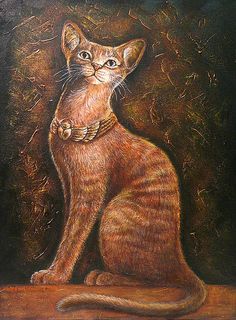
She is appropriately named. Her fur is deeper than butterscotch or peanut butter, and while she would fall into the category of orange tabby, her coat is a dark, two shade variation of rusted pine needles. Her profile card says that she is nine and her former owners surrendered her because they didn’t want her anymore. Surrendered; the softened, politically correct term for abandoned, guaranteed not to inflict guilt upon an owner. No one forced them to give up the animal.

The profile cards admit when owners move, develop allergies, have a child of whom the animal is jealous, or returned to the rescue because he or she didn’t get along with earlier acquired pets. Cinnamon’s tag clearly indicates that she is no longer wanted.

Other people stop by the cages, read the cards, and cautiously poke their fingers through the bars to scratch behind an ear or under a chin. Cinnamon returns to her nap just beyond the reach of the grasping fingers; she is oblivious to the kind words and prying eyes.

She has seen this all before on the faces of these humans who stop by to look at her and her fellow rescues. Their eyes search first for the kittens or at least the young cats a year old or less. Then they read the cards on the cages, making mournful noises in their throats over the rescued strays. They compare each cat to one they’ve known at some time or other (This one looks like Lucky, only bigger or Doesn’t that one resemble Jane’s cat, Dartmouth). They cheer victoriously when a cat allows itself to be petted; more so should the slinky creature meow as if for their pleasure. They chuckle at funny names bestowed upon the cats (Witherspoon, Merlin, or Chairman Meow).

Cinnamon doesn’t care about any of this, but then neither does Ziggy in the bottom, left-hand cage. They continue napping, lending to the aloof reputation that cats enjoy and proving sullen, dog-loving boyfriends correct when they claim cats aren’t as nice or cuddly as dogs. Cinnamon does not need or want to go home with the young women dating these idiots. In fact, she doesn’t need anyone, or at least that’s what she wants you to believe.

Sometimes, during the hours she spends at the pet store in the small room with a glass partition, she wonders in cat fashion how long she’ll be here. And where are her owners? Why never crosses her mind because it isn’t her fault. She does wish the store employees wouldn’t prop open the door to the room. The store can be quite noisy, especially on the weekends.

A Dash of CinnamonOn the days that Cinnamon graces the public with her wakeful presence, her peridot eyes, and her expressionless visage, she likes to sit upright in her cage with tail wrapped around her front toes. From this position, she regally dispenses judgment like Bast. Go ahead and assess me if you dare. Her countenance would lead one to believe that she could read thoughts.

If she could, she would find humor in those running through the head of a man who really wants another cat but doubts the two he has at home would get along with her. His boys, both under two years of age, can be quite rambunctious at times. They would probably torment Cinnamon relentlessly as she attempted to nap. He imagines a scene in which Cinnamon rises like a disturbed lioness that tears into his precious fur babies with tooth and claw. Yes, perhaps, he’ll leave this one for someone else.

Then there is the young couple with two toddlers in tow. The mother, pregnant to the point of bursting, repeatedly corrects the children rattling the lock dangling from Cinnamon’s cage. The temptation is too much, and the mother must remove her offspring who tries to climb the front of the cages. She calls to the father who lingers a moment in the glass room, considering Cinnamon for adoption until a vision of a black lab playing with his grade school-aged children passes through his thoughts.

A little girl, who has been promised a cat for her birthday, complains to her anxious parents that she couldn’t rename the dumb, old cat because she probably wouldn’t learn her new name. She balls her fists on her hips and shouts Muffin. Cinnamon ignores her. When the child says Cinnamon, the cat’s head moves. The little girl stamps her foot, shouts I told you so, and dissolves into a tantrum of tears. She is dragged, screaming, from the store.

One woman passes up the opportunity to adopt Cinnamon because she fears cat fur would stick to her cabernet colored suede couch. An elderly couple decides against the option because they worry about who would take the cat in the event she outlived them. Another couple admires her, but their children are grown, and they want to start traveling; finding someone to watch the pets is such a chore.

No matter. Cinnamon is not in a hurry to go anywhere. Her owners might return at any minute. Maybe tomorrow.

One by one the lights in the warehouse-sized store begin to go off for the night. The staff scurries to finish sweeping and arranging displays. They grab coats, purses, keys, and lunchboxes. One calls out goodnight to the rescue cats. Then it is dark and silent, except for security lights and the bubbling of tanks in the fish department.

Cinnamon stares into the darkness, searching for movement in the aisles of pet food and toys. She doesn’t move for thirty minutes or more. It would feel so luscious to be able to escape her cage for a few moments, to stretch and roll along the floor, to prowl the quiet store. She curls into a ball under the wooden shelf in her cage and falls asleep contrary to her nature.

In her dreams, there is a person who visits the store for the express purpose of taking her home. Perhaps it’s a man, maybe a woman, but either way the voice is kind, soothing. This human is gentle with her, only saying her name in the long, drawn out way a human does when he or she is calling for someone. This individual doesn’t scold harshly when she is caught sleeping on the couch or lapping puddles off the shower floor. Cinnamon isn’t expected to curl up on a lap or play with kittenish toys. But this person is always within reach, reading the paper on the floor and laughing when Cinnamon decides to plop down on the pages, or sitting on the basement steps and inviting her to share the space. Most importantly, this person is patient. Patiently waiting for Cinnamon to relax enough to bestow even a fiber of trust. However long it takes, this person will wait, and he or she will recognize success when the sandpaper kiss of a tongue caresses the back of a hand just once.

Paws twitch and eyelids flicker. Cinnamon chatters in her sleep.

Across town a widowed woman said goodbye to her beloved cat today. Tomorrow, she will visit the pet store in search of another to help her work through her grief. Probably an older specimen for they are usually calmer, more settled. She is partial to orange tabbies.

Apple Seeds

Warmth from the sunbaked, terracotta tiles radiates through the bottom of his thin-soled, canvas shoes. The old man eases himself into a wrought iron chair beneath the jacaranda tree. He slips a pen knife from his pocket; he isn’t supposed to have it, not after Crazy Effie threatened one of the orderlies with her nail file during breakfast. Now they’re all supposed to cut their sausage links with a fork or spoon. This place, this rest home for the retired, treats them like imbeciles. He chuckles to himself as he watches his friend, Wade, drooling as he sits strapped into his wheelchair, napping in the sun. Maybe some of us are, he thinks.

It will be a cold day in Phoenix when he allows them to remove his pen knife from his possession. It’s nothing special. No insignia from a branch of the service or Boy Scouts graces the mother-of-pearl sides. It’s just a nice knife he bought at Woolworth’s when there was still one at the mall. He thinks there might have been a matching razor with it but can’t say for sure. He’s used it to open everything from letters to wounds. Years of grime need to be wiped from the space where the mother-of-pearl meets the metal. Hell, maybe it’s not even real mother-of-pearl.

Apple SeedsHe removes a green apple from his sweater pocket. The bulge caught the eye of every resident he passed, making them wonder what he had smuggled out of the dining room. Green apples are his favorite, and the pretty Hispanic girl who runs the dining room, Gina or Tina, he can’t remember which, always keeps a few in the cooler for him. She knows he likes them cold; he must make more of an effort to remember her name.

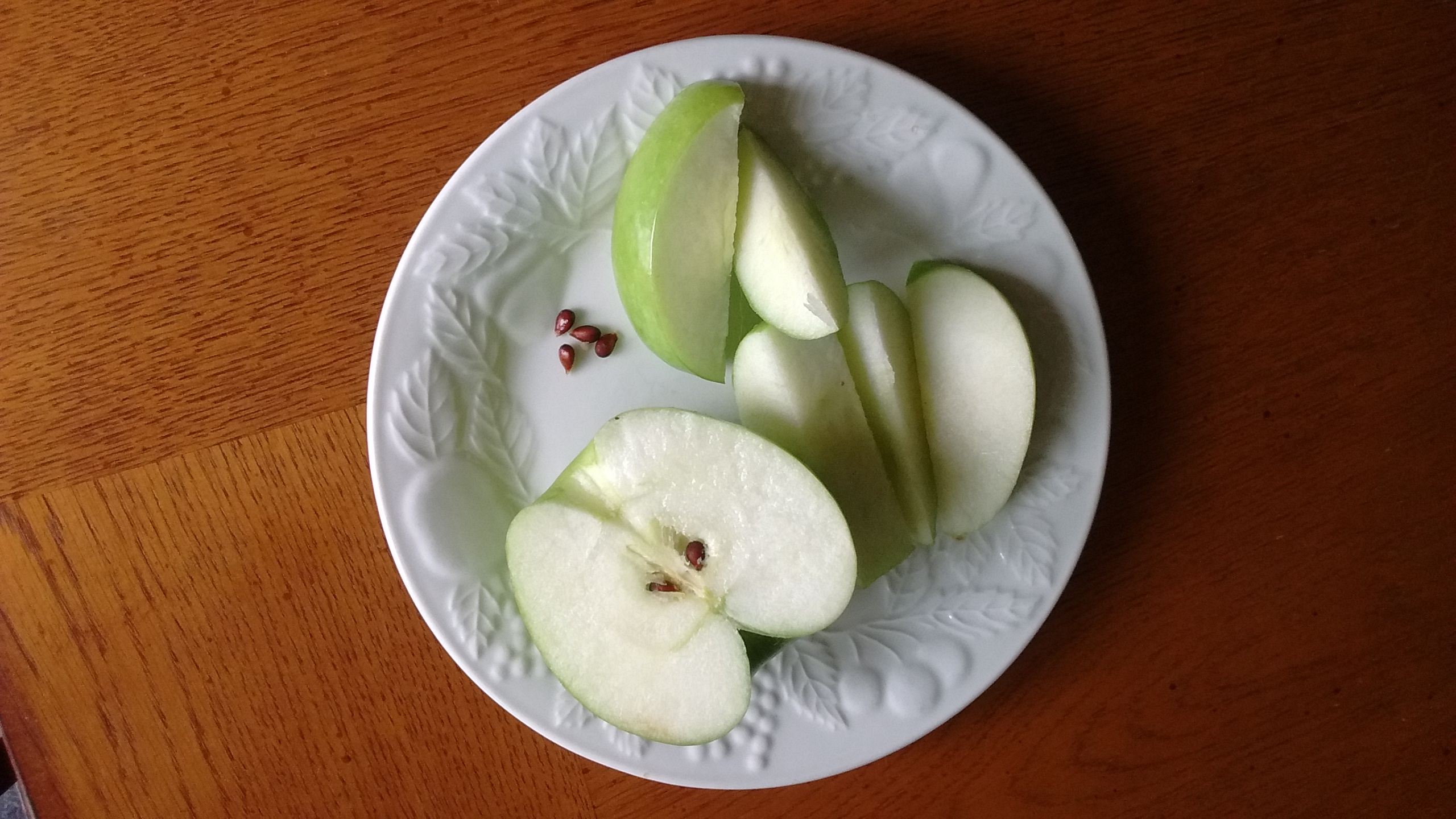
Carefully, with much consideration and turning of the apple over and over in his hands while worrying his dentures with his tongue, he decides where to make the first cut. The vibrant green skin breaks with a crisp snap and a soft spray of juice as he slices along the entire curve of the apple. He licks the tartness from his thumb. With a gentle twist, he separates the halves.

Two seeds pop out onto his lap. He draws his knees together to catch them before they fall to the greedy earth hiding between the tiles below, enticing with the promise of life. He knows what the seeds do not: nothing disruptive, certainly not an apple tree with a vast and reaching root system, would ever be allowed to flourish here. Both seeds are pinched between his forefinger and thumb, and then placed gently on the tip of his protruding tongue.

The old man enjoys the bitter-almond taste of the seeds. He always chews them. While most people, especially his lazy grandchildren, only eat the flesh of the apple, the old man consumes every part of it except the stem. He savors the acrid taste of the seeds as he cuts a slice from one half of the apple, eating it off the thumb on which it is balanced, his knife held securely in the same hand. Another seed is visible but trapped in its pocket. A little surgery with the pen knife frees it from its fibrous prison. This seed is bigger because it did not have to share space with a sibling.

His wife once told him the taste of the seed was from the cyanide within. It seemed like a fact she would know, so he never questioned her on it. From then on, he made a point of eating every seed especially if she was watching. I’m building up my tolerance and recognition of cyanide in the event that someone tries to poison me, he had teased her. She retorted that if she wanted him dead she would use the cast iron skillet on his head while he slept. Their wicked sense of humor shocked most people, even their friends.

He wonders how many apple seeds he’d have to eat to escape this place. It’s so beautiful, Dad, his daughter had said, with flowering trees and benches, shuffle board courts and walking paths, a chess club and whirlpool. Who had she been trying to convince? One little tumble down the front porch steps and the next thing he knew, he was an inmate at Buena Vista Acres. His daughter believed she was doing him a favor moving him to Arizona to be near her. As if a fifty minute drive was near her. He might as well still be living in Ohio for all that he sees her.

If he could see anyone right now, it would be his wife. He crushes two more seeds between his back teeth, the ones that are still real. More of the apple is consumed, more seeds discovered. More memories flirt with the edges of his mind. The white walls of the main building shimmer with early morning heat, the brightness nearly blinding him even though his eyes are averted. Bittersweet and tart, apple seeds and life. The core of his existence chewed away to nothing. He will not let it poison him. He kisses the stem and flicks it into the bushes.

As he returns to his room for a nap, he waves to Maria, the dining room attendant. Maria, just like his wife. He smiles to himself, proud at having found a way to remember her name.

Coffee

CoffeeLeonard Summerscale sat like a mannequin in the center of a roomful of chattering diners. Knives and forks slaked against plates, ice swam brightly in glasses of water. Waitresses called orders to the cook before they were halfway back to the kitchen. Above the din of lunchtime in the city, the bell on the door chimed. Only then did Leonard’s face reanimate, as the scarecrow with red hair threw his arm up and navigated his way to where Leonard sat.

“Thank you for agreeing to meet with me, Reverend.”

“No problem, Len, none at all. Your message sounded so urgent. What can I do for you?”

“Please, have a seat,” Leonard said, indicating the chair opposite him at the two-seat diner table.

Reverend Bast slid into the grease-slicked, padded chair. The red vinyl cushion released a squeak and a puff from a tear near the edge. Leonard busied himself flagging down one of the waitresses performing an awkward ballet through the narrow aisles; a balancing act of three plates occupied the length of each arm.

“The service is usually much better, much better.”

“Don’t fret, Len. It is lunchtime.”

“Leonard, please.”

“Of course, I’m sorry.”

The harried waitress in a rumpled, powder blue uniform finally appeared at the table. She placed a menu in front of each man, shoved her sagging ponytail off her shoulder, and wiped the back of her hand across her nose.

“What’ll you have, Reverend? There’s a ten percent discount for men of the cloth.”

She jabbed her pencil in the direction of his collar.

“Well, lucky you,” Leonard said. “That should save you a few pennies.”

The Reverend’s eyes scanned the a la carte section of the menu as he mentally replayed Leonard’s voicemail. He was sure invite you to breakfast had proceeded his congregant’s request to talk.

“I’ll have the poached egg on rye toast, black coffee, please.”

As the waitress scribbled on her pad, Leonard waited with fingers steepled. He paused long enough to draw the young woman’s attention, making eye contact with her, before he spoke slowly, deliberately.

“I’ll have two eggs fried hard, and I do mean hard, with the yolks broken, brown, crispy edges, the whole nine yards. Please encourage the cook to properly season the eggs; I should be able to see the pepper flakes but not the salt. Shredded hash browns, toasted thoroughly but not swimming in grease. The ham steak? Is it sugar cured or country style? Oh, no matter–you probably don’t even know what I’m talking about. Wheat toast, hold the butter, cut from corner to corner. Is there mixed fruit jelly on the table? Very good. And decaf coffee. Be sure it’s a fresh pot. I know how long the decaf sits around in a place like this. Also, please bring real cream or at least milk. I despise those little plastic containers of oily, faux cream.”

The waitress shifted her weight from one foot to another. She chewed the inside of her cheek before smiling and saying, “You got it.”

The Reverend straightened jelly packets in the swiveling caddy as Leonard tsked at the waitress’s retreating back. He turned a conspiratorial look upon the Reverend and said, “Well, let’s see how much of that she gets correct.”

“I thought you’d been here before,” the Reverend asked.

“Oh, only a few times with co-workers. They chose to dine here. It’s not the sort of venue I’d normally patronize.”

“So, what can I do for you, Leonard?”

“Yes, the real reason we came. Now I know we haven’t been in your congregation long, and by we, I mean myself and Mrs. Summerscale–”

“–lovely woman, so very helpful in the nursery–”

“–and while we agree with the majority of your theology–”

“–oh, well–”

“–there are a few minor points I’d like to discuss on another occasion, still, I believe we made the correct choice in churches to attend.”

Leonard folded his hands across his stomach and leaned back in his chair. The Reverend remained silent for ten seconds until he understood it was his turn to speak.

“We…do enjoy your presence, and that of Mrs. Summerscale.”

“Ah, Mrs. Summerscale. What a tactful segue you’ve provided, Reverend, for it is the subject of my dear wife that brings me here today.”

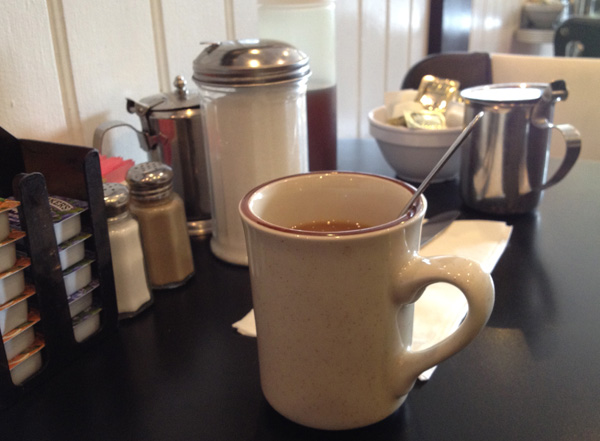
Leonard gazed toward the water-stained ceiling tiles and puffed his cheeks, his customary gesture when preparing for a long discourse on a topic of interest to no one but him. His efforts were halted momentarily by the arrival of their coffee followed by several moments of fussily arranging his cup and saucer, requesting an orange coaster to indicate to passing waitresses that he preferred decaf, and polishing his spoon as if for inspection by a Marine Corps drill sergeant.

Clouds of milk lightened Leonard’s coffee to an acceptable shade of taupe, placating the man to his previous state of calm. His voice achieved a stunning decibel of self-importance as he said, “Have you ever really considered coffee, Reverend?”

“I know I’m pretty worthless in the morning before I’ve had mine.”

Leonard’s eyes rose from his cup to contemplate the patches blushing the Reverend’s freckled cheeks. His uneven smile and softened expression conveyed the verdict of I know, I know. The Reverend thought to mention that Mrs. Carrick, the church secretary, always had a fresh pot ready for him prior to Sunday service, but he let it go.

“The average American adult drinks around three, eight-ounce cups per day. That’s 382 billion cups of coffee consumed in America alone every day. I suppose that makes me below average, eh Reverend?”

“Oh, I wouldn’t say that, Leonard. You’ve done marvelous things since joining the Board of Elders.”

A twitch in his left eye brought Leonard’s finger to the rescue. His hand in front of his face muffled his sigh.

“I only require one cup of coffee a day, and decaf at that. So many people are dependent upon the addictive qualities of caffeine to sustain them. But for me, coffee is a cup of warm reassurance that I shall succeed at whatever I set my mind toward for the day. That is to say, I don’t require coffee, Reverend, I enjoy it.”

“Indeed. How lucky for you.”

Another pause ensued as Leonard waited patiently for the Reverend to say something, anything, of relevance to the conversation. He came to the young man’s aid with, “As an unmarried man, you couldn’t possibly know the sheer joy of having your wife responsible for providing a fresh pot of coffee every morning. Such is the pleasure that Mrs. Summerscale brings to my life.”

“It’s the simple things, like drinking coffee together, that solidify a marriage. Or so I’ve heard.”

“You miss my point, Reverend: while I enjoy the coffee, what solidifies my marriage, any marriage for that matter, is the consistency with which the ritual is conducted. Therein lays the quality of any relationship. Do you understand?”

The Reverend twisted sideways in his seat.

“And when that consistency is disrupted–well!”

The Reverend twisted in the other direction, mostly to avoid Leonard’s hands thrown up in frustration but coming across the table with the rapaciousness of an eagle’s talons.

“Play nice, fellas. You’re breakfast is here.”

The waitress who placed their food on the table was not the one who took their order. This woman, with face haloed in bad orange foundation and crusted scabs of concealer, smacked down plates of food and topped off their coffee cups with the practiced movements of a seasoned professional. Her abrupt behavior brooked no complaint as the matriarch of the herd lumbered off to refill the cups of other customers, supervising the younger waitresses as she moved, her hosiery sagging around her ankles.

Both men obediently bowed their head to pray. Leonard’s head remained in the position of supplication long after the Reverend said Amen. When he opened his eyes, he caught the Reverend with fork in hand, spearing his first bite.

“You’re a young man yet, Reverend. What are you? Twenty eight, thirty tops?”

“I’m thirty five.”

A waved hand and gravelly snort dismissed the comment.

“See–young yet. Must be that peachy complexion beneath those constellations of freckles. One might even say peach fuzz.”

Leonard barked a laugh around a mouthful of food at his joke and set himself to coughing until his face reddened and his eyes watered. The female elephant, continuing her crisscross migration through the diner, delivered three hearty thumps to Leonard’s back as she passed.

“Thank you, Madam, thank you.”

The pair resumed eating in silence. The Reverend finished his meager breakfast. He sat with a napkin draped over his crossed legs while Leonard, only half way through his meal, restarted his conversation.

“I’ve established some basic but essential points for you, Reverend, and although I’ve applied them to marriage, if you take time to review what I’ve said at your convenience, your earliest convenience, you’ll see that what I’ve instructed also applies to life.”

The Reverend, whether willingly or unwillingly he did not know, remembered nothing Leonard had said prior to his choking fit. He had, however, managed to track the progression of a toast crumb from the corner of Leonard’s lips, into his mustache, watched it disappear once into his mouth, reappear on the tip of his tongue, and miraculously land in the opposite corner where it rode up and down with the movement of Leonard’s chewing.

Leonard mistook the Reverend’s intense concentration as interest and enthusiasm.

“But it is with much hesitation that I must admit to you as…well, if not my spiritual counselor or close confidante…then as a somewhat significant figure in my life that all is not well between me and Mrs. Summerscale.”

“What seems to be the problem?” the Reverend’s mind directed his mouth to say.

The crumb had fallen to Leonard’s chin. The Reverend rooted for it to hang on.

“I can’t quite place my finger on it. Mrs. Summerscale and I have been married for thirty five years, so I’m quite attuned to my wife’s quirks. Still, this event of which I shall inform you came quite out of the blue.”

A knuckle swiped across his chin came to rest on Leonards’ greasy lips. He meant to look thoughtful but only succeeded in redepositing the crumb to the hairless divot on his upper lip. The Reverend clenched his jaw; surely an indication of real concern.

“Exactly two weeks ago, Tuesday, Mrs. Summerscale arose promptly at 5:30 AM and donned her robe as she always does. Then she went to the kitchen to prepare my breakfast. All was well. I finished my bath, shaved and dressed, and descended to join her. Mrs. Summerscale had already placed my oatmeal and cream on the table. She had even stirred in half a cup of dried currants, a pleasant surprise as they are my favorite.”

A sharp intake of breath on Leonard’s part pulled the crumb back to his bottom lip. The Reverend’s brow creased, and his troubled congregant pressed on.

“Just as I was enjoying my first bite of oatmeal, the coffee pot gurgled, indicating that it was done brewing. Peripherally, I watched Mrs. Summerscale retrieve a cup and saucer from the cupboard and prepare my coffee.”

Lips pressed together then pursed shifted the crumb to Leonard’s upper front tooth. The Reverend leaned forward and pointed.

“Now just a moment, Reverend. I haven’t finished my story.”

“Please go on.”

“Mrs. Summerscale approached the table where I sat, and she…she arranged the cup near my right hand as I prefer.”

Leonard’s voice wavered with distress at the memory. The crumb, taking on a life of its own, worked its way across several teeth, moving in an eastward direction, before popping back into the bristles at the edge of Leonard’s lip. The Reverend pressed his balled fists into his mouth.

“And that’s when I saw it.”

The Reverend nodded wildly.

“My coffee was a muddy shade of black.”

“I’m sorry?” the Reverend allowed to slip from behind his bony knuckles.

“Yes, it’s true. You heard me order my coffee today with cream, or at least milk, so you are aware of how I take it. But then so isn’t Mrs. Summerscale aware, abundantly aware, of exactly how I take my coffee. Imagine my utter shock at looking into a cup of plain black coffee served by my wife. I asked her what was the meaning of this, and do you know what she replied? She said, ‘Oh isn’t that how you take your coffee?’”

“I don’t understand.”

“Reverend, really? For thirty five years Mrs. Summerscale has prepared my coffee to perfection. It is a–to what shall I liken it–an intimate knowledge of my very self, a dance between principle partners? For her to suddenly forget, or worse, become quite negligent and offer me a cup of coffee on the other end of the taste and shade spectrum? Why this can only indicate some gross aberration in foundation of my marriage. God forbid I entertain the thought, but do you suppose Mrs. Summerscale is having an affair?”

The Reverend smacked the table with both palms, fingers splayed, causing the dishes, silverware, and salt and pepper shakers to jump in unison. He threw back his head and laughed uproariously for five minutes until the redness in his face surpassed the color of his carroty hair.  All other sound and movement in the diner fizzled to quiet and stillness.

“Oh–Oh really–really, you are too funny, Leonard, too–damn–funny. You old fool. You pompous, cheap, old fool.”

Leonard’s mouth sagged like a mastiff’s; his head turtled into his shoulders at the unwanted attention directed toward himself and the Revered. The Reverend wiped his mouth, neatly folded his napkin, and stood to leave.

“By the way, Leonard. You have a toast crumb stuck in your mustache.”

Throwing Down the Gauntlet

Throwing Down the GauntletToday’s blog post originated with a challenge from fellow author, Lucy Flint. I had never heard of the 7/7/7/7 Challenge, but I accepted after reading the rules.

The challenge is extended from one writer to the next. Those who accept 1) locate page seven of his/her current Work in Progress (WIP), 2) count down seven lines, 3) include the next seven lines from his/her WIP in a blog post, and, 4) challenge seven different writers to do the same.

Sounds painless. Furthermore, if I can’t stand up to critiques from fellow authors and followers, what will keep me from crumbling when professional reviews of my writing start rolling in? So, without further ado, here is the appropriate portion to satisfy the challenge from my current WIP, a short story currently titled “The Shape of My Dreams”:

“Excuse me, counselor, but you’re the one who recently lectured me about saving money, especially for our upcoming vacation, and suddenly you have endless funds for decorating. If you’re going to spend money on something, why not upgrade that old door lock with a nice digital security system?”

I throw back the covers and storm off to the bathroom. Mark follows.

“I don’t want to go to Cancun and don’t start on me about the age of this building,” I say around a mouthful of toothpaste.

“Why not?”

Hopefully, you can tell that this argument between my protagonist, Ellen, and her boyfriend, Mark, is not going well. Mark’s snide use of her profession against her only serves to heat up their fight. This story is still largely in my mind and appears in disjointed chunks in my notebook. Accepting this challenge has inspired me to complete it.

Now, I’m nominating:

1) JS Mawdsley (Once for J)

2) JS Mawdsley (Once for S)

3) William Frederick

4) Carrie Tangenberg

5) Marie C. Collins

6) Mark Tilbury

7) Clay S. Robinson

There is absolutely no pressure or obligation to participate if you don’t feel ready to at this time.

Moving Day

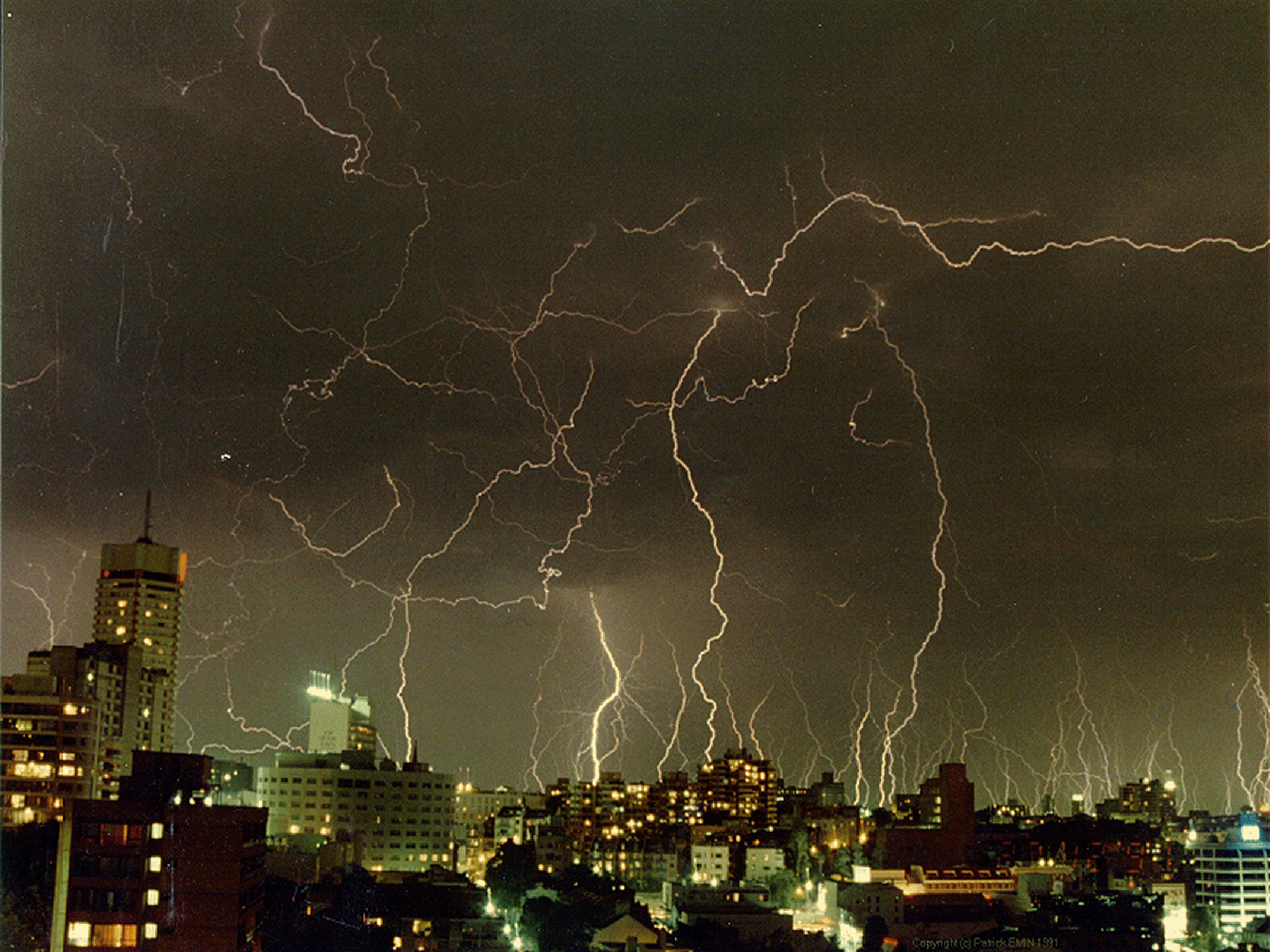
Thunderstorm_in_sydney_2000x1500Thunderstorms of a Noachian proportion blast the city for three days, washing the sun from the sky. White water eddies cluttered with trash swirl around the tires of cars abandoned until the deluge subsides. Undulating sheets of rain reduce all human activity to that of water-logged muskrats scurrying from building to bus stop and back again.

When the skies finally clear, the ancient apartment building smells like books stored in the basement. Tenants prop open their doors with fans to shift the staleness from corner to corner, never allowing it to settle on the pages of their lives. Cycling dehumidifiers placed by the landlord lure the saturated air with the promise of stagnation in the too-small reservoirs.

Joel’s fingertips rest on the windowsill; his eyes scan the street three stories below. Part of him wants to go downstairs to search for the movers’ truck. They were scheduled to arrive at nine that morning but probably couldn’t find a place to park out front. For all he knows, they’re circling the block or double parked, ticketed, and arguing with a cop. His fingers drum impatiently, and he sighs. His own lack of punctuality over the years has not made him lenient toward other people’s lateness.

Another stack of books is removed from the shelves, the void outlined in dust, and absentmindedly placed in a cardboard box. All week things he’d rather be doing kept popping into his head, but he doesn’t have the leisure of avoiding the chore, and no one else is going to do it for him. The zip of duct tape brings Kirsten from the bedroom. Her eyes are red and swollen.

“Can I help?”

Joel kneels to press the duct tape along the seam of the cardboard flaps. When he looks up, a forced smile twists his mouth sideways.

“I got this.”

“’Cause you know I’ll help. It’s not like I wouldn’t or something.”

“I know.” He stands and places his hands on her arms. “It’s why I love you.”

A quick peck to her forehead conceals his cringe at having misspoken, but now he’s afraid his kiss also sends the wrong message.

“You don’t have to be here right now–or stay–if you don’t want.”

“I came out ‘cause I thought you’d enjoy some tea, but I’ll go back if you want.”

“That’s fine, tea is fine.”

She shuffles to the doll-sized kitchen, the slap and scuff of her slippers grating on Joel’s already frayed nerves. Gray sweatpants and hoodie render her dancer’s body shapeless. Her unwashed hair is pulled into a sloppy ponytail, exposing her long neck as she stands at the sink filling the kettle with water. Damn he loves the sight of her neck. It was the first place he ever kissed her, right where the long, sable strands stopped and the micro fine, colorless ones began. She had been wearing a ponytail then, too.

He could spend hours making love to her neck alone, her warm flesh goose-pimpling beneath his parted lips, and the sweet scent of lily of the valley residing behind her ear. Being with Kirsten felt like standing in intense, bright sunshine, and looking at her like viewing diamonds of light dancing on water until his eyes teared, the pain so sweet. He believed he possessed something truly worth having when he held her in his arms; he was free and bound all at once in his love for her.

Joel’s eyes close like a stage curtain dropping on the memory.   He remains motionless for several seconds listening to the click and ragged woof of the burner. When his body sways, his eyes flick open. Dizziness on the fringe of his senses is replaced with the claustrophobia of the stuffy living room crammed with packed boxes of his stuff.

“The tea should be ready in a jif.”

He nods at Kirsten and wanders about the room gathering the last few items that defined his space in their home. A high school swimming trophy, the book on Albert Einstein he is currently reading, a chipped clay dinosaur he made in first grade, the teak kaleidoscope Kirsten gave him for Hanukkah, a Lego pirate, his Call of Duty video game; all these items are cradled in his arms. Again he looks out the window wondering where the hell the movers are.

“Where’s your favorite mug?”

Kirsten searches the cupboard where it should be and all the ones in which it was never stored, opening and slamming the doors shut, making little noises in her throat every time she doesn’t find it.

“I already packed it, but I know right where it is.”

“Never mind; you can use mine.”

Gathering clouds and the return of soft rain diminishes the light in the narrow room, fuzzing the crisp edges of the long shadows. Joel listens to the patter against the windows, his thoughts disturbed by the remembrance that she doesn’t have a favorite mug. Another lie.

Kirsten removes the kettle from the burner when the metal begins to tick and hiss with the strain of the boil inside. The simple process of drinking tea will draw them together one more time when all Joel really wants is for Kirsten to leave so he can focus on packing. Anything would be better than the haphazard orbit they’ve danced for the past three weeks, tactfully avoiding each other but never able to escape the other’s pull.

A few dunks of the tea bag and Kirsten plops down on the loveseat with both legs tucked beneath her. She splashes the hot tea on her hand and winces with childlike poutiness. The mug intended for Joel stands alone on the countertop. He can feel a bee swarm of bitterness rising in his chest as he dumps the gathered items in his arms on the countertop next to the tea. He knows Kirsten wants him to join her on the loveseat, but he resists her wishes. Much to his surprise, he has to resist his own as well.

To drink the tea means he’s yielding his will to hers, but he doesn’t know what to do with her simple offering. It’s just tea, though; green tea with jasmine, his favorite tea in her pretended favorite mug. The unspoken request for forgiveness swirls upward with the coils of fragrant steam.

The thing is, Joel wants to forgive Kirsten. The knotted rope of muscles between his shoulders would finally be eased; his stomach would stop roiling like a bad chemistry experiment. And how many times has he heard in life that forgiveness is as much for him as it is for the other person? Countless. Just do it, he thinks and chuckles at relationship advice coming from a Nike ad.

Kirsten reaches between the loveseat cushions to retrieve the remote. She points it at the stereo releasing Monica’s voice into the room. Angel of Mine fills up every ounce of space not already taken up by moving boxes and furniture. Joel’s shoulders sag, and his weight shifts to one hip. When she pats the space beside her, he obeys.

“More than anything–no wait–I just want, hope rather, that we can part on…if not good terms exactly, um, happy?”

“Friends? You want us to leave as friends, Kirsten?”

“Well at least friendly. Kind to each other would be nice. There’s no reason anymore to be angry or bitter. Not now that you’ve decided to leave.”

Joel seriously considers a scalding gulp of tea to keep from saying what he truly wants to say and to keep the conversation from deteriorating into an argument. Monica has given way to Marvin crooning about sexual healing.

“You’ve conveniently made this my fault because I decided to move out.”

“I don’t believe this is a matter of fault, Joel. I’m not pointing fingers or laying blame.”

“No, Kirsten, that’s not what I meant.”

“Then what did you mean?”

“Just forget it, okay?”

He stands too quickly, spilling tea on his cargo pants. As he pauses to brush at the blossoming stain, she jumps up to follow and runs into his bent back, dousing his ratty cardigan with tea.

“Ow–that’s still hot!”

“Oh, baby, I’m so sorry.”

Her hands join his in trying to wipe away the liquid, but he pushes her away bodily with his arm.

“Never mind, Kirsten, I’m gonna have to change. It soaked through to my t-shirt.”

“But your clothes are already packed.”

The stupidly obvious statement silences him; he stares at her as if she suddenly grew scales on her lovely neck. With exaggerated precision of movement, he walks to the boxes stacked three high. The top two are removed with great flourish, and then Joel pauses to make sure Kirsten watches.

“Look, honey, they can just as easily be torn open.”

He grabs the doubled-over, duct tape handle he fashioned and rips it from the box removing a great deal of cardboard with it. The ragged scar across the edges will be difficult to reseal. All manner of clothing is flung about the room until he locates a pair of jeans and a t-shirt. The neat freak in Joel stalks past the mess without stopping to pick it up. He heads for the bedroom with Kirsten in tow.

“Joel–I can fix this. It’ll be okay.”

“You can’t fix this, Kirsten. It’s ruined.”

Janet calls from the stereo reminding him that’s the way love is.

He tosses his clean clothes on the dresser then sheds the drenched cardigan and throws it at her feet, turning his back on her to remove the rest of his clothes. When he faces her, she has his sweater, pants, and shirt clutched in her arms, pressed to her face. Her muffled voice comes to him edged in tears.

“It’s not ruined, Joel. It just needs cleaned.”

Cool air makes his skin prickle; he feels like a fool in just his socks and underwear. A shiver makes him cross his arms. She lifts her face from the soggy bundle.

“And I can sew on another button where you lost one, put some Fray Check on the cuff where it’s unraveling. Please let me fix this.”

Every fiber of his being wants to beg her for forgiveness, no longer caring that the blame has shifted to him. He accepts it willingly, never questioning how he came to be the one needing to explain his actions.

“It’s just that that sweater was my Grandpa Joe’s. I’m named for him, you know.”

“I know.”

“He wore that thing every day of his life. I can still smell him on it.”

“That cologne he wore?”

“Yeah. It was like his signature scent or something. His calling card before he entered a room. And his sweater…”

“I get it, Joel. Really, babe, I do.”

“My Grandmother Judith made that sweater for him. It’s been around for like–ever. It’s endured a lot.”

“And it’s well made. That’s why it’s survived.”

“Exactly.”

Kirsten tucks Joel’s shirt and pants under her arm. With the clothes pressed against her body it’s difficult to properly fold the sweater, but she does. The precious garment is placed on the dresser, the ordinary clothes dropped. She stand before him for so long that he doesn’t know what to do next.

Instinctively, his arms pull Kirsten against his chest where his skin quivers at her presence. His mouth seeks her forehead, her cheek, her earlobe. Joel slips outside of his own body, watching his hands sneak under the draw-string waistband of her sweatshirt, caressing her back as they move upward. He sees with his fingers that she isn’t wearing a bra.

Luther tells him all that matters is here and now. So Joel submits to the sacredness of the moment, the opportunity to occupy the same space as Kirsten, the chance to reknit the warp and weft of the fabric of their life together. Time stops, and the morning is lost to work more satisfying than packing boxes.

There is no before, no after, only rain drumming a cadence on the roof of their building, the sound dulling Joel’s consciousness as he sinks into the softness of Kirsten’s embrace. He spirals downward toward sleep, aware of the sensation overtaking him until his body jerks. The buzzing cell phone vibrates on the hardwood floor, demanding attention.

A missed call is followed by three rapid-fire texts. Joel slips from the tangle of Kirsten’s arms and legs, twisting on the bed to pick up her cell phone where it fell when she undressed.

Emilio: Hey babe is he gone yet

Emilio: Call me when the jerk leaves

Emilio: Are we on for tonight

Joel’s thumbs work at punching out the message: screw u Emilio

Plastic and tidbits of circuitry fly in every direction when the cell phone hits the closet door.

“Hey!”

Kirsten sits up in bed and points at the debris of her new iPhone freed from its hot pink paisley cover.

“What the hell are you doing, Joel?”

“You’re worried about your damn phone right now?”

“What the hell else should I be worried about right now? Oh, how about the fact that my boyfriend has gone psycho?”

“Unbelievable, Kirsten; you are just so freakin’ unbelievable.”

Joel grabs his tea-stained, damp pants from the floor and jams his foot into one leg, hopping around on the other foot.

“This is so typical of you, so typical, and I am so tired of being your computer geek patsy. How cliché for the principal dancers to fall in love with each other.”

“What–What did you say? You’re muttering, Joel.”

He spins around and loses his balance, his feet tangled in both empty pant legs as his knees crash into the bed, and he lands on his outstretched arms. His face is only inches from hers. Kirsten laughs and places her palms on either side of his face.

“Oh, Joely.”

“No–don’t you Joely, me.”

“It was just a cell phone, honey; I don’t mind, although I do feel bad since you paid for it.”

“How could you? This isn’t even about the stupid phone, Kirsten.”

“Then why don’t you tell me what it’s about? And why don’t you either put your pants on or lay back down with me?”

Her arms assume the fifth position as she reclines on the bed, but her legs are in second beneath the covers. Disgust contorts Joel’s face, and he pushes himself upright.

With his back to her, he finishes dressing. A sneaked look in the mirror on the bedroom door reflects her image with drawn up knees and her chin resting on her crossed arms. Wide-eyed, innocent Kirsten has returned.

“Joel, I know I’m not perfect–”

“You got that right–”

“–but I believe what we have together is worth saving.”

“That may have been true at one time, but I’m not so sure now.”

“If you’re not sure, then why leave? Why make a hasty decision you’ll end up regretting?”

“Because I don’t want to stay here and end up regretting us.”

“Is that your final decision?”

Joel sits on the caned chair by the window. The torn seat gives under his weight but does not break. His eyes search the view outside, his back still toward her, as Tina asks what’s love got to do with it.

“Kirsten, I have allowed this to play out for so long, that I don’t even know what I’m looking for anymore. I want–I need–a sign or something to tell me what am I supposed to do?”

Joel squints when sunlight slices through the partially drawn bedroom curtains. He stands to lift his face toward the brightness like a sunflower. His chin drops to his chest as the squeal of brakes on the street below signals the arrival of the moving van.
A Fresh Perspective

banyan-tree-shoppingI started the following short story several months ago, and while I had an idea of how I wanted the tale to begin, I honestly wasn’t sure how it should end.  So I let it sit, worked on other writing projects, and forgot about it.  I came across this piece five days ago and still didn’t know how things were going to turn out for my protagonist, but I felt more inclined to take the journey with her.  I’m pleased with the outcome, and I hope you will be, too.  Enjoy!

A Fresh Perspective