Taking Stock of the Situation

Taking Stock of the Situation 1The summer of 1929 held a world of promise for young John Welles. He was succeeding brilliantly at the University of Maryland, had made two lifelong friends in Sam Feldman and Claude Willoughby, and the once competitive relationship he had with Garland Griffin turned into a romantic one unlike anything John ever imagined.

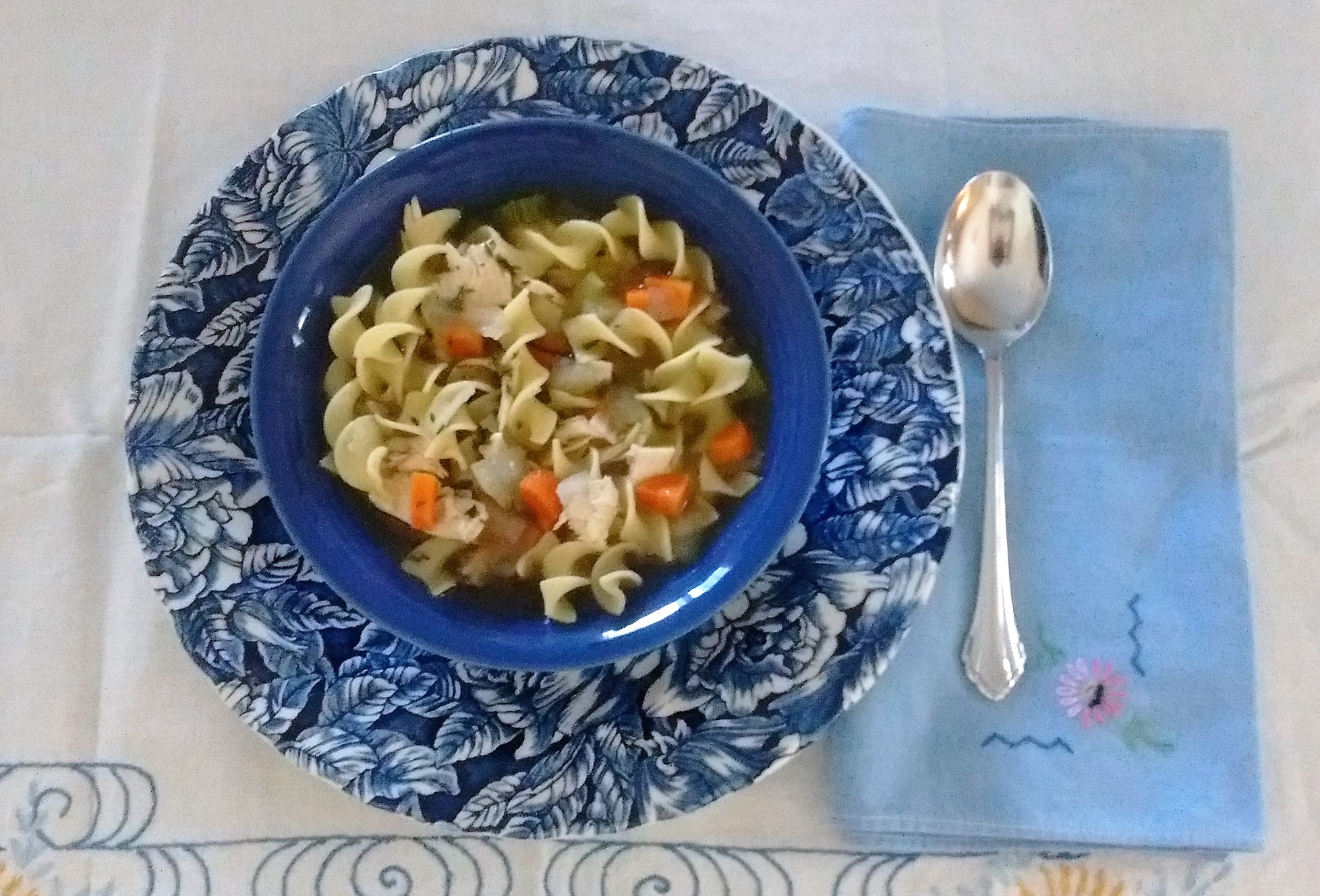
The opportunity to pamper the young woman who was swiftly becoming the love of his life occurred a few days after their visit to Garland’s home. An unexpected cold kept Garland away from John for a few days, and when he could stand it no longer, he took a crock of chicken soup to her.

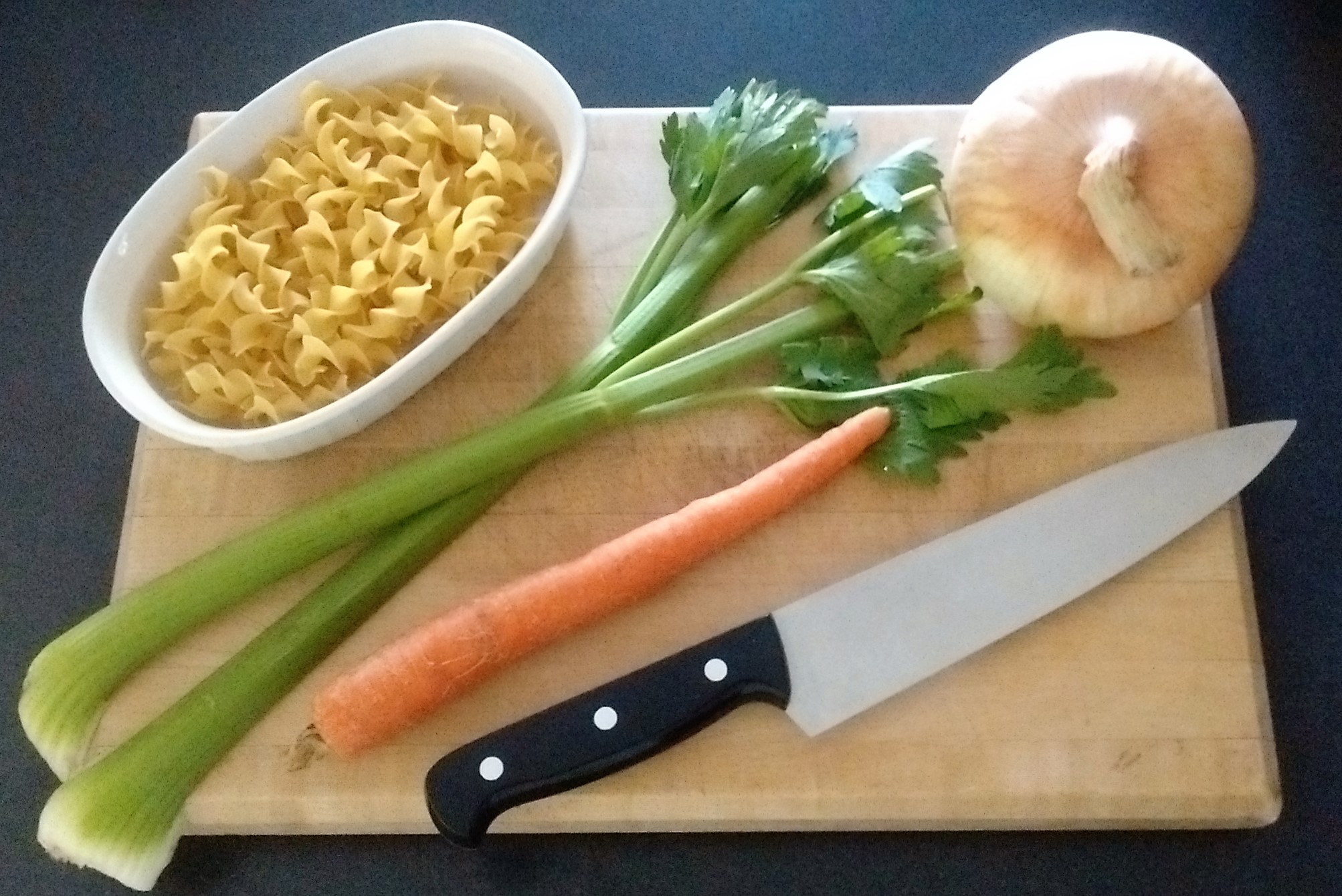
Lucia, the sassy cook who works for John’s Aunt Prudence and keeps her on her toes, made the recipe for chicken noodle soup Sam’s mother, Gladys Feldman, gave her. Per Mrs. Feldman, Jewish chicken soup cured everything. Unfortunately, neither Lucia nor Gladys could predict how Garland’s secret would crash down upon John’s world, a secret for which there was no remedy.

The recipe I had in mind for the above-mentioned scene actually starts with the post Winner, Winner, Chicken Dinner. This recipe provides the carcass you’ll need for the stock that is the base of the soup. I highly recommend using this particular carcass as the seasoning from that recipe tastes amazing in the soup.

Chicken Stock:

1 roasted chicken carcass

2 T olive oil

12 c water

1 medium carrot

1 medium celery stalk

1/2 medium Vidalia onion

1 t thyme leaves

1 bay leaf

1 t quad-colored whole peppercorns

Remove the meat from the chicken carcass and reserve it for the soup. Break up the carcass into several pieces using a large knife or kitchen scissors. Heat the olive oil in a Dutch oven or stock pot to medium heat and brown the carcass pieces on all sides. Be sure to scrape any browned tidbits from the bottom of the pot and occasionally turn the pieces.

Peel the vegetables and coarsely chop them. Add the water, vegetables, and seasonings to the pot, and bring to a simmer. Do not let the stock boil. Reduce the heat to low and continue to simmer, occasionally skimming any scum off the surface of the stock using a large spoon. Adjust the heat as necessary to keep the stock at a simmer until the flavors have melded, about 1 – 1 ½ hours.

Remove and discard the pieces of chicken carcass. Pour the stock through a wire mesh strainer placed over a large crock or bowl. Do not save the vegetables for the soup as the flavor has gone into the stock. The stock can be cooled to room temperature and stored in an airtight container in the refrigerator for three days or frozen for one month.

Or you can pour the stock into a six quart pot and proceed with making soup.

Chicken Noodle Soup:

Reserved chicken meat

2 medium carrots

2 medium celery stalks

1/2 medium Vidalia onion

1 t sea salt

1 t thyme leaves

Freshly ground quad-colored peppercorns to taste

2 c dried egg noodles

Bring the stock to a simmer over medium-high heat. Peel and dice the vegetables to a medium dice. Add them and the seasonings to the pot and stir thoroughly. Return to a simmer then reduce the heat to medium low. Simmer until the vegetables are tender, about twenty minutes.

In a separate pot, bring water to a boil. Add the noodles and cook until al dente. Drain them in a colander. Do not cook the noodles in the stock or they will become mushy and your stock pasty.

Shred the reserved chicken meat into small pieces. You’ll need about 2 c for the soup. Save any extra for another use.

Once the vegetables are tender, add the shredded chicken and drained noodles to the stock. Stir thoroughly and return to a simmer. Cook about five minutes to meld the flavors. Season with salt and pepper as needed.

Enjoy!
Taking Stock of the Situation 2

Winner, Winner, Chicken Dinner

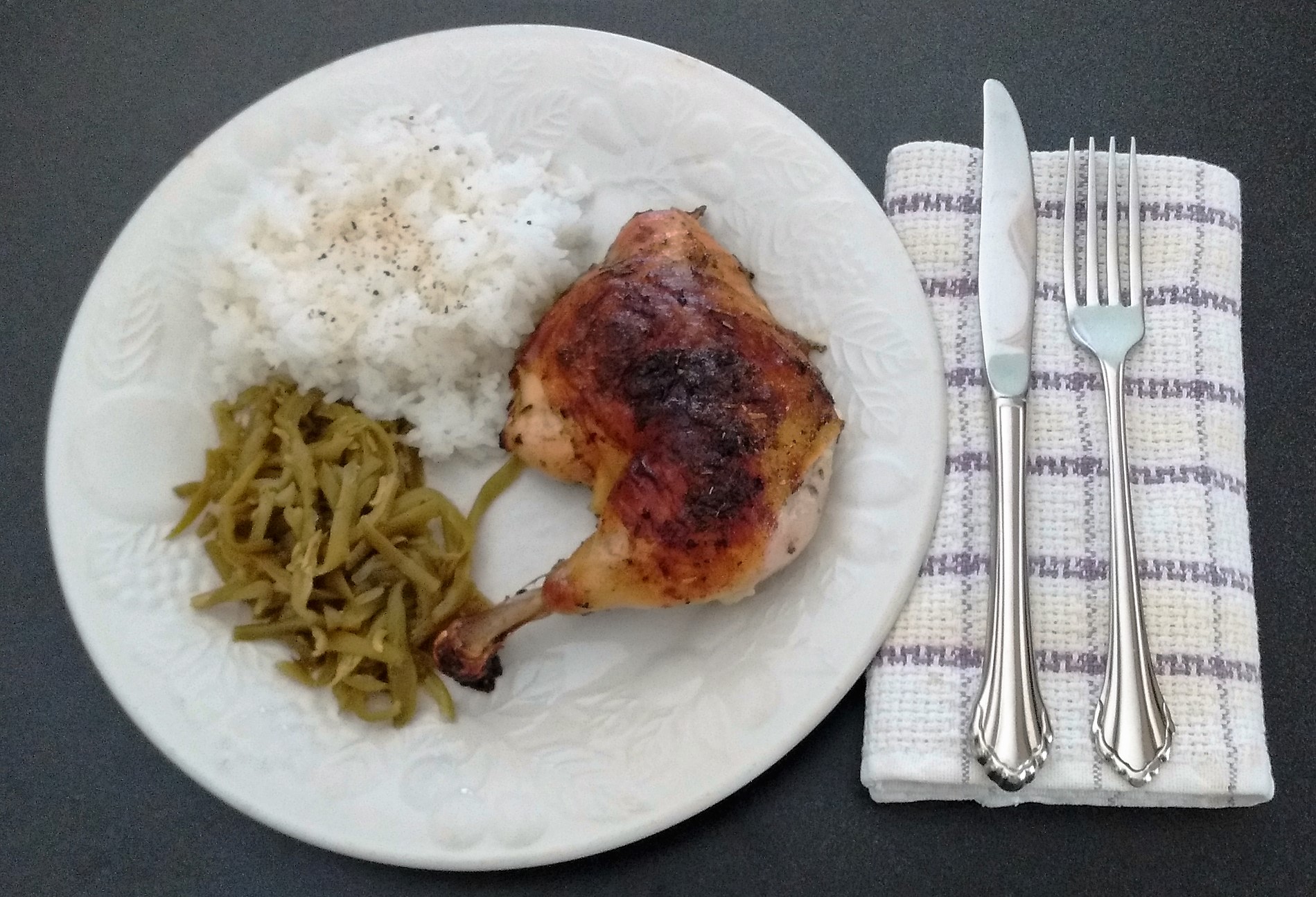
Winner, Winner Chicken Dinner 2Hugh Griffin is on the cusp of a secret that will change the path of John Welles’s life forever. The unspoken shared knowledge exists between Hugh and his daughter, Garland, who John loves dearly. The once competitive pair has become quite close although for different reasons. Their relationship reaches its pinnacle in the summer of 1929 when she invites him to her home to visit her father, Hugh.

The retired Lutheran pastor welcomes his daughter and her boyfriend with abundant graciousness. Hugh is the type of man who lives a simple life with excellence. His cooking is homey, delicious, and prepared with love. For the special meal, he takes a little extra time with the otherwise ordinary dish of roasted chicken.

The following recipe is the one I had in mind for Hugh to prepare when John and Garland visited. The extra steps of spatchcocking and marinating the chicken are simple and go a long way to making the humble roast chicken juicy and tender. Besides, half the fun of spatchcocking a chicken is saying the word spatchcock. While I could describe this process to you, it’s much simpler to direct you to a website on Spatchcocking a Chicken. Once you’ve spatchcocked your chicken, proceed with the following recipe.

1 4-pound chicken, spatchcocked

Marinade:

2 c buttermilk

¼ c plus 2 T olive oil

4 cloves garlic, pressed

1 T ground peppercorns (I used quad-colored peppercorns)

1 T sea salt

2 T rosemary

1 T honey

Mix the buttermilk, ¼ c olive oil, garlic, pepper, sea salt, rosemary, and honey in a bowl. Whisk thoroughly. Pour the mixture over the spatchcocked chicken in a baking dish to be covered with plastic wrap or place the marinade and chicken in a freezer bag and seal tightly. Refrigerate overnight or up to two days.

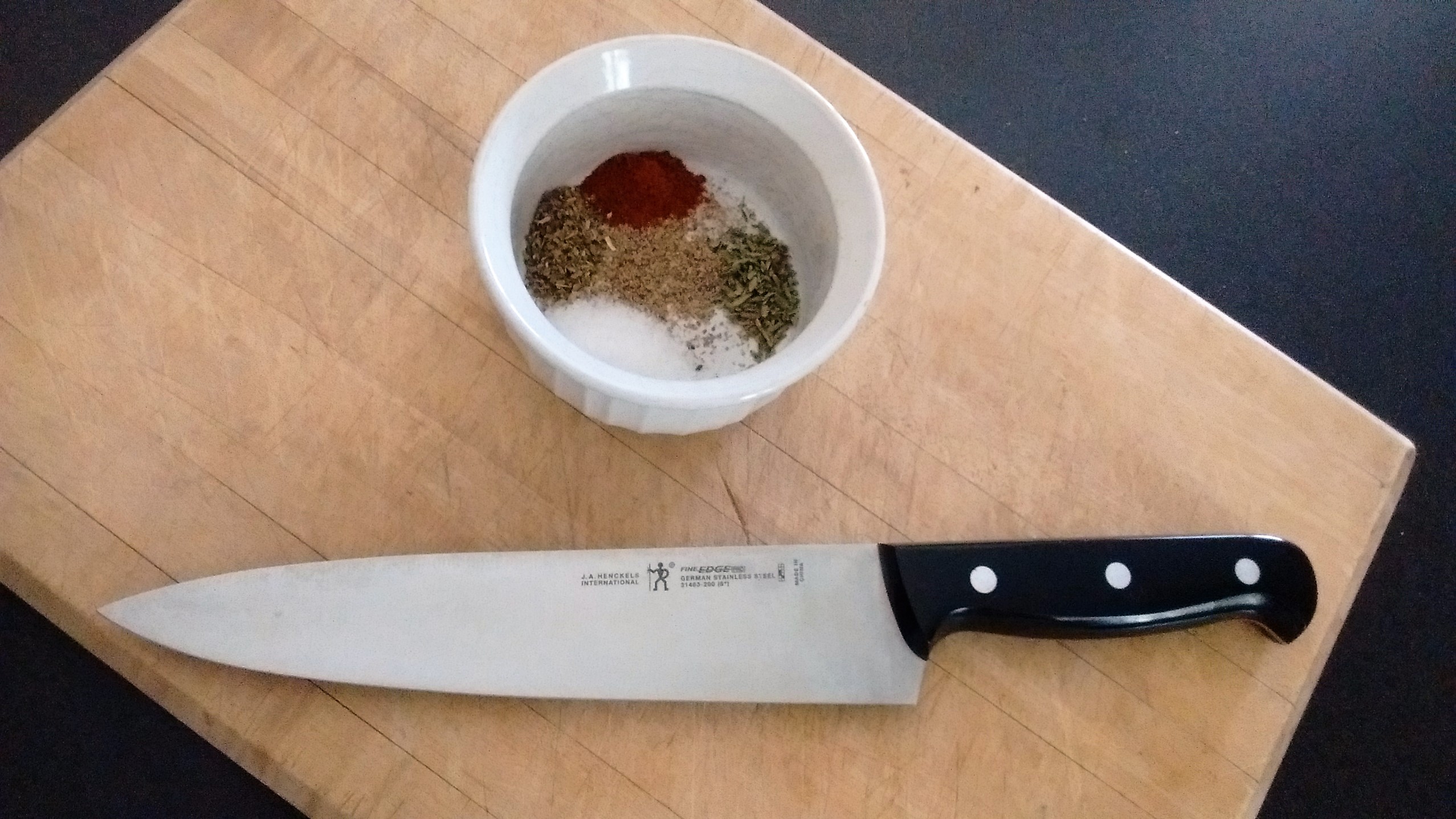
Preheat the oven to 400° F. Remove the chicken from the marinade and place on a rack so the excess can drip off. Prepare the seasonings mixture.

Seasonings Mixture:

6 T unsalted butter, cold and cut into six squaresWinner, Winner Chicken Dinner 1

1 t sea salt

¼ t oregano

¼ t thyme

¼ t paprika

¼ t ground peppercorns (Again, I used the quad-colored variety)

Combine the spices and salt. Dip one side of the cold squares of butter in the seasoning mixture and shove four beneath the skin across the breast of the chicken and one each beneath the skin over the thigh/drumstick area. Drizzle the chicken with remaining 2 T olive oil and sprinkle any remaining seasoning mixture across the skin of the chicken.

Place the chicken breast side up in a roasting pan or baking dish. Tuck the wing tips beneath the chicken. Roast for 45 minutes then reduce heat to 325° F. Baste the chicken and continue roasting until well browned and until juices run clear when chicken is pierced where leg joins thigh, about another 20 minutes.  Baste again when done roasting.

Place chicken on a carving board and allow it to rest for 10 minutes before cutting into serving pieces. Place a portion on each of four plates, and drizzle each serving with pan juices.

Enjoy!

Masking the Truth

Clove Gum 2Everything seemed peaceful for Dr. John Welles in August of 1952. Despite a lifetime of dealing with secrets, whether keeping them for the sake of a loved one or generating secrets of his own, Dr. Welles believed he had finally found sanctuary in the hills of West Virginia. But it wasn’t to be.

By helping Bea Turner, who had become quite dear to him, John made a deal with the representatives of evil itself: the Ku Klux Klan. In his naiveté, he underestimated how truly wicked the Klan was and promised a favor in return to be fulfilled at the Klan leader’s whim. The day the favor was called in set John on his most destructive path so far. He turned to alcohol as a stabilizing factor in his downward spiraling life, yet he was unable to retain any sort of control. Alcohol claimed Dr. Welles for its own, and by submitting to the influence, he continued to lose what was dear to him.

One way the doctor kept people from discovering his alcoholism was to chew strong clove gum. Although I never mentioned brands, I always had Adams Clove Gum in mind for John when masking his drinking. He wouldn’t have been the first to do so.

Clove gum was first manufactured by the Thomas Adams Company in 1914. After working as a photographer and glassmaker, Adams tried his hand at inventing. The only thing he invented of any worth was achieved in the 1850s. While working as a secretary to the Mexican President, Antonio López de Santa Anna, the pair attempted the business venture of using chicle as a cheap alternative to expensive rubber tires. After a year of trying, the project was abandoned, and Adams eventually realized he could use chicle to produce a better type of chewing gum. He formed a company that by the late-1880s was making gum sold across the country.

In 1899, Thomas Adams became part of a new company called American Chicle Company which merged the six largest American chewing gum manufacturers. He remained a member on its board of directors until 1905 when he died. American Chicle Company was renamed Adams in 1997, and The Adams Company has since been acquired by Cadbury. Today it is known as Cadbury Adams. Cadbury Adams continues to use the same packaging used in 1914 to capitalize on the nostalgia factor, and the formula has remained essentially the same as well.

Commercial production of gum dates only to the mid-1800s making clove gum one of the oldest, continuously sold flavored gums on the market. It was especially popular in the Prohibition era, when people believed that they could cover up the scent of alcohol on their breath by chewing it.

Every few years, Adams Clove Gum makes an appearance on the market and is scooped up by longtime fans ensuring that candy and gum sellers run out quickly. The Internet helps when looking for new suppliers, however, my recent tour around the Internet didn’t reveal any sources at the moment.

While many young people today haven’t heard of clove gum, among its devotees, Thomas Adams will forever be remembered as the father of the modern day chewing gum industry.

The Secret in the Sauce

The Secret in the SauceGarland Griffin is an intelligent, beautiful young woman with a secret that’s going to change the course of John Welles’s life. When Garland and John first meet at the University of Maryland, where both are pursuing studies to become doctors, the pair develops an instant rivalry over grades. A chance encounter at a speakeasy leaves the duo unsure of where they stand with each other, but it is the unwelcome growing attraction they feel that catches both off their guard.

Over a tulip sundae at the soda shop, Garland observes John and his two best friends, Sam and Claude, and comes to the decision that although she’s experiencing feelings for her fellow student, what she needs is John’s presence in her life as cover for her dark secret.

The following recipe for hot fudge sauce is the one I had in mind when I wrote the above-mentioned scene. There are other delicious toppings I could have chosen for Garland, but she needed a selection as dark and sultry as herself.

Hot Fudge Sauce

⅔ c heavy cream

½ c light corn syrup

⅓ c dark brown sugar

¼ c Dutch-processed cocoa powder

¼ t sea salt

¾ c bittersweet chocolate (chopped and divided in half if using blocks. I used Ghirardelli chips.)

2 T unsalted butter

2 t vanilla

Bring the heavy cream, light corn syrup, dark brown sugar, cocoa, salt, and half the bittersweet chocolate to a boil in a saucepan over a medium-high heat, stirring constantly. Reduce the heat to low to maintain a simmer. Bubbles should rise slowly to the surface. Stir occasionally to keep from scorching the sauce. Cook for five minutes.

Remove from the heat and add the remaining chocolate, butter, and vanilla. Stir until smooth. Cool in the saucepan or a shallow dish for 20 to 30 minutes before transferring to an airtight container for storage in the refrigerator. The sauce will last for two weeks. Reheat in a saucepan on the stove over low heat or in the microwave for 30 second increments until it is pourable but thick.

Enjoy!

Bea’s Diner-Open For Business

In the summer of 1948, Dr. John Welles is the newest resident in Addison-on-Gauley, West Virginia. He’s still reeling from his brief experience during World War II, the effects of which will haunt him for many years, and seeks refuge in the small town tucked away in the Appalachian Mountains. His role as the new doctor provides the perfect camouflage for the emotional scars he carries and allows him to hide behind his mask of professionalism. Only one person in the town can’t be fooled.

Bea's DinerBea Turner, the voluptuous, cigarette smoking diner owner, takes a fancy to John which he returns in kind. They become close during his initial trip into town, an event that makes John the butt of an unexpected joke, and their relationship grows through many hardships and trials. Their love for each other is recognized in town as something akin to marriage. They alone believe they’ve kept their liaison under the radar.

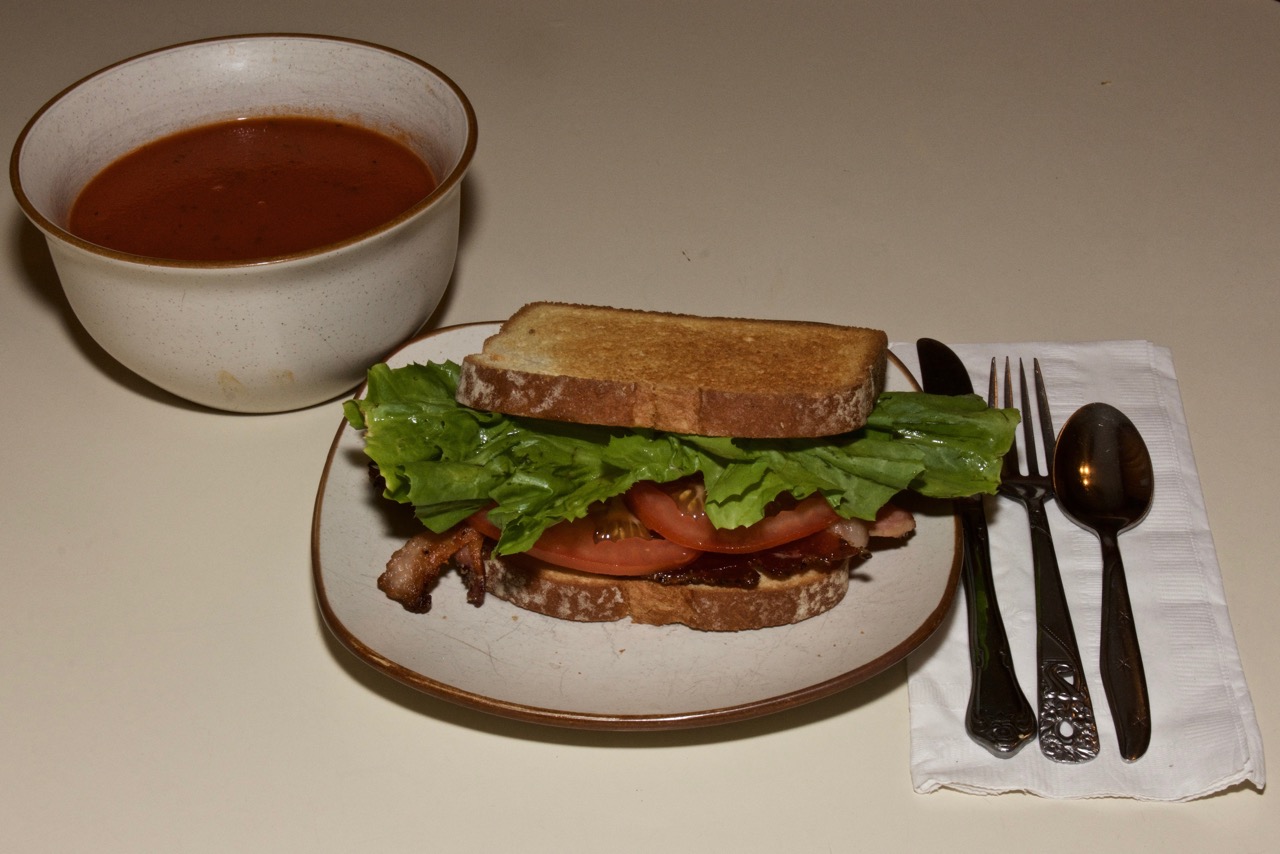
The sassy restauranteur serves John a bacon sandwich and tomato soup for lunch during his first visit. He doesn’t enjoy the meal surrounded by the more gossipy members of the town, but having Bea in his presence eases the awkwardness. The biggest surprise comes at the end of lunch when somehow John gets stuck with the entire check.

Bacon sandwiches are easy to make and don’t require a recipe. Two slices of your favorite bread toasted to your desired darkness, add as many slices of cooked bacon as you prefer, top with lettuce, tomato, and mayo—Viola! Bacon sandwich. I’m sure there are people who choose other condiments, vegetables, dressing, relishes, and those who leave off everything except the bacon. Really, the humble bacon sandwich is a matter of preference.

As for the tomato soup, while the majority of the items on Bea Turner’s menu are homemade, one place she cuts corners is by using good ole Campbell’s Tomato Soup. She is, after all, the only employee in her own restaurant.

I’ll not enter the debate on the sodium levels in canned soups and how Campbell’s added high fructose corn syrup to their soup to appease the American sweet tooth. I’d like to believe that during the summer of 1948, when John visited Bea’s diner, the soup was wholesome and tasty and the can wasn’t lined with bisphenol-A.

As recently as 2012, Campbell’s Tomato Soup still ranked as one of the top ten selling dry grocery items in U.S. grocery markets. It’s fairly healthy, too, for canned, modern industrial food. No fat, no cholesterol, no fake colors or flavors, laced with minerals, iron and Vitamin C. A two-serving can is only 270 calories before adding a bacon sandwich as a side.

There are organic choices on the market now as well as lower-sodium varieties and those made without high fructose corn syrup. Whichever option you choose, remember to add a tasty bacon sandwich, or the traditional grilled cheese, and enjoy your meal.

When Life Gives You Lemons

When Life Gives You Lemons 3In June of 1920, Prudence Welles Mayfield picked up her nephew, John, to take him to Baltimore to live with her.   The event proved to be a difficult time for her and her sister-in-law, Collie Mercer Welles.

Collie, the midwife who delivered John, raised him from the day he was born when his mother died due to complications from childbirth. She knew the opportunity to live and attend school in Baltimore would be one she could never provide for her youngest child, but the thought of letting him go broke her heart. For Prudence, anxiety came from her insecurities about parenting her nephew when she had absolutely no experience. A dose of guilt also plagued her because she alone knew her intentions weren’t as altruistic as they appeared on the surface.

When Life Gives You Lemons 1The two women were never close and barely tolerated each other at best. The only thing they had in common was their deep, abiding love for John. They would never let him see them quarrel over his upbringing. And yet, a gentle tug of war went on just below the surface as they vied for John’s affections. Collie’s last ditch effort to lure her young son back to his family and life on the farm was the simple picnic she sent with Prudence and John for the trip to Baltimore. She hoped her good cooking, the favorite dishes John grew up eating, would produce a change of heart in the boy. Included with the meal was a Mason jar of lemonade, sweet and chilled, the perfect taste memory that would hopefully send John fleeing from his rich aunt and back into Collie’s waiting hug.

My own memories of lemonade began with that made by my Aunt Ann for family picnics. I remember she served it in a large brown crock; such an unusual container for a kid who grew up with Country Time Lemonade drink mix and Tupperware pitchers. I’ll never forget the first time I tasted Aunt Ann’s lemonade, lightly sweet and refreshing, as delicious as any food item on the picnic table at our family gathering.

The following recipe is the one that I had in mind when I wrote the above-mentioned scene. It’s every bit as wonderful as what my Aunt Ann made, and I hope you and your family will enjoy it.

Homemade Lemonade

6 – 8 large lemons, enough for 1 c of juice

1 c sugar, I use raw

1 c water

8 c water

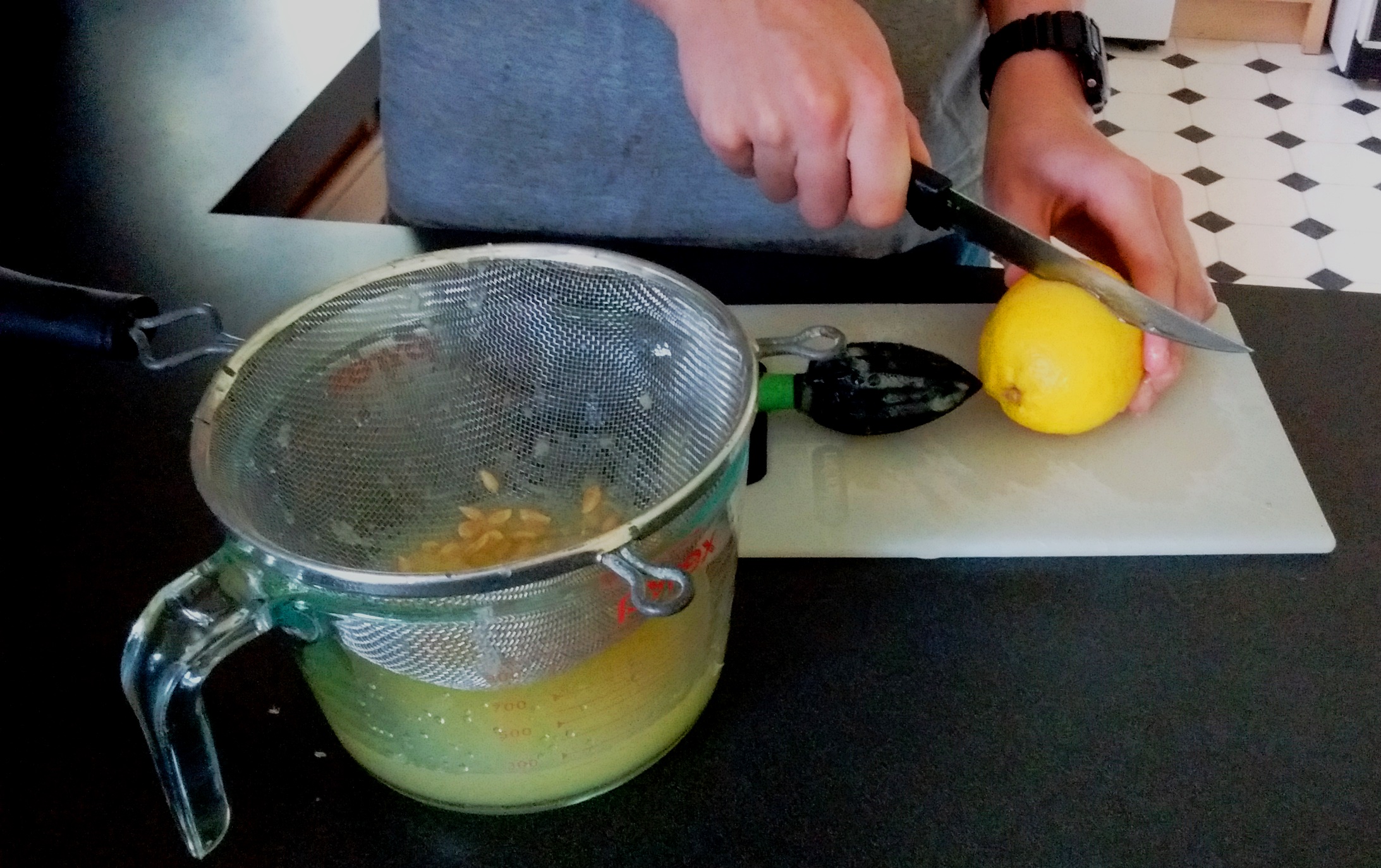
Squeeze enough lemons for one cup of juice and set aside. Cut remaining lemons into slices to float on the lemonade. Mix the sugar and one cup of water in a saucepan over medium heat. Stir until the sugar is dissolved and the mixture is heated through. Do not boil or scorch. Allow the sugar syrup to cool completely.  Raw sugar will produce a darker syrup and a deeper yellow lemonade, but it absolutely will not alter the flavor.

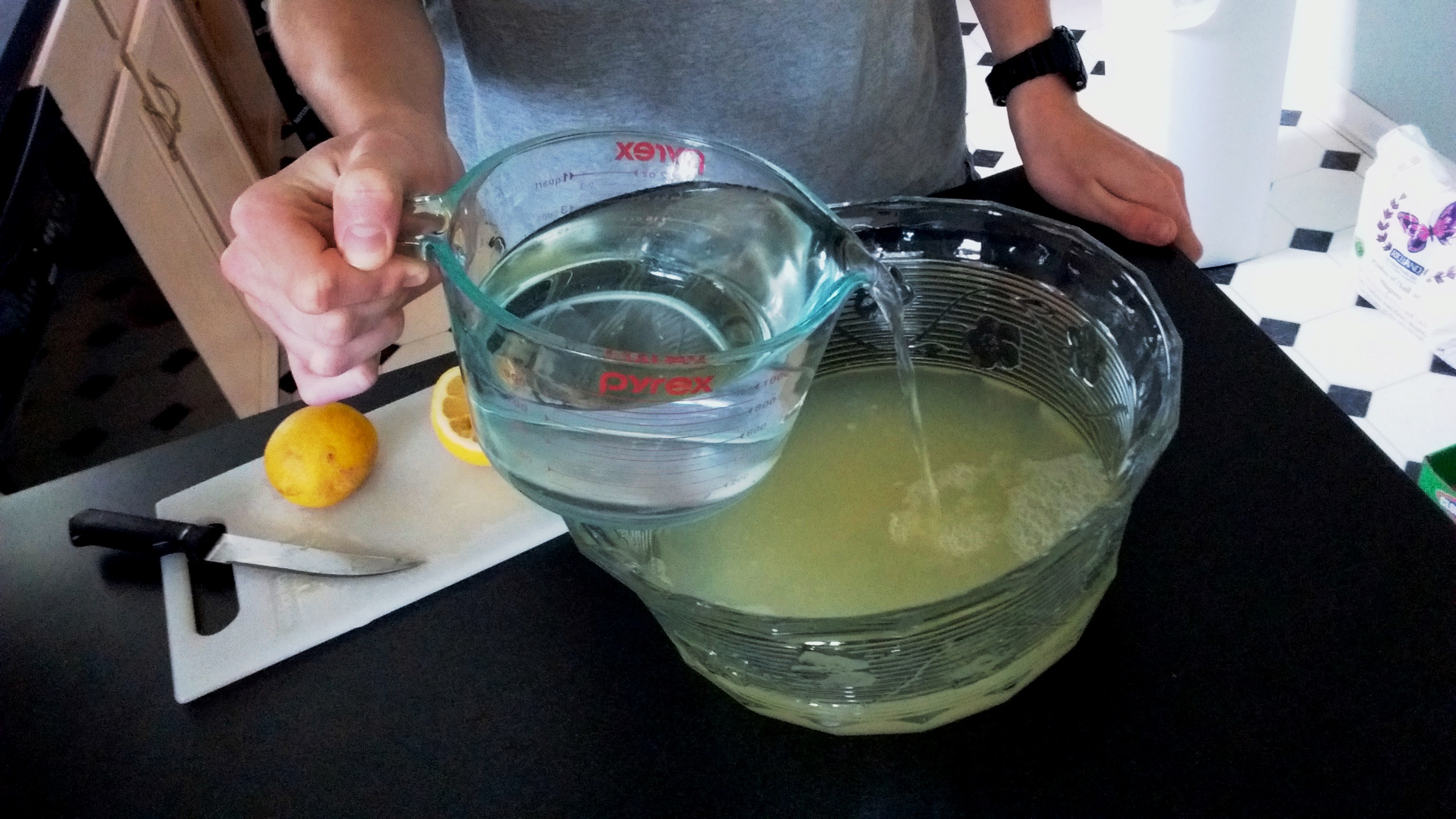
To prepare the lemonade, pour the lemon juice in a large glass bowl or crock, stir in the cooled sugar syrup and the 8 c of water. Float lemon slices on the surface. Stir thoroughly, cover with plastic wrap, and chill for at least an hour in the refrigerator.

For individual servings, fill glasses with ice and a slice of lemon. Ladle the lemonade over this and serve.  For a pitcher or beverage dispenser, fill the container with ice layered with lemon slices, pour the lemonade over this, and serve.  The ice will melt into the lemonade and dilute the tangy/sweet mixture to the perfect flavor.

When Life Gives You Lemons 2

Everything Is Just Peachy

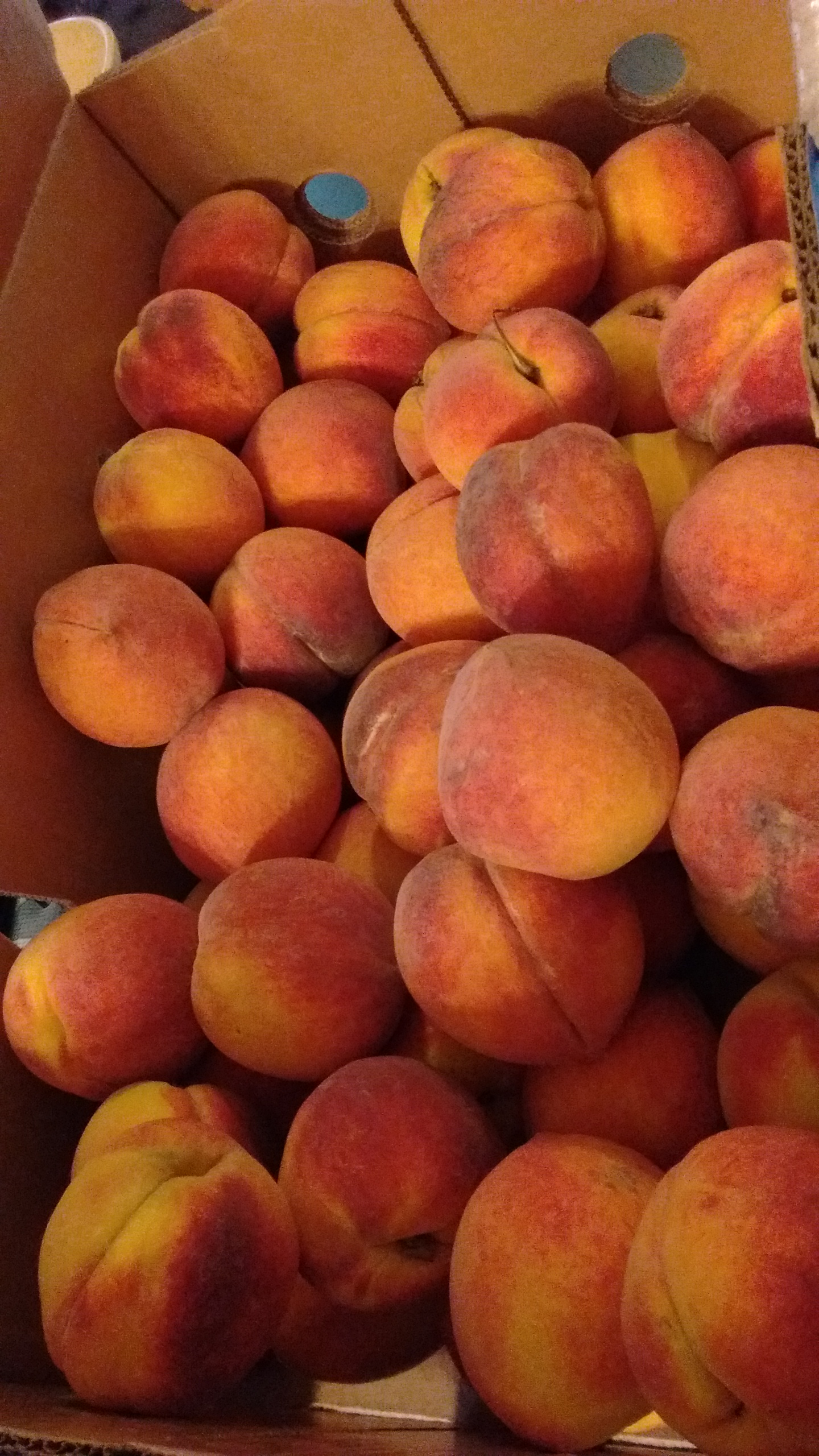
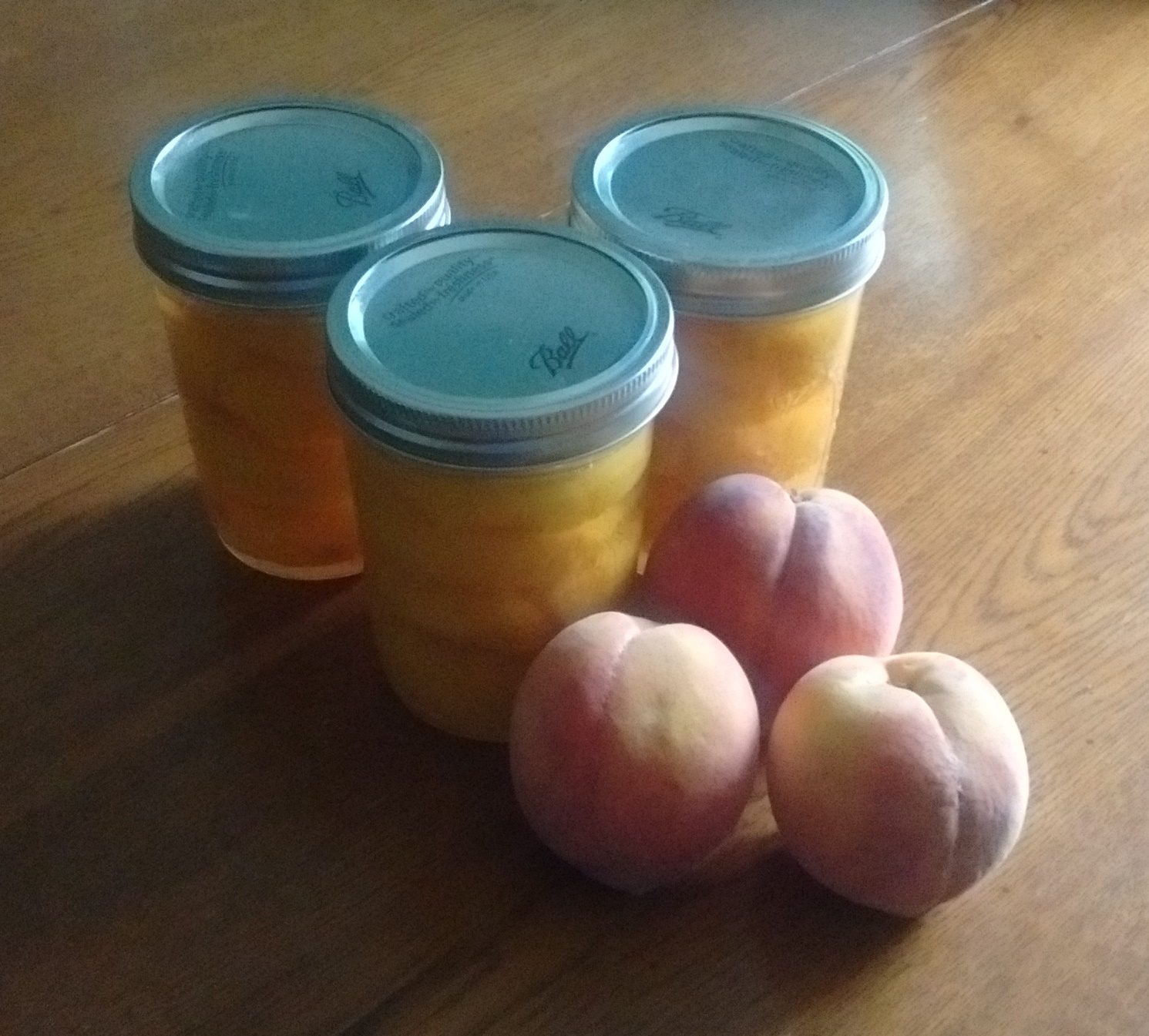
IMG_20160704_095721821Ah, the humble peach: sweet and juicy and the pride of Georgia. This year while perusing Facebook, I came across a post announcing the arrival of The Peach Truck. I would have passed right by it because there are stands all over our area selling peaches except that this truck was stopping at two well-known garden centers in the area. For some reason, that seemed incredibly important to me. If a truck loaded with peaches would announce its arrival at places with which I was familiar, I should probably check it out. Besides, I love peaches and the price per pound was phenomenal.

So, twenty-five pounds of peaches later, I had to come up with a way to use them. I must admit, the reason for my purchase had to do with a scene from my novel, The Secrets of Dr. John Welles, during which the midwife, Collie Mercer, served a humongous celebratory breakfast in honor of my protagonist’s birth. For whatever reason, I chose to have her serve canned peaches. I was probably thinking they would be extra special for breakfast and somewhat dessert like. Of course, in keeping with my posts for Edible Fiction, I have been preparing the foods from my novel and sharing the recipes on my blog. I have never in my life canned peaches. In fact, I’ve never canned anything.

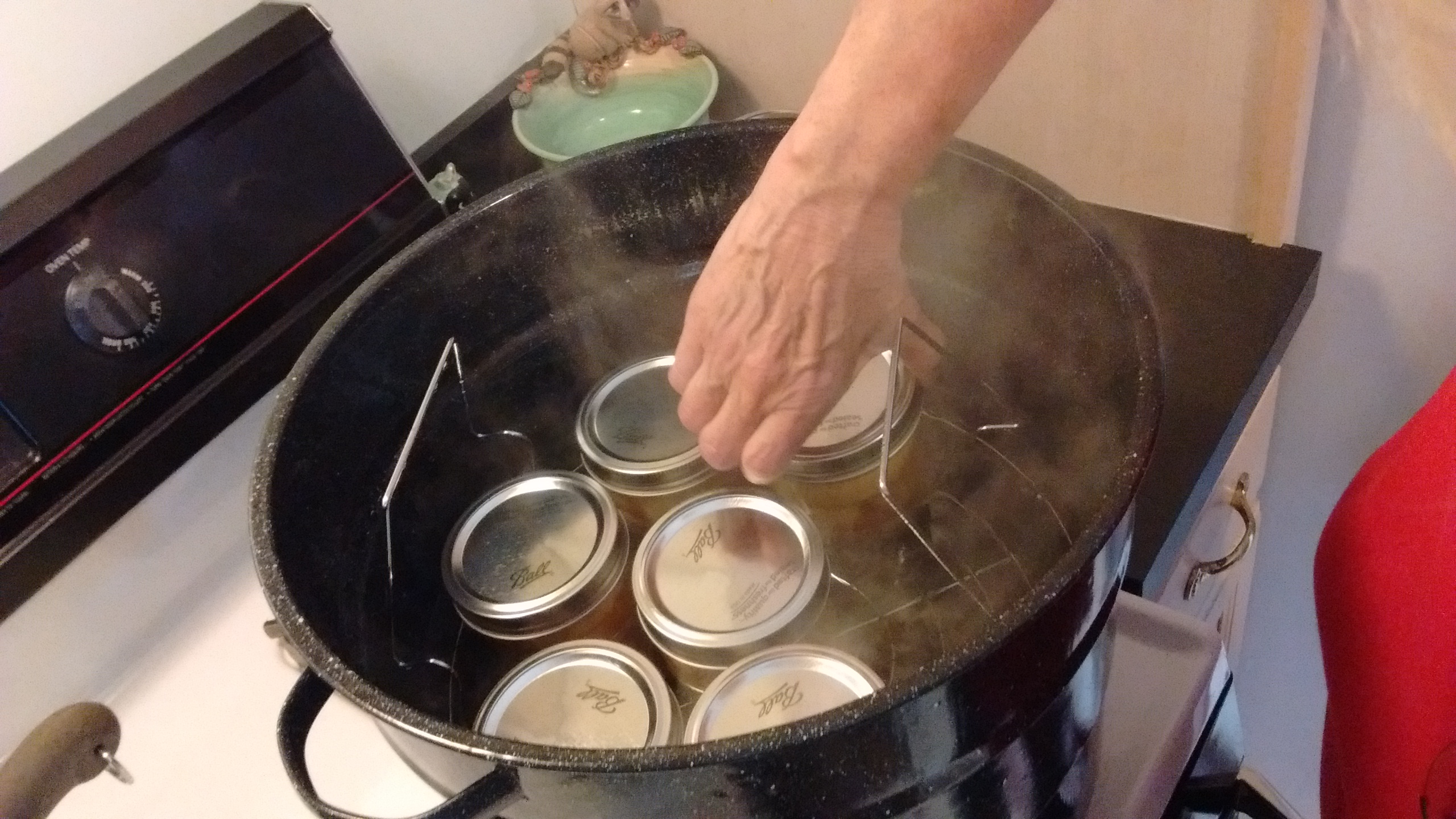
IMG_20160704_103204029Thankfully, my mother canned when I was a child. I remember all-day canning sessions of tomatoes, pickles, corn relish, and applesauce. She used a pressure canner, but my darling husband, William, supplied me with a water bath canner which was much less intimidating to a novice such as me. My best friend, Emily, provided all the canning jars I would need. I picked up new lids and rings, and I was ready to can.

The best part is that even if you don’t have a brilliant, experienced mother to fall back on, The National Center for Home Food Preservation offers detailed instructions for canning, drying, freezing, smoking, curing, and pickling foods. One simply cannot go wrong by accessing the wealth of knowledge provided here. Useful charts and step by step processes will guide you through preparation, various methods, quantities, etc. I direct you to this site in lieu of a recipe because you may choose to make larger batches than I did. One thing I will warn you though: canning is addictive. I’m already making plans for next year’s batch of peaches as well as other fruits and veg to can throughout the year.

Everything Is Just Peachy

One Potato, Two Potato

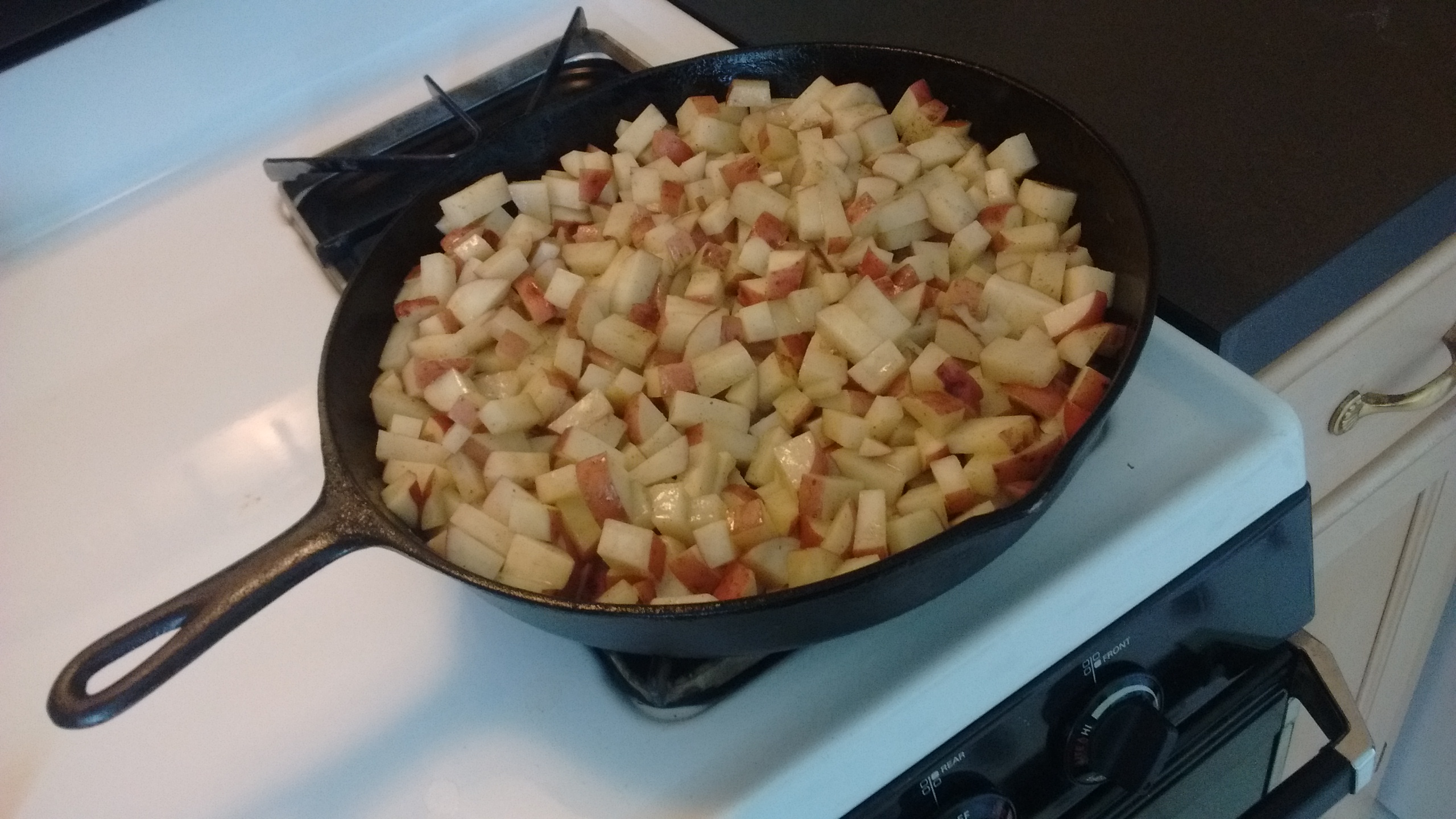
Fried PotatoesI’ve heard the Irish are fond of their potatoes, but I suspect Americans are a close second when bestowing favoritism on tubers.  Baked, fried, roasted, or mashed, potatoes are not only a staple, they are comfort food.  This is probably what midwife Collie Mercer had in mind as she prepared a celebratory breakfast including fried potatoes for the Welles family to mark the arrival of the newest sibling, John.  Not to mention the hearty meal would sustain them on that cold December morning.

Fried potatoes are one of those dishes you learn to prepare by watching your mother or grandmother.  Recipes for fried potatoes probably exist but really all one needs is a little know-how.  Russets, America’s most popular potato type, are good for frying.  I use a mushroom brush to scrub the skins as I rinse them under cold water.  You can peel them if you choose.  One to two potatoes per person is plenty depending on the appetite of your guests and what else you may be serving.

Cut the potatoes into half-inch chunks and place them in a bowl of salted cold water until the task is complete.  This will keep the potatoes from turning an unbecoming shade of gray.  Drain the chunks and pat dry.

Grab your cast iron skillet as the non-stick variety will not get hot enough.  Peanut oil is the best for frying, but I imagine Collie made hers in butter.  When I use butter, it is unsalted.  In either case, the skillet should be hot enough that the oil will ripple on the surface without smoking or the butter will melt quickly and bubble.

Add the potatoes but don’t overcrowd the skillet.  Brown until crispy on the edges then flip the potatoes and repeat on the other side.  You can cover the potatoes at first, but be sure to remove the lid for the last bit of browning or they will be soggy.  Garlic, onions, and red or green peppers make tasty additions to this humble dish.  Season with salt and pepper to taste and serve hot.  Slices and shreds can be prepared in exactly the same way.

Enjoy!

Hammin’ It Up

Lyla Welles had one mission in life: protect her children from the hard hand of their father. So when her youngest child, John, was born on a cold December morning in 1907, the delivery-weakened mother worried that she wouldn’t have the strength to see her goal through.

Oblivious to his wife’s concerns, John Welles the elder saw the birth of his fourth child, third son, as cause for celebration. He indulged his appetite by breakfasting on the good food prepared by the midwife, Collie Mercer.

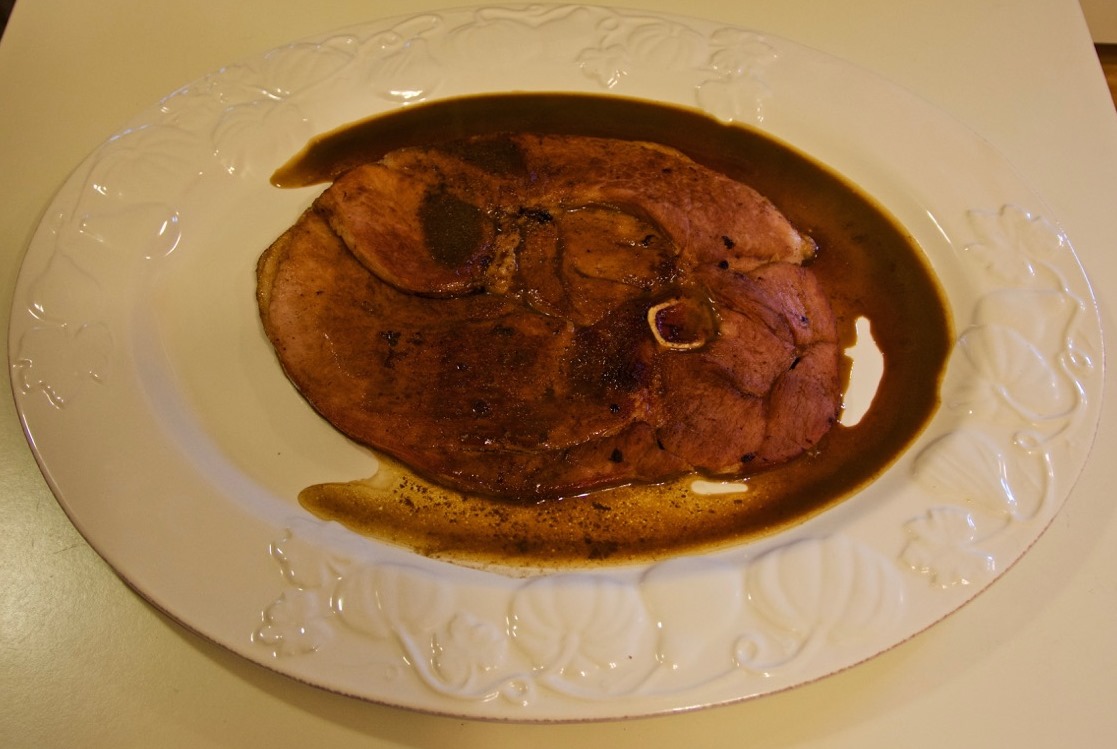
The following recipe is the one I had in mind when I wrote the above-mentioned scene for my novel, The Secrets of Dr. John Welles. While many people enjoy ham, redeye gravy is somewhat of an acquired taste. The salty flavor is enhanced by the strong coffee, and although redeye is thinner than other breakfast gravy, it’s quite rich.

Enjoy!

Ham Steak and Redeye Gravy

1 bone-in, fully cooked ham steak, approximately 1 lb.

½ c strong black coffee

¼ c water

2 T unsalted butter

Salt and pepper to taste

Heat a 12-inch, cast iron skillet on high heat until it is hot. Carefully test for degree of warmth with your hand above the skillet. Place the ham steak in the skillet once it is heated all the way across. Brown the ham steak on both sides. There should be a nice quantity of drippings and ham tidbits in the bottom of the skillet. Don’t burn this or the meat.

Once the ham steak is heated through, remove it to a platter and place in a warm oven. Add the butter, coffee, and water to the skillet and gently scrape the skillet to loosen any browned pieces. Season with salt and pepper to taste. Stir gently until the gravy is reduced by at least one-third. A gentle boil is acceptable, but take care not to scorch the gravy, or it will taste burnt.

Pour the gravy over the ham steak on the platter and serve.

Hammin' It Up

Juicy and Delicious

Pop On Over, Love

IMG_20160607_085149863[1]By June of 1948, Dr. John Welles still hadn’t overcome his experiences during World War II. The haunting memories were more than he bargained for. Further gnawing at his conscience was the fact that his service had been quite brief. The worst part, though, was the secret John brought home from the war.

In his efforts to bury the painful truth of what took place in France, John became increasingly distanced from his family and friends. They were patient and loving in return, waiting for John to open up on his own terms. All except his Aunt Prudence.

Prudence had never been one to sit back and wait for things to happen. She always made her own outcome to her satisfaction, and this was exactly what she intended to do with John. Unfortunately, her well-meaning endeavors didn’t produce the results she had hoped for. She argued with her nephew until John simply shut down. Still, Prudence never backed off where he was concerned.

Into the middle of this family struggle stepped Lucia, Prudence’s sassy cook since the days of John’s boyhood. She knew her employer turned close friend had John’s best interests at heart, but sometimes Prudence’s tactics were too harsh, especially for a man still reeling from the effects of war.

One morning, over a breakfast of popovers, Lucia offered the sage advice that helped John make the first positive decision in his life since returning from Europe. Prudence hated to admit that her cook was right, but she didn’t press the issue.

The following recipe for popovers is the one I had in mind when writing the above-mentioned scene for my novel, The Secrets of Dr. John Welles. The recipe has been in my mother’s recipe box since her high school home economics days. Popovers are incredibly simple to make, and they taste delicious fresh from the oven with butter.

Enjoy!

Lucia’s Popovers

1 c all-purpose flour

½ t salt

1 c milk

2 eggs

Preheat the oven to 425° F

Thoroughly butter 5 – 9 custard cups. Mix all ingredients with a beater until smooth. Do not overbeat the batter or the volume will be reduced.

Fill the greased custard cups half full. Bake for 40 minutes. Resist the urge to peak or the popovers may fall. Check after 40 minutes. The popovers should be golden brown.

Serve warm with butter.