Farm Implements Useful to Writing

Sometimes, writing a blog post to share with all the world is like tap dancing on the stage alone when you took piano lessons: your mistakes will be obvious and glaring. Thankfully, Word catches the majority of them, but there are days when almighty Word isn’t enough. That’s when we turn to our Google search bar, right?

I’m going to extend myself some grace here and admit that I’ve gone back to correct mistakes I spotted after major editing, proofreading, and posting. With all that being said, what tripped me up most recently was another dual spelling. Word didn’t issue the customary red squiggles when I typed it, but I kept staring at my laptop because something didn’t look quite right. You have to love the contrary English language.

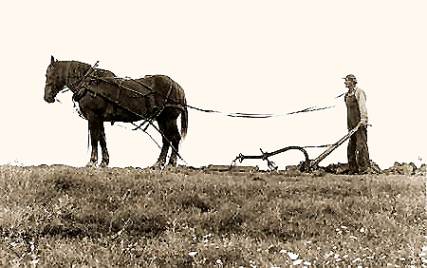
Farm Implements Useful for WritingToday’s The Weight of Words focuses on plow vs. plough. Locale factors in to this one with American and Canadian speakers of English preferring plow as the spelling for the farm implement and the related verbs. Our British and Australian neighbors prefer plough. In either case, the word is pronounced the same. Although I do think it would be hilarious if plough was pronounced the same as rough.

How Reading Taught Me to Misspell Words

How Reading Taught Me To Misspell WordsI’ve read so many books during my life that I’ve started to misspell words. I’ll give you a minute to think about that.

I didn’t pay attention to which books were written by English authors and which by American authors. There must have been a time when my selections were top heavy with Brits because I started dropping a U into words that Microsoft Word kept underling, claiming that a U didn’t belong in said word. When it happened with the word color, well, that one seemed rather obvious.

Then came a day when Word underlined realise. I couldn’t figure out what was wrong. I kept re-reading the sentence for grammar and content to make sure it wasn’t a fragment, etc., etc. But wait, the underline was red, squiggly, and mocking. What in the world was wrong with this word?

I deleted it, retyped it, and again the ugly red squiggles popped up. It was time to resort to the good ole Google search bar. When the first article to pop up was titled Realise vs. Realize, I had a sneaky suspicion of the mistake I’d made. I was having my own private British Invasion.

According to Grammarist.com:

Realise and realize are different spellings of the same word, and both are used to varying degrees throughout the English-speaking world. Realize is the preferred spelling in American and Canadian English, and realise is preferred outside North America. The spelling distinction extends to all derivatives of the verb, including realised/realized, realising/realizing, and realisation/realization.

None of this may seem relevant to a writer, but on the off chance your writing includes a letter composed by someone born and raised outside of North America, think how smart you’ll look to your editor when you spell realize with an S.

Tools of the Trade

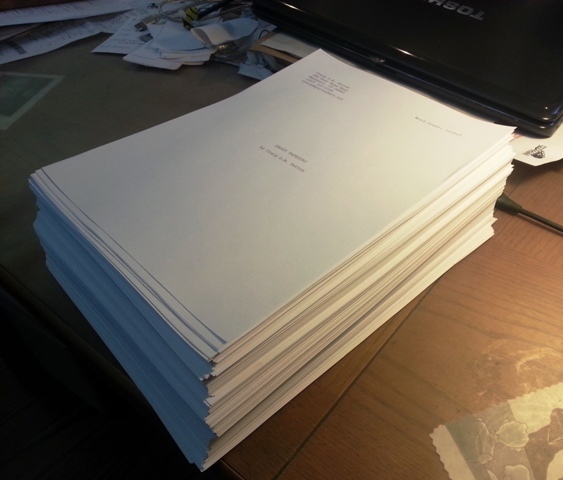
Tools of the TradeAt this month’s Critique Group, a fellow writer said that he thought he’d done everything correctly when writing his novel only to find that it had to be double spaced with one-inch margins, Times New Roman 12 point, starting a third of the way down the page—

“Wait, wait, wait,” I said when I noticed panic widening the eyes of another new member. “What you’re talking about is a manuscript submission copy.”

We had a discussion on how to write a story and touched on plotting versus pantsing, writing by hand versus typing on a laptop, etc. The first point I want to make is just write the story. As Will Shetterly said, “It is better to write a bad first draft than to write no first draft at all.” I’m also fond of “Write your first draft with your heart. Re-write with your head.” There are many such encouraging quotes, but I’m sure you understand what I’m saying. Get that story written.

With that being said, the second point and true purpose of this post is to offer another resource where new writers can find the information they require to turn their manuscripts into acceptable submission copies. I’m all about giving back the information I discovered and/or processes I learned.

These steps are for formatting a novel:

  1. Set 1″ margins on all sides.
  2. Prepare a title page with your name and contact information in the upper left-hand corner of the page (some sources say include the word count here), title in ALL CAPS about one-third of the way down the page, skip a line, followed with a novel by, skip a line, and your name.
  3. Don’t number the title page. Begin numbering (1) with the first page of the text of the manuscript, usually the introduction, prologue, or chapter one.
  4. Use a header on each page, including your last name, the title of your novel in ALL CAPS, and the page number. Remember to make the font of the header match the font of your manuscript.
  5. Start each new chapter on its own page, one-third of the way down the page.
  6. The chapter number and chapter title should be in all caps, separated by two hyphens: CHAPTER 1—THE BODY.
  7. Begin the body of the chapter four to six lines below the chapter title.
  8. Indent fives spaces for each new paragraph.
  9. Double-space the entire text.
  10. Use a standard font, 12-point type. Times New Roman, Arial, or Courier is fine.
  11. Alignment should be to the left, not justified. The right edges will not be uniform.
  12. Indicate scene breaks with a blank line and five centered dashes or number signs.
  13. End your manuscript with the five centered dashes or number signs or simply type THE END.
  14. Use 20-lb. bond paper.

The guidelines for a manuscript submission copy may vary a titch based on which websites you reference and/or who you talk to. The steps presented above are the basics and will ensure that your manuscript doesn’t get rejected because it is sloppy.

Three’s a Crowd

Three's a CrowdTwo words that are similar are enough to drive this writer crazy, but when there are three that actually give me pause concerning spelling, definition, and usage, well, that’s when the ole Google search bar gets quite a workout on my laptop. Today’s The Weight of Words focuses on eminent vs. imminent vs. immanent.

And by the way, I don’t really use my Google search bar to look up words. That’s what Grammarist is for. Per the website:

Someone or something that is eminent is of high rank, noteworthy, distinguished, or prominent. An accomplished world leader and a respected intellectual, for instance, are eminent.

Something that is imminent is (1) very near or (2) impending. For example, when the weather forecast calls for a 100% chance of thunderstorms, we might say that storms are imminent.

Something that is immanent exists within or is inherent to something else. The word is often used in reference to spiritual or otherwise nonmaterial things. For example, a spiritual person might say that God’s power is immanent to the natural world.

Though the three adjectives are not exact homophones, they are similar enough to engender occasional confusion. Immanent in particular is very often used in place of imminent in popular usage, and imminent and eminent are also frequently mixed up.

Clear as mud? Now go forth and use them!

Baring My Writer’s Soul – Part 16

Writers are an odd lot. We’d be the first to admit it. Writer’s post things like “That moment when you finish a book, look around, and realize that everyone is just carrying on with their lives as though you didn’t just experience emotional trauma at the hands of a paperback.” And because we’re writers, we’re also readers. At least we should be.

We reading/writing types are deeply and emotionally attached to the characters we read about. They become real for us in a way that often defies description. The closest I can come is to say that when I finish a well-written book, I feel as if I’m leaving behind great friends. Non-readers may scoff at us, suggesting that we simply re-read the book. That is an option, but what we want as readers is to move forward with our favorite characters, possibly gathering them all together regardless of genre, entwining them in our lives. That may seem a titch odd, but what can I say? We’re artists; perhaps this is why we write.

The interesting thing I have discovered as a reader/writer is that just like our real friends, we each have different criteria for which fictional characters we will allow in our lives. What first brought this to my attention was when I learned that my friend was reading Gone With the Wind for her classical literature book club. We discussed the book over lunch during which I admitted that I pushed myself to read it and could barely make it halfway through. I hated every minute of that piece of vintage literary fluff which actually surprised me because it came so highly recommended. After Margaret Mitchell’s endless declarations about the quaint South and dreary passages of battle scenes, the book was incredibly mediocre. Yet it wasn’t the writing that ruined it for me.

Scarlett was. I hated her. Each self-centered deed and word I had to endure at the hands of Scarlett made me want to beat her with a stick. I rooted against her at every turn and rejoiced when she didn’t get her way. Throw in spineless Ashley and sickening Melanie, and there was no way I was going to finish this book. I simply cannot stand annoying people in my real life, so why would I waste my time enduring three fictional nuisances? My friend, on the other hand, found Scarlett to be funny in her total self-absorption. Maybe my friend is more patient that I am.

Writer's Soul 16Then Dale came to mind. She’s a character from Joanna Trollope’s book, Other People’s Children. Dale was every bit as self-serving and manipulative as Scarlett and more so because she possessed a psychological hold on two other characters. She was evil, she was brilliant. I hated her with a passion and seriously considered writing Mrs. Trollope to request a sequel in which Dale was killed off slowly and painfully.

So what was the difference? Well, I’d never willingly allow someone like Dale in my life, but I wouldn’t hesitate to take her head on either. Whereas pathetic, annoying Scarlett wouldn’t earn a second glance from me as I ignored her in the most obvious ways possible. However, we’re dealing with the fictional realm, and in this world, Scarlett would never be able to compete with Dale as a worthy opponent and one that would engage me as a reader. Where Margaret Mitchell failed with Scarlett, Joanna Trollope succeeded with Dale.

In addition to the writing behind amazing characters that have the ability to evoke great response from the reader, our desires and tolerances make them appealing to us whether they are the protagonist, antagonist, or peripheral character. These factors combined determine who we will welcome into our minds. The beauty of this is that your choices don’t have to be all pleasant ones. You can fall for the bad character without any harmful side effects unlike real life where allowing the wicked person into your life may destroy you. It’s quite brilliant, really, and I wonder why more people don’t read.

Write Happy!

Baring My Writer’s Soul – Part 15

Two days ago I started reading a novel by an author whose previous book I enjoyed. Admittedly, I only had one book by which to judge her writing, but since I absolutely fell in love with the story, I trusted that I would like other books she wrote. The first novel I read by this particular author was set in medieval Japan, a favorite era of mine, which scored the book high marks right off the bat. I didn’t have to labor at all to find the exciting parts as the writing was excellent and the story captivated me. Again, this alone shed a positive light on the second novel even though it wasn’t about Japan.
Writer's Soul 15Many years had passed between reading the two novels, but I had high hopes for the second one. The second book started slowly with very little dialog and page long paragraphs composed of rambling sentences from multiple POVs separated only by commas. It took some effort to follow whose thoughts were being expressed. But I’m no quitter. If I could read José Saramago’s The Double which has enormous paragraphs with only periods and commas even when it’s dialog, and ended up being one of the best books I ever read, then I could finish this book.

One of the first things I checked was where in the lineup of publication this particular book stood. It’s number fourteen for the author which is quite impressive. There was a reason to keep going. If publishers believed the novel worthy of printing, then I should probably press on. I mentioned this to my husband, and it generated a question we’ve debated before. Is there a certain place in an established author’s career when no matter how mediocre the book may be it will still be published based on his or her prior success and/or reputation?

I’m tempted to read this author’s first and second books. They were published several decades ago, and I wonder how the writing may have evolved over time. Is it better, worse, different? Was the author simply trying something new, something she always wanted to do but didn’t dare attempt until she was established enough to trust that her work wouldn’t be rejected? Or does this later book reflect the change in tastes among readers?

In either case, I’m going to be fair to this author and finish the book. There have been less than five books in my lifetime that I was unable to finish. Also, I’m willing to allow an author some grace as she builds up to the pinnacle of the story. I trust that fourteen books later, this author knows how to write worthy of my attention. There are slight mysteries and questions that have been posed, and I cannot set the book down without discovering what they are.

I mention all of this to lay some groundwork for the real issue I want to discuss. It has to do with query letters, synopses, and first page or chapter critiques experienced by new authors. If the book I’m reading was a first novel, without an established reputation backing it, to be judged only on a query letter, synopsis, or first chapter, regardless of how brilliant those items may be written, it would be rejected outright.

A person simply cannot focus on a tiny glimpse of someone’s writing taken out of context and judge whether or not the entire work is worthy of publication. And yet, this is exactly what it done during pitch sessions at writing conferences and in agents’ offices on a daily basis. How much brilliant writing is bypassed because an agent, editor, or publisher wasn’t aware of all the narrative forces driving the story as it unfolds to reveal its true shape?

I fear that what I’ve termed ‘fast-food thinking’ has negatively influenced the art of writing and publication of said writing. Everything in life takes place at the speed of light so that our desires receive instant gratification. Just as quickly, we move on to seek the next tantalizing thing without ever realizing that we aren’t truly satisfied. The more we seek, the more things need to be supplied to fulfill the vicious whims of demand. And if you are the person who can do it bigger, better, faster than anyone else, you’ll probably be the one to make boat loads of money. So what if quality suffers? Well, that’s the problem I’m leading up to.

Let’s step back for a moment and analyze why this fast-paced process isn’t working. Let’s start with the writing. Great writing takes time, and if people have bought into the lie that time is money, then great literature is in more danger of becoming obsolete than even I thought possible.

There has to be a better way.

Writing is a major investment of passion and time. It doesn’t follow cookie-cutter formats and spew out copycat books, it doesn’t happen to make the writer rich, and it doesn’t exist for the express purpose of becoming a movie. Writing can be summarized for book flaps and reviews, but if that was all it took to satisfy a person, the writing wouldn’t have become a book in the first place.

It’s time to trade in ‘fast-food thinking’ for ‘stop and smell the roses reasoning.’ If anything worth having is worth waiting for, then I propose allowing this lesson in patience to be applied to how books are evaluated. Furthermore, as a society, we must no longer tolerate being spoon fed our entertainment especially where books and/or writing is concerned. Readers must also slow down and appreciate the treasures they hold in their hands when they read a book.

Of course, I’m open to suggestions on how to make this process work better, not just easier. In doing so, we’ll not only rescue writing from being destroyed, we’ll stop this process from encroaching upon other forms of art.

Write Happy!
My Classical Education

My Classical EducationI stopped reading Jane Austen’s Pride and Prejudice forty-two pages before the end of the book. I am familiar with the conclusion, and I have viewed both the Jennifer Ehle version of the movie as well as the Keira Knightly version (the Jennifer Ehle is far superior), and yet I put the book down for no other reason than to extend my own enjoyment. I’ll never tire of the tension between Elizabeth and Mr. Darcy, Jane’s sweet disposition, or even Mrs. Bennet’s endless rambling and scheming plans to marry off her daughters.

Pride and Prejudice is the first in a list of books that I am reading not only for pleasure but also for a close study of classical literature as suggested by Francine Prose in her book, Reading Like a Writer. The language alone inspires me to write better. I do have to wonder, though, if Jane Austen would have liked the benefit of word searches. While her pet words do not detract from the story in any way, she does have a few that she repeatedly employs. I find it encouraging that someone who is considered a master of writing and storytelling made such a simple error, and it is certainly one that I am willing to overlook.

Most importantly, what I am learning from reading Pride and Prejudice is that great writing appears in many different styles that transcend time. I may acquire a few talents from Jane Austen, and being compared to her would be no small compliment, but I have a voice of my own to hone and hopefully will do so until one day, when someone reads a passage from my books, they will be able to say, “Clearly, this is HL Gibson’s writing, and it is remarkably well done.”

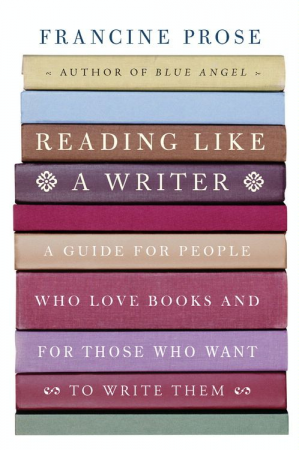
Reading Like a Writer by Francine Prose

I first spied Francine Prose’s book, Reading Like a Writer, while shelving at my former job. I sneaked a few moments to read the first few pages and Reading Like a Writerinstantly fell in love. The sentence that resonated with me, “Like most–maybe all–writers, I learned to write by writing and, by example, by reading books,” combined with, “Long before the idea of a writer’s conference was a glimmer in anyone’s eye, writers learned by reading the work of their predecessors,” confirmed for me that I had found a kindred spirit. Her passion for reading and writing and the process of learning by indulging in both was the best piece of advice I had ever heard. Mrs. Prose’s comments awakened in me what I always believed to be true: great writing is an organic process that comes from creating beyond outlines and plot-pointed structures with perfect character arcs.

Great writing begins with close reading and follows with careful consideration for every word that will become a sentence, which will become a paragraph. This isn’t to say that Mrs. Prose or I believe writing should be utter chaos without any structure, but I trust if one applied her approach to their own writing, he or she would see amazing growth in how they create characters, employ narration and dialogue, and present details and gestures.

Woven throughout the book are examples from great writers that will back up what Mrs. Prose is teaching. You don’t need to be familiar with these authors or their works to appreciate them. Another reviewer I read proclaimed his dislike for Mrs. Prose’s book because he didn’t know any of the referenced works. I suspect he thought Mrs. Prose was being pretentious; I encourage you not to be intimidated by her knowledge but rather delve into the suggested reading list as soon as possible.

Another aspect of the book that appealed to me is Mrs. Prose’s admission that while there are rules in writing for the express purpose of guiding us, rules are, essentially, meant to be broken. And if you’re brave enough to ride off the reservation of writing rules, make sure you’re breaking them brilliantly.

Regardless of your preferred writing style or approach thereof, I highly recommend reading Francine Prose’s book. I would be truly surprised if you didn’t take away something positive from the experience.

Baring My Writer’s Soul – Part 14

Writer's Soul 14I’ve been thinking quite a lot about my writing, and I don’t mean in quantity. Rather, I’ve been thinking a lot of different things about what my writing is or isn’t.

It started last year around November when my novel was technically finished. There were a few minor points that needed to be re-researched (is that even a word), and I had a wonderful research librarian who I met at the Conneaut D-day Reenactment assisting me. The whole process was starting to bog me down. I began to hate it, resent it, and wanted to dig a deep hole in my back yard in which I could bury my book without any witnesses.

The holidays were coming, and since much of the preparation for Thanksgiving, Hanukkah, and Christmas fell to me, I really didn’t have anything left to give my writing. I didn’t want my writing to suffer, but I felt so guilty about setting it aside. After all, what kind of writer would I be if I wasn’t writing every single day? Good question.

While wrestling with this dilemma and wanting to be able to focus on all the fun that comes with the holidays, I ran into our pastor’s wife at the local grocery store. After the usual pleasantries, she asked after my novel. I told her what I’ve already mentioned above and concluded that I wish someone would give me the permission to quit for a little while. If I could just take a break, I knew I would go back to writing in January once I was refreshed.

She looked at me and said, “Heather, I give you permission to quit.”

Even now I laugh at how easy it was for someone else to grant me the grace I needed to give myself but was unable to. And guess what? I did go back to the writing and research in January as I promised myself I would. In fact, I attacked it with renewed vigor and produced better writing than I would have had I pressed myself to go on through November and December. What’s more, I enjoyed it!

So what’s the point of this blog post you may ask? It still scares me somewhat that I took off two months of much needed rest time. There are so many writing books, and I imagine books devoted to other forms of art, that will tell you to create every day without fail. Are these people right in tasking others in this way?

Yes and no. If I said it once, I’ve said it a thousand times. You have to find out what works for you. Thankfully, the day I returned to writing coincided with Chapter 11 of Heather Seller’s book, Page After Page. The writing exercises in this chapter were wonderful for getting me back on my rails. You’ll understand this better when you read the book which I highly recommend you do.

The funny thing was, while Chapter 11 worked for me, I recalled that before the holidays, Chapter 10 flipped me out. This is the beauty of the book. The next time I read it, Chapter 10 may be exactly what my writing needs. All this to say, don’t be afraid to embrace the bad (insert chosen art form here) because you may uncover a gem on the way to the good (insert chosen art form here).

In doing so, your creativity will flow and your art will come naturally. There are going to be different amounts of flow, and that’s to be expected. Don’t despair over these days even if they extend into weeks, months, or years. Begin again in small ways, flex your creative muscles, and build up to your peak performance like an athlete training for the Olympics. You will achieve gold.

Write Happy!

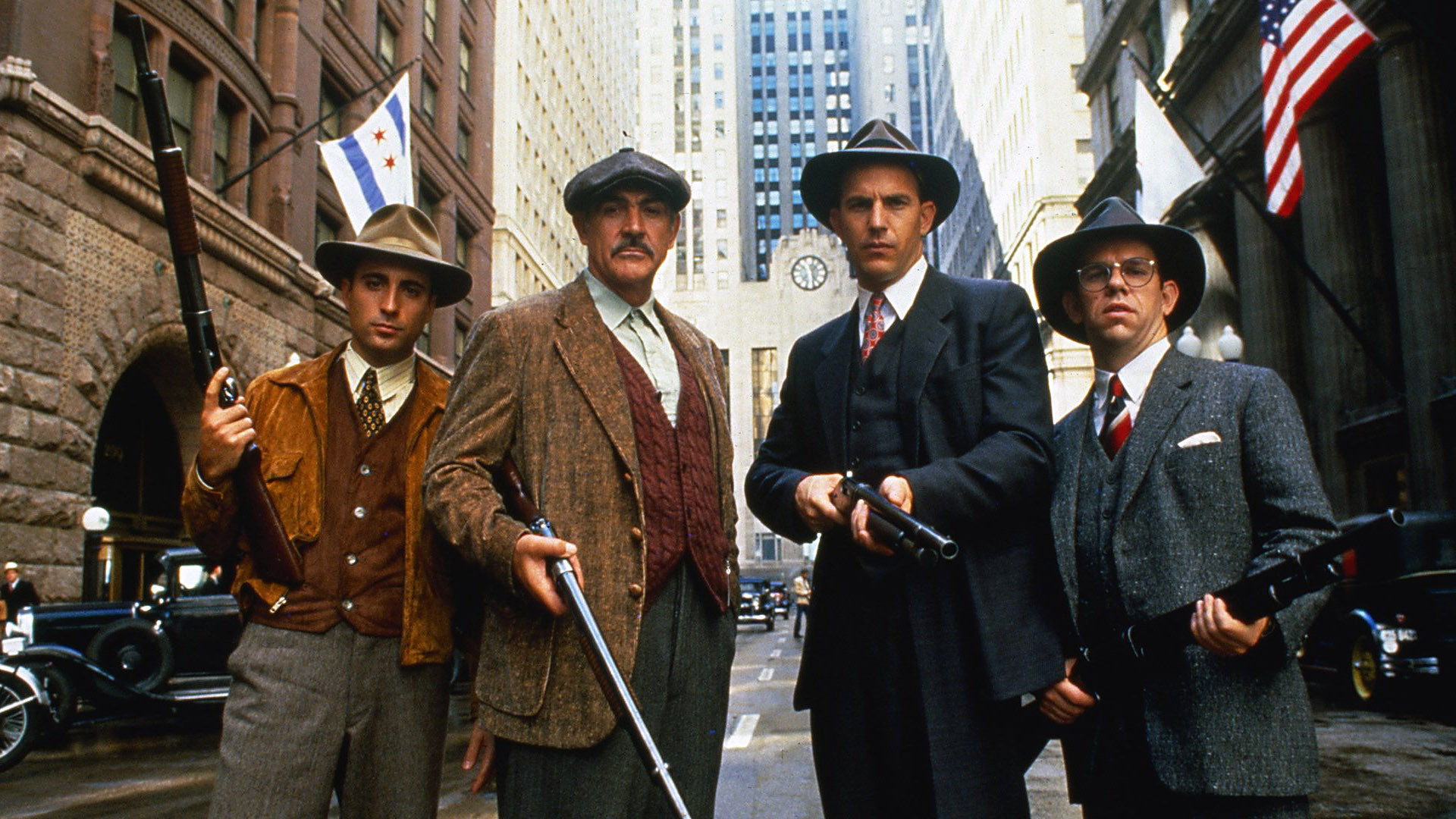
One For the Gangstas

Today’s The Weight of Words was generated by my need to know the correct spelling of a word that I’ve said quite often but never needed to write. Until now.

Pants, jeans, slacks, trousers, breeches…or is it britches?

Pull Up Your Pants or Else!

Pull Up Your Pants or Else!

According to Grammarist.com, breeches are short trousers that extend to or below the knee. When speaking informally, breeches is a term that may refer to any trousers. Breeches is a plural noun, the preferred pronunciation is BRIchiz. The word breeches appears around 1200 and comes from the Old English word brec, the plural of broc, meaning a garment for the legs and trunk. Breeches cover a person’s posterior. The word breech has come to refer to a baby trying to emerge from the womb posterior first, and the part of a gun behind the bore.

Britches are also short trousers that extend to or below the knee, but when speaking informally, britches is a term that may refer to any trousers. Britches is a plural noun, the preferred pronunciation is also BRIchiz. Britches first came into use in 1571. It is an alternate spelling of breeches, and also, a less formal spelling.

I’ve compared the definitions several times and conclude that the only difference is whether or not you want to use the formal or informal spelling in your writing. They are pronounced the same.

In either case, gangstas, please pull up your BRIchiz. Problem solved.