Welcome Home, Dr. Welles

I’d like to share one piece of inspiration to which I returned repeatedly while writing my novel, The Secrets of Dr. John Welles.

Welcome Home, Dr. WellesThe Lark Ascending, by Ralph Vaughn Williams, is an exquisitely beautiful and haunting piece of music that perfectly captures the joy of returning from war and the pain of what had to be endured.  I believe it was nothing short of Divine coincidence that this piece played while I attempted to write what my main character, John Welles, would have experienced as he returned from the European theater of World War II.

John’s participation in the war was brief due to a horrific tragedy that leaves him scarred both physically and emotionally.  Nothing could have prepared him for the burden he must bear; he alone is responsible for the terrible secret.  His one wish is to escape the pain he caused by seeking refuge with his family.  Unfortunately, the memories at home plague him every bit as much, if not more, than his time in the war.

English poet George Meredith’s 122-line poem, also titled The Lark Ascending, was the inspiration for Williams’s musical work.  The poem is a hymn to the skylark and his song.  I admit that I’m no poet and certainly not qualified to decide what makes good poetry.  However, I am pleased that Meredith’s poem led to the creation of music that led to the writing of one of my favorite scenes in my novel.

Please take a pause in your busy day to listen to The Lark Ascending above and read The Lark Ascending below.  Enjoy!

The Lark Ascending, George Meredith (1828 – 1909)

Appreciation For vs. Appreciation Of

Appreciation For vs Appreciation Of

Today’s post is a simple reminder on when to use appreciation for versus appreciation of. We all believe we know the rule until that split second when we’ve been tasked with something like the engraving of a plaque to commemorate a co-worker’s achievement. The shop clerk, who usually isn’t an English major and provides absolutely no help at all, stares at you blankly, waiting for you to decide whether the plaque should read appreciation for a job well done or appreciation of a job well done.

Because I care enough to not let you return to the office in shame, I’m going to help you out with this little dilemma. Both are appropriate under different circumstances. Appreciation for indicates a love, an understanding, a feeling as in, “He has a great appreciation for modern art.” Appreciation of indicates a thankfulness, an acknowledgment as in, “The plaque was awarded in appreciation of Bob’s service to the organization.”

I hope this lesson is a helpful reminder. If you should ever forget how to use appreciation for and appreciation of, at least remember my blog address, www.hlgibsonauthor.com, where you’ll find all the answers to life’s annoying problems. Well, at least the ones that have to do with writing.

Welcome to Mayfield House

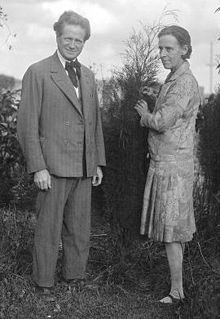
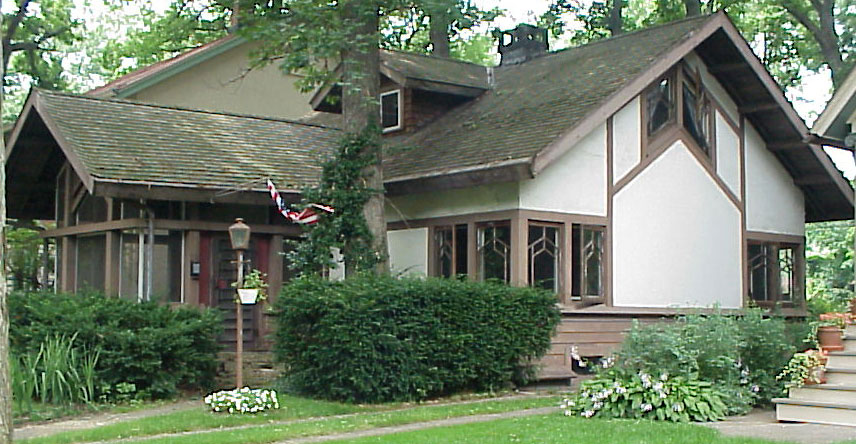
220px-WalterburleygriffinOne of my favorite topics of research for my novel, The Secrets of Dr. John Welles, was for an architect to build Prudence Welles Mayfield’s mansion.

I started by Googling architects for the era in which her house was built. The list, which I believe came up on Wikipedia, gave a brief synopsis for each architect. There were many interesting choices including Frank Lloyd Wright. As appealing as I find Mr. Wright’s style, I didn’t want someone quite so famous or well known for my novel. I’m not exactly sure why.

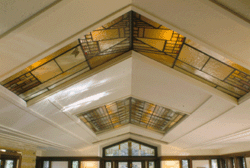
I kept reading through the list of architects, noting several who were of interest to me, ceiling-lights-mueller-1when I came across Walter Burley Griffin. I wish I had the original paragraph regarding Mr. Griffin. Between what I read and pictures of him I found online, I knew he was perfect for building Prudence’s dream home.

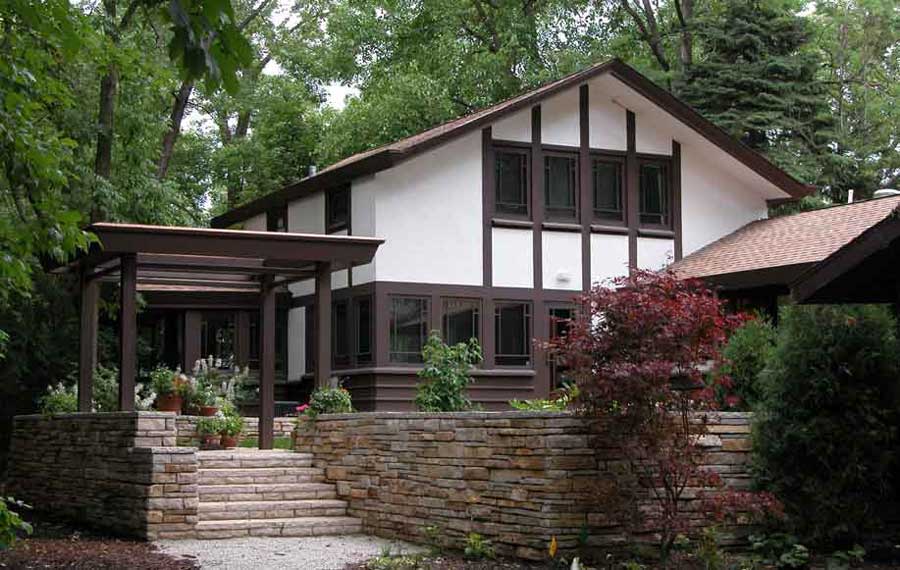
Adding to my choice of architect was Griffin’s wife, Marian Mahoney Griffin. Marian was an outspoken, artistic woman. She was the second woman to graduate with a degree in architecture from the Massachusetts Institute of Technology and the first licensed female architect in history. These schwartz_rear1facts alone made her a believable choice for my forthright character, Prudence. I imagine these two ladies would have worked wonders together.

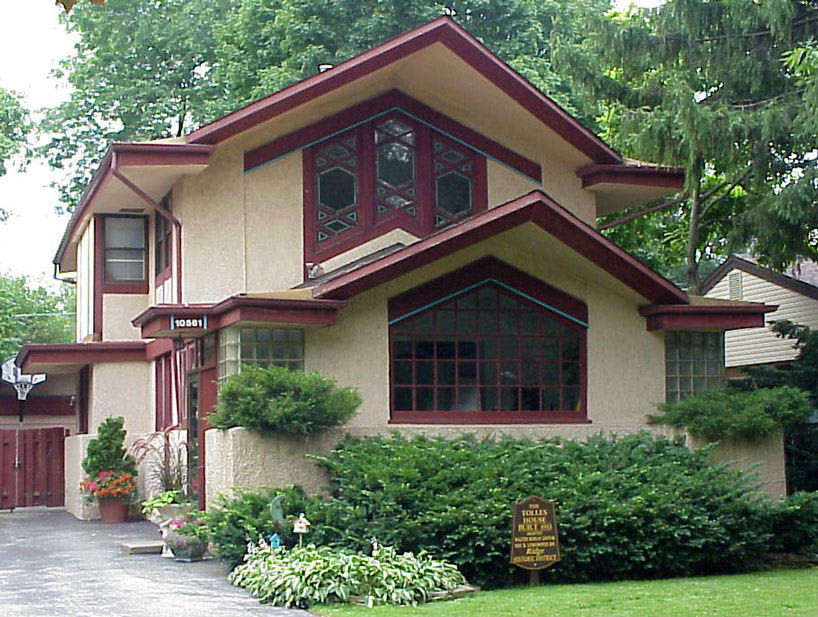
The next thing I needed to do was locate a neighborhood in Maryland that would be suitable for Prudence’s fabulous mansion. Again, after researching several well-to-do areas where her home could be built, I decided on the community at Guilford. This is one detail where I took some liberties in my novel.tolles

You will most likely not find a home such as those built by the Griffins in a neighborhood like Guilford, however, Prudence wasn’t the type of woman to be told no. If she wanted her house built in Guilford, then the developers of the neighborhood would have had to resign themselves to the fact that her home was going to be built in Guilford. As mentioned in my novel, a generous donation from her husband, Wallace, toward the development of streets and parks went a long way to smoothing over her demands.

The last detail I needed for Prudence’s mansion was a name. I hoped to come up with something memorable and elegant like Falling Water. Even though the home I created was fictional, I wanted it to have an impact upon my readers to the degree that they would always remember the vannostrandsprawling mansion as if they had walked through it themselves. Maybe based on the fact that I used real architects and a real neighborhood, they would even go in search of data to see if the house actually existed.

I wish I could find my original, handwritten manuscript and/or notes so I could tell you some of the names I worked on for the mansion. Thinking about them now, I have to laugh to myself; they were that ridiculous. Of course, that’s why we writers edit, right? In the end, I settled on Mayfield House for Prudence’s home because the design, building, and habitation thereof really were all about her. In its simple elegance, Mayfield House proved to be the best choice.untitled (6)

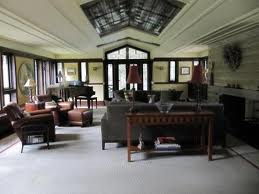
I have included several pictures within my post to give you a feel for what Mayfield House would look like and a link to other homes built by Walter Burley Griffin. I hope you enjoy mentally walking through Prudence’s home. Please remember to wipe your shoes at the door. (Prudence’s words, not mine.)

Redbones Revisited

Redbone CoonhoundI have been in love with redbone coonhounds ever since I read Where the Red Fern Grows by Wilson Rawls in eighth grade. It’s probably why I chose a redbone for the protagonist of my short story, “Zane in the City,” even though I own a collie. I wrote the story for a contest hosted by the AKC.

My research on redbones led me to Wayne Campbell’s website, Timber Chopper Redbones. I couldn’t have found a better source of information on my chosen dog than Wayne’s site.

The history of Timber Chopper is fascinating as is the pedigree of their dogs. The dogs themselves are impressive to look at with their gleaming red coats and gentle eyes. Take time to watch the video of Kobie under the Dogs & Pedigrees tabs. Not every ear will appreciate the sound of a hound baying, but take a minute to understand the magnificence and strength behind their voice. I believe a hound’s bay is generated from within the fiber of their being. They live to bark.

One of my favorite tabs on Wayne’s site is the Terminology page. What a bonus find for my research on redbones. I was able to correctly depict my fictional redbone’s actions by incorporating the terms found here.

Wayne provided the most help when writing my story. He patiently answered my e-mailed questions, and we even spoke on the phone once. His praise for my story let me know I had nailed the character and qualities of redbones. His return e-mail said, “Heather, You did good!! So…very true! Thanks.” I still get thrilled when I read his message.

Thank you, Wayne, for helping to make Zane memorable.

Get Your Italian On

Below are three fabulous websites I used while researching food for my short story “Italian Cooking.” If you don’t want to visit Italy or at least cook something Italian after reading these then all I can say is, you’re not enjoying food and/or cooking to its fullest. I was ready to hop a plane for Italy and sign up at Academia Barilla. I have no idea how I would pay for it, but who cares?

Buon appetito!

Saveur

Academia Barilla

Wine Weekly

Before CK One, There Was Tabac Blond

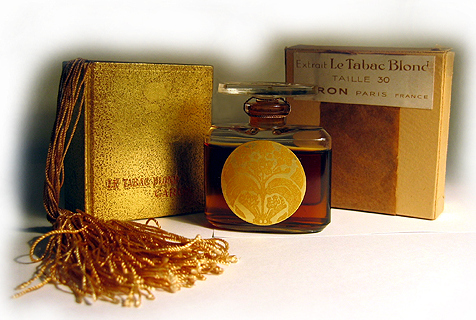
Vintage Tabac Blond

Vintage Tabac Blond

The year is 1927. John Welles and his two best friends, Sam Feldman and Claude Willoughby, are planning a clandestine night on the town. Their destination is a speakeasy hidden on the outskirts of Baltimore, Maryland. For the young medical students, the night will be both thrilling and disastrous.

Before John slips out for the night, he sneaks a dab of his Aunt Prudence’s perfume. This might seem like an extremely feminine thing to do until you become familiar with the scent he chooses to borrow.

One of my favorite subjects researched for my novel, The Secrets of Dr. John Welles, was perfume from the early 1900s. It is how I discovered Tabac Blond. The perfume was perfect for Prudence, a rebel-before-her-time class of woman who smokes, and John, by the simple fact that he’s male. Let me explain.

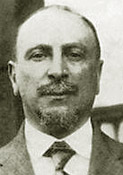
Ernest Daltroff

Ernest Daltroff

Tabac Blond was created in 1919 by perfumer and founder of the house of Caron, Ernest Daltroff. The fragrance was intended for women who smoke cigarettes, the symbol of women’s liberation and Parisian chic. What made Tabac Blond appealing were the leathery top notes, usually found in men’s fragrances, blended with a feminine floral bouquet. The added scents of undried (blond) tobacco leaves and vanilla made it desirable to both men and women.

Many reviewers insist upon a decanting of vintage Tabac Blond complaining that the new version doesn’t present as well. I’ll have to take their word for it as I do not own either and have yet to experience them in real life. It is, however, my goal to do both.

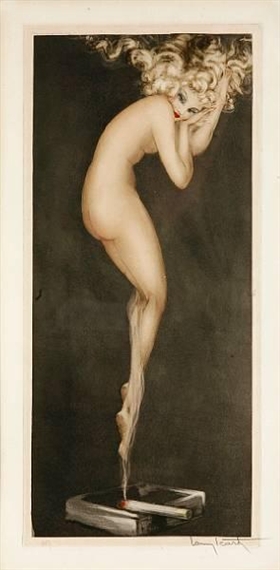
Artwork inspired by Tabac Blond

Artwork inspired by Tabac Blond

If you’re a lover of rich, exotic, glamorous perfume, Tabac Blond may be for you. Don’t let the price tag deter you from your passion. Whether you purchase the new version or a vintage decanting, there will be a small investment. I believe this is testimony to the allure of the fragrance. Be warned, however: wearing Tabac Blond may encourage behavior such as wild dancing, excessive drinking, and dressing like a flapper or F. Scott himself.

Yesterday’s Perfume

Perfume Projects

Writing What You Hear – Dialect & Accents

There is a character in my novel, The Secrets of Dr. John Welles, who is Mexican.  For a minor character, Lucia is one of my favorites.  She’s smart, classy, and in charge of all that goes on around her.  In short, she’s the perfect foil for her boss, the intelligent, elegant divorcée, Prudence Mayfield.

Prudence is nobody’s fool, but Lucia keeps her in check when needed. She pulls no punches with her employer and sometimes their conversation is quite spirited. My initial attempts at writing a Mexican dialect were hilarious and amateur. I needed to find a way to convey Lucia’s nationality without her dialog sounding cheesy or offensive.

Assistance came from a video on Howcast by voice and speech coach Andrea Caban. My mistake was that I never consider the posture of the mouth or the musicality of the dialect when writing for Lucia. The breathy S sound at the end of words, the hard R sound, and the nasally tone were exactly what I wanted for my character. How could I put that on paper without writing ridiculous phonetic spellings that would drive the reader insane?  By describing Lucia’s accent.

Originally, the only phonetic spelling I was going to use was jew for every time she said you.  I have since decided against this so I don’t offend potential readers.  Still, when I read Lucia’s comments out loud, I always do so in her accent. I’m confident the suggestions employed helped me to better express her dialect on the written page.  Please share your experience writing a foreign character’s dialect.

Recommended sites for writing dialect/accents:

How To Do a Mexican Accent

The Dos and Don’ts of Dialect

Andrea Caban – Dialect Coach

He said, She said – He complained, She admitted

And the debate rages on. I’m talking about using dialog tags other than said and asked. It wasn’t so long ago that said is dead seemed to be the rule of the day. While everyone agrees that too many dialog tags are annoying, people tend to waver on whether or not to stick with said and asked or mix it up with more descriptive verbs such as complained, boasted, and grumbled.

A few tags that appear to slip under the said/asked radar include whispered, yelled, and shouted. I suppose that’s because they are either extremely passive or aggressive; on opposite ends of the said/asked spectrum.

Then there is laughed and chuckled. People will argue that you can’t laugh or chuckle while speaking; it only occurs before or after a person is done talking. I would have to disagree based on personal experience. Laughing while talking doesn’t have to hinder the speaker. Short sentences can be spoken with a lilt to one’s voice that I would definitely describe as a laugh.

So join the debate. I want to hear from you on this subject. Do you think this is a hard and fast rule or a rule to be broken at the writer’s discretion rendering it just a guideline?

UPDATE:  Last week I sat in a seminar with a professional editor who actually suggested using dialog tags beyond said and asked.  She agreed that too many are burdensome to read, however, she pointed out how they help a reader keep track of who is speaking in a long conversation of two or more people.  I maintain that when used correctly, dialog tags beyond said and asked do not distract the reader.  Rather, they enhance the story and the writing.  In either case, I’d still love to hear your opinion, dear follower!

imagesX1C2VG7Y

The Weight of Words

I have always been intrigued by words and their definitions.  I believe word choice is crucial whether writing or speaking.  Many of the words I use daily were learned while reading thus giving me a rather decent vocabulary.  I don’t see this happening with children today.  Too many books are dumbed down for them, and this trend that has crept into adult fiction.

I don’t claim to be a master.  I will undoubtedly make mistakes.  Please be tactful when pointing them out.  In the meantime, I’ll keep learning and striving for the very best language in everything I do.

For this reason, I have created The Weight of Words.  I’ll feature various words and definitions I have found interesting.  I hope you will find them useful and/or helpful.  If you have any word suggestions for this category, please don’t hesitate to comment.