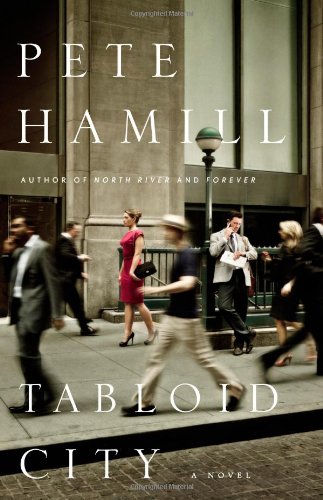
Tabloid City by Pete Hamill

tabloid-cityI enjoy sharing reviews for books, movies, and music in the section of my blog by the same title. Every now and then, I mention one that didn’t quite hit the mark in my opinion because I also enjoy generating discussion on the material especially if a follower disagrees with my review.

Such is the case with Pete Hamill’s novel, Tabloid City. I would never discourage anyone from reading this book because I allow people to come to their own conclusions but mostly because I’m hoping he or she will point out what I missed. Until then, I believe this novel would appeal solely to people who lived or are living in New York and/or are currently employed or retired journalists. Unfortunately, I don’t fall into those categories.

It’s not that I find New York and journalism boring, but the way both subjects were presented in Tabloid City did nothing to pique my interest regarding them. It’s not unusual for me to grab my phone while reading to Google something for reference even if it’s a subject with which I am familiar. Many of my favorite authors spur this kind of self-education in me, and I love it.

Let me also say that I adored Forever, North River, and Snow in August also by Pete Hamill, and that one mediocre book will not keep me from reading his other works. Still, I’m not sure what the author was thinking when he wrote this jargon-filled tale. I know he writes his passions into his works (New York and journalism), and while I can bestow an A for effort here, I cannot go much beyond a D- for the result.

tabloid-city-2Tabloid City is incredibly disjointed. It’s a scattering of stories that read like newspaper clippings replete with jagged backstory and each character’s knowledge of New York, other characters, events, etc. I kept searching for continuity in this laundry list of stories, something to tie them together or make me care for the characters. Slow going defines the novel until about page 104. The thin thread of a tale about a Muslim terrorist and his police officer father and another about the demise of newspapers and libraries saved the book; otherwise I’m left feeling that this was the framework for a better story handed off too soon.

Let me end on a positive note and encourage you to read the other three books by Pete Hamill I mentioned above. Also, I haven’t read the Sam Briscoe mystery/thriller trilogy written by Pete Hamill, but fans of the books will be happy to see Sam reappear in Tabloid City.

First Class Storytelling

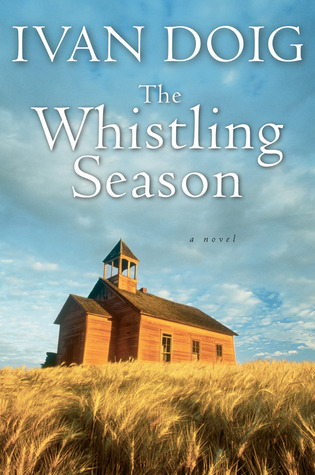
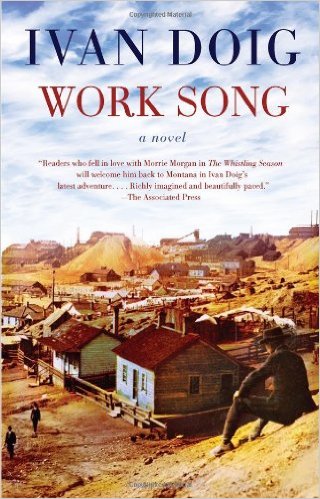
first-class-storytellingFans of Ivan Doig’s storytelling will not be disappointed with his novel, Work Song. The tale picks up with the character of Morgan Llewellyn, alias Morrie Morgan, after he departs the cast of characters living in Marias Coulee in The Whistling Season.

Morrie, still mourning his loss of Rose to widower Oliver Milliron, finds his way back to Montana and the copper mining town of Butte. He takes up residence in the boarding house of the lovely widow Grace Farraday where he meets Griff and Hoop, the twin-like retired miners full of life, full of the love of mining, and full of themselves.

Morrie’s first job as a funeral crier introduces him to the woes of life for the miners and their struggle with the Anaconda Copper Mining Company and the Industrial Workers of the World. But it is his love of reading and a fortuitous trip to the Butte Public Library that lands him in the position of glorified errand boy for the enigmatic and terrifying ex-rancher turned library administrator, Samuel S. Sandison.

Before long, Morrie is dragged into the copper miners’ battle between Anaconda, the IWW, and the union all the while dodgingDoig_WS_5.indd company goons who try to peg him as an IWW agitator and Chicago mobsters still looking for him for the gambling debacle he perpetrated with his brother. As if that weren’t enough to keep him hopping, Morrie finds his plate even fuller when a former student from Marias Coulee, now engaged to the union leader, presses him into service on behalf of the union. The Latin-loving bibliophile can no longer stay neutral in the battle, but he must operate below his tyrannical employer’s unpredictable nature and ever-watching eye.

At the eleventh hour, Sandison, a large man with an even larger secret, comes to Morrie’s rescue. All is saved, yet Morrie, who has fallen in love with the Widow Farraday, knows he cannot stay in Butte for it is only a matter of time before the mob finds him. A final, well-placed bet secures the financial future for those Morrie has come to care for. His last goodbye to Grace, another widow he must leave behind, produces the best windfall Morrie experiences to date.

first-class-storytelling-3Doig’s tales of western life transcend the clichéd cowboy story. He writes from the working class point of view and evokes the joys and hardships of life in his beloved Montana. One of my absolute favorite authors, it was my sincere wish that he write a third novel summing up the lives of Morrie Morgan and the marvelous cast of characters spanning both the The Whistling Season and Work Song. Alas, with Ivan Doig’s passing in 2015, not only did his unforgettable characters lose their voice, literature lost one of the best storytellers known to man.

The Conjurer’s Bird by Martin Davies

the-conjurers-bird“Wonderful and heartbreaking all at once,” is how I described The Conjurer’s Bird by Martin Davies to my husband upon finishing the novel.

After I made the small mistake of starting a book about a taxidermist while eating lunch, I was rewarded with no further descriptions of the process and an incredible tale of love, loss, and discovery. The story is woven back and forth through history and includes real and fictional characters blending seamlessly.

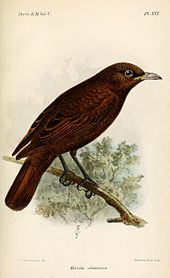
Davies’s story is his accounting of the Myterious Ulieta Bird seen only once in 1774. He recounts the factual tale of naturalist Joseph Banks and his mistress, the elusive Miss B. Then he goes further by filling in the blanks with his version of what took place.

Interlaced with Banks’s story is that of disenchanted taxidermist, John Fitzgerald. Fitzgerald is drawn into the mystery of searching for the only known specimen of the Ulieta Bird which disappeared from Banks’s collection without explanation two hundred years earlier.

Along the way Fitz and his boarder, the lovely, young Katya, unravel clues that richer, more powerful people than they are also following to discover not only the Ulieta Bird but also botanical drawings worth millions supposedly hidden within the case.

the-conjurers-bird-2Readers and admirers of A. S. Byatt’s Possession will find a similar, slightly more accessible novel following two stories that converge with a satisfying conclusion. I commend Mr. Davies for keeping the tension high right up to the end where it looks as if all the wrong people triumphed. With well-placed clues, two personal histories within John Fitzgerald’s portion of the story revealing much about the character, and a convincing cast of supporting characters, The Conjurer’s Bird is a worthy novel not to be missed.

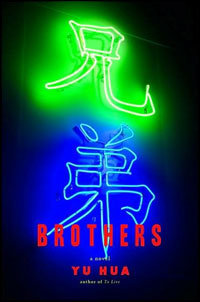
Brothers by Yu Hua

brothers-by-yu-huaWhat I loved about Brothers by Yu Hua is that within the pages of one book I found a story that made me laugh and cry over and over. The tale is both horrifyingly dark and twisted, but with seamless transition, Yu Hua writes some of the best comic scenes I’ve ever read. Life in America for the past eight years has made it possible to understand the absurdities about which Yu Hua writes, and for this reason, they are believable.

The story of Baldy Li, one of the most memorable characters I’ve encountered in fiction, and his brother, Song Gang, opens right before Mao’s Cultural Revolution. Scenes in which neighbors are unified in a common cause or belief and turned into enemies the very next day are chillingly similar to what is happening in the world today. When Yu Hua writes about Li Lan’s, Baldy Li’s, and Song Gang’s grief over the death of Song Fanping, I thought my heart would rip in two so great was their anguish.

The two definitions of stupidity (knowing the truth, seeing the truth, but still believing the lies, and doing the same thing over and over and expecting a different result) often came to mind while I read Brothers. I’m watching the premise of the story take place right in front of my eyes as the youth of America believe they can make certain political systems work in their generation even though overwhelming evidence of failure exists in other countries. I have to wonder if they’ve forgotten the past or are purposely not being taught. In either case, we’ll all be doomed for it.

The story is engaging based on the time period and cultural differences. Yet the prose is so simple that I have to wonder if this is due to the translation from Chinese to English or if the author chose to keep his words plain. In either case, his writing style works. Another thing I noticed while reading this translation was the repetitive nature of the writing. I’ve only encountered this in one other translation, Haruki Murakami’s 1Q84, and I wonder if this is a style particular to Asian writers. I find it lends emphasis to details and storylines.

Yu Hua broke the rules of writing brilliantly by not following plotting formulas. Two ways in which he did this was by the introduction of a new character and storylines in the last one third of the book. Not surprisingly, the pacing of the novel was not interrupted, and as a reader I wasn’t jarred out of the book. Obviously, Yu Hua writes for intelligent readers, and in this way, it reminded me of Dumas’s The Count of Monte Cristo with its large cast of characters, interwoven storylines, and backstory. In both cases, readers willing to stay with the book to the end will absolutely not be disappointed.

I know the book was written as a criticism on political systems and to show all the evil and craziness that stems from them. I found my interest focused on the relationships of the characters enduring life under the various political systems and how their relationships were further affected by their personalities which dictated how they reacted to circumstances and each other.  I came to the conclusion that all one can probably do in such a situation is be kind, work hard, and do no harm.

Despite the depth of the tale Brothers presented, as I said there were some hilarious moments including a chicken search party, Yanker Brand underwear, and actual blind men drawing blind conclusions. But again, that’s part of Yu Hua’s ability to make a reader laugh while getting his point across. The best line though was probably Yanker Yu explaining politics to Popsicle Wang when he said, “…comfortable circumstances breed freethinking, which is why the rich love politics.” I laughed aloud as I shuddered thinking how stirred up the politicians are keeping the world.

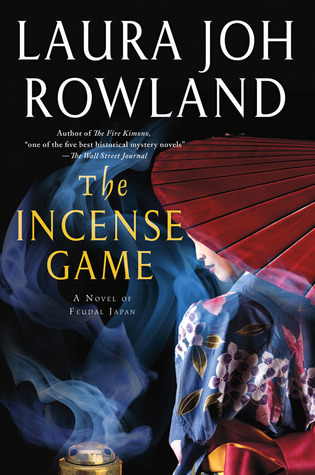
The Incense Game by Laura Joh Rowland

the-incense-gameI recently finished book sixteen in Laura Joh Rowland’s Sano Ichiro Mysteries Series, The Incense Game. I know I’m nearing the end of the series, there are only two more books, and while all good things must come to an end, I hate to see it actually happen.

I started several years ago with book ten, The Assassin’s Touch, and made a promise to myself that I wouldn’t go back to the beginning of a series that I really didn’t have time for. Even though book ten read like a stand-alone novel, I fell in love with Sano and the cast of characters. Combined with my love of all things Japanese, I immediately broke my promise, started reading from book one, and now own all of them except for the final book.

Most of the mysteries I have read are because I stumbled upon them in a library where they had been mislabeled as regular fiction. Book ten of Ms. Rowland’s series was on the new book shelf, and the picture of a Japanese woman with a fabulous dragon tattoo drew me in. As someone who usually bypasses the shelves of mysteries, I was hooked.

All the books are rich with history from the era of the shoguns. Ms. Rowland seamlessly blends historical figures and events with fictional ones to create believable storylines. She adds a dash of the mystical martial arts to ramp up the tale without coming across like a poorly dubbed foreign film.

Sano is a realistic hero because he suffers trials and tribulations as well as successes. Of course for Sano, either situation constantly places him in a good light with his allies and a bad one with his enemies. The tension and struggle is real, and often frustrating, as the reader will want Sano to act in such a way that looks like it would resolve all his problems. However, he is bound by obedience to bushido which governs his every move.

There is always a bad person behind the mysteries Sano investigates, but the best antagonist throughout the novels has been Yanagisawa who, on top of everything else Sano endures, is constantly trying to get rid of him by whatever means necessary. No scheme is too diabolical for Sano’s archenemy including attempts on the life of Sano’s wife and children.

The cast of peripheral characters—Sano’s wife, children, friends, retainers, the Shogun—add to the depth of storytelling I have come to love from Ms. Rowland. The one character I hated to see go by the wayside was a love interest for Sano in an earlier novel. I would have liked to have seen Aoi, a beautiful woman trained in the ninja arts, to make a reappearance in a later book. This worthy character definitely would have heated things up especially if she returned after Sano married.

If you haven’t read Laura Joh Rowland’s Sano Ichiro Mystery Series, I strongly suggest you do. Take it from someone who is extremely picky about her mysteries, you won’t be disappointed.

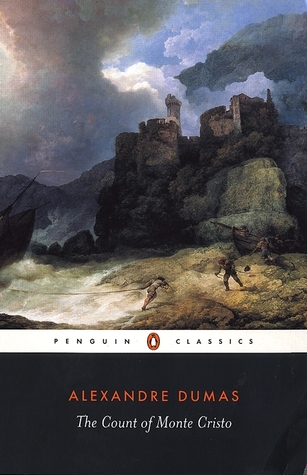
The Count of Monte Cristo – Alexandre Dumas

the-count-of-monte-cristoYou’ve probably heard it said many times that a movie is never as good as the book on which it was based. I’d have to agree 99.9% of the time, because I have two movies in mind that actually were better than the book. Still, as my aunt once pointed out to me, the reason I enjoyed movies based on my favorite books, and that is a rare occurrence, is because I read the book first and was familiar with all the details and nuances of story and character that never made it on screen.

With all that being said, The Count of Monte Cristo is one book that will never be captured in its entirety in a movie, and yes, I know it’s been made into a movie, and no, I haven’t watched any version; I don’t have to, I’ve read the book. All 1276 glorious pages. But perhaps a mini-series would do a good job of catching a few extra, interesting tidbits, you say. I’m sorry, my friend, that will never be sufficient.

As I read Alexandre Dumas, admittedly for the first time, his writing constantly reminded me of Anne Baxter’s portrayal of Nefertiti in The Ten Commandments. Both Dumas and Baxter displayed the same intensity of passion for his and her craft. I’m talking over-the-top passion that sweeps one away with what they are reading, or in the case of Baxter, watching.

The cast of characters is as interesting and varied as the type of people one might view walking through a crowded bazaar in a foreign country. Rich and poor, saint and sinner, they all have wonderful personalities, even when it’s as an antagonist, and backstory galore. The interesting thing is I didn’t once mind reading their histories because without it the overall novel would have lost its magic and momentum. Dumas wove together what would have been for writers of today probably two or three novels. Yet he made the enormous quantity of words and pages work. He made it flow. He made me sigh when I finished the novel the same way I would upon leaving great friends.

The Count of Monte Cristo is not for the timid or impatient reader nor is it for someone who wants a quick hit story that translates well onto the big screen. Everything that makes the novel a classic is, unfortunately, being stripped out of writing today. There’s a reason it’s a classic, and I believe one would do well to follow in the footsteps of the masters.

One such technique, which Dumas employed brilliantly, was to engage his reader directly with gentle reminders of previously mentioned details, scenes, and actions. The writers of today would probably label this poor writing because they’ve been taught not to do anything that would jar the reader out of the story. How absurd. I wasn’t jarred out of the story, my mind so feeble or easily distracted that I took offense with the author. On the contrary, I found it tantalizing for this passionate man to say, “Now stay with me because I have something even more incredible to show you, and I didn’t want you to forget a single detail in my extensive, worthy novel.”

My classical literature book group read the Robin Buss translation published by Penguin. I researched Buss as a translator, and the general opinion about his translation of The Three Musketeers was that he did the best and most accurate job. Therefore, I trusted him for The Count of Monte Cristo. The point on which all agreed regarding the Buss translation is that it kept certain sexual overtones in place which had previously been removed or glossed over by other translators and/or editors so as not to offend delicate, Victorian sensibilities. Don’t allow this tiny fact to scare you off from reading Dumas. Compared to novels produced today for tweens and teens, the sexual scenes Dumas wrote would be considered implied at best.

In conclusion, if you’re looking for an easy yet engaging read, an exciting romp through history full of adventure, dashing, mysterious men, maidens who blanch and faint, and above all a great story of well-deserved revenge, then I highly recommend The Count of Monte Cristo.

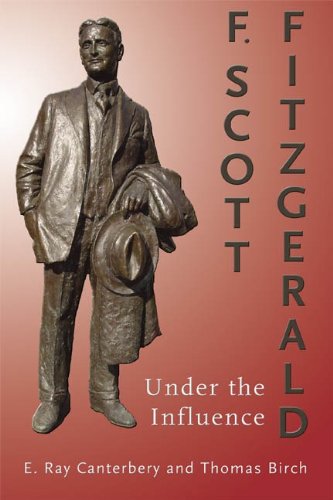
Under the Influence

under-the-influenceAs a follow up to reading F. Scott Fitzgerald – The Short Stories, I read his biography, Under the Influence, by E. Ray Canterbery and Thomas D. Birch. I assigned myself the goal of learning about the man as an author and a person for research toward a novel I’m working on.

As I suspected, my opinion of him hasn’t changed, and I’m seriously reconsidering the other Fitzgerald commentaries, biographies, and novels I had planned to read to gain a better understanding of him. The role to which he will be assigned in my new novel doesn’t warrant more than what I’ve already completed.

Under the Influence was well-written, highly informative, and laid a large portion of the blame for Fitzgerald’s failure at Zelda’s feet. It is well known now that Zelda suffered from schizophrenia and that her mental illness wreaked havoc upon their marriage. However, one must step back and analyze why Fitzgerald married Zelda in the first place.

Fitzgerald had lost the love of his life, Ginevra King, who represented two of his lifelong ambitions: wealth and power. Zelda, also beautiful and rich, seemed a means to an end where his desires were concerned. Then there was the fact that she was the rebound girl, and everybody knows you don’t fall in love with, let alone marry, the rebound girl. His actions make me question whether he truly loved either woman or was simply satisfying his need for a “top girl.”

I don’t blame Fitzgerald for not being able to predict Zelda’s illness, but he could have handled it better once she started displaying signs. Even before she was diagnosed, when she was unable to curb her outlandish conduct, instead of exercising maturity and control, more often than not Fitzgerald would join her in bizarre behavior. The biography presents him as a caring family man, but responsible family men don’t indulge bad actions.

While Zelda was a victim of a condition not of her own choosing, Fitzgerald was a prisoner of a condition of his own making. He alone was responsible for his excessive drinking and all the negative effects it had on his life, his family, and his writing. Throughout his life, Fitzgerald relied on alcohol to bolster his insecure nature, and it cost him both personal and professional relationships as well as reputation among fellow authors.

The biography reinforced my belief that Fitzgerald wrote himself into much, possibly all, of his work. His fictional characters reflect his ambitions, goals, beliefs, failures, and successes. One really doesn’t need to read the autobiographical Crack Up essays to obtain a clear picture of the man. Although I don’t care for his writing, I still find it sad that he squandered his talent chasing the idea of the American Dream, specifically the portion where he was steeped in wealth.

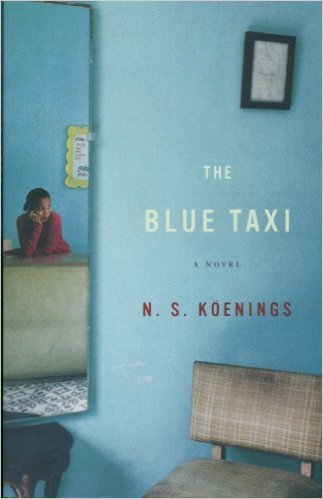
The Blue Taxi by N.S. Köenings

the-blue-taxiThe Blue Taxi by N.S. Köenings is a brilliant work of literary fiction. From the opening line the reader is treated to a feast of language describing with perfect accuracy and depth of detail a story of love and longing, loss and acceptance, new beginnings and dreams deferred. The tapestry of lives woven together includes Sarie, unfulfilled wife and mother, her husband, Gilbert, a small man of meager talents and grand ambitions, wise and naïve Bibi who desires visions almost as much as she does a grandchild, and Majid who lost his mind nine years ago when he lost his wife.

Drawn together by tragedy and influenced both positively and negatively by a cast of multi-layered peripheral characters, the lives of all involved will never be the same as they struggle to find their footing. Post-colonial South Africa provides the backdrop for this tale of cultures clashing and expectations shifting in N.S. Köenings’ unforgettable novel.

It’s a Mystery to Me

its-a-mystery-to-meMy first encounter with Agatha Christie was her novel, Murder on the Orient Express, which I read for one of my book clubs. I’m not usually a reader of mysteries unless by accident. John MacLachlan Gray’s two Edmund Whitty novels and Laura Joh Rowland’s Sano Ichiro series are among those happy accidents. Of course, there are the three Dorothy L. Sayer’s Lord Peter Wimsey novels my mother gave me for Christmas which prompted the purchase of the complete stories, so perhaps I occasionally, intentionally read a mystery.

With that being said, I approached Murder on the Orient Express with a titch of bias. I expected Agatha Christie’s writing to meet the standard set by the above-mentioned authors. In Mrs. Christie’s defense, I have read only one of her novels, and by the time I wrote this blog post, I also completed the short story, “Witness for the Prosecution.”

Charming but dull was the phrase that continually came to mind. Hercule Poirot didn’t do anything for me as a protagonist except manage to be cute and annoying at the same time and fusty even in the era for which he was created. The peripheral characters weren’t memorable; I had to keep re-reading their bios at the beginning to keep them straight. Only one of them had an interesting twist, and for all Poirot’s intelligence, how he managed to miss it until the end didn’t lend very much credibility to his detective skills.

I kept comparing Poirot to Lord Peter, who is more aware of his eccentricities, Chamberlain Sano, who accepts bad situations with great humility and presses on, and Edmund Whitty, who is a likeable loser right from the start. They are more believable as protagonists and detectives, more human in character and actions.

Then there was the prejudice of the author that comes through in the way she handled foreigners and the lower classes. Some of the things Mrs. Christie wrote would be considered intolerable today and were clearly the general opinion of her class. Dorothy L. Sayer’s tiptoed in this direction occasionally, but in my opinion, with much less offense. However, in the hands of someone like John MacLachlan Gray, these types of comments read harshly yet brilliantly. Perhaps this is because he’s writing an historical mystery, and I can trust he’s not wielding them for shock value.

As for the conclusion that everyone was guilty, I couldn’t accept that as a solution. Too many people who know the details of a secret are bound to screw it up without the help of Mother Nature. If not for the snowstorm, am I to believe all the suspects would have succeeded with their scheme? And perhaps I’ve watched too much Law & Order and Criminal Minds to accept that the head of the railway line, with Poirot’s apparent blessing, has the authority to let everyone off the hook because the man they killed was a kidnapper and murderer. Maybe I just wasn’t interested in debating the issue of justice in a book that in all other ways was simple and unengaging.

I probably wouldn’t have picked up another Agatha Christie book if it weren’t for the fact that my other book club is also doing Agatha Christie. My next purposeful attempt at a mystery will also be for book club. Arthur Conan Doyle’s Hound of the Baskervilles is on the schedule. I’ll be interested to see how he measures up to the other mystery writers.

A Soldier’s Story – Omar N. Bradley

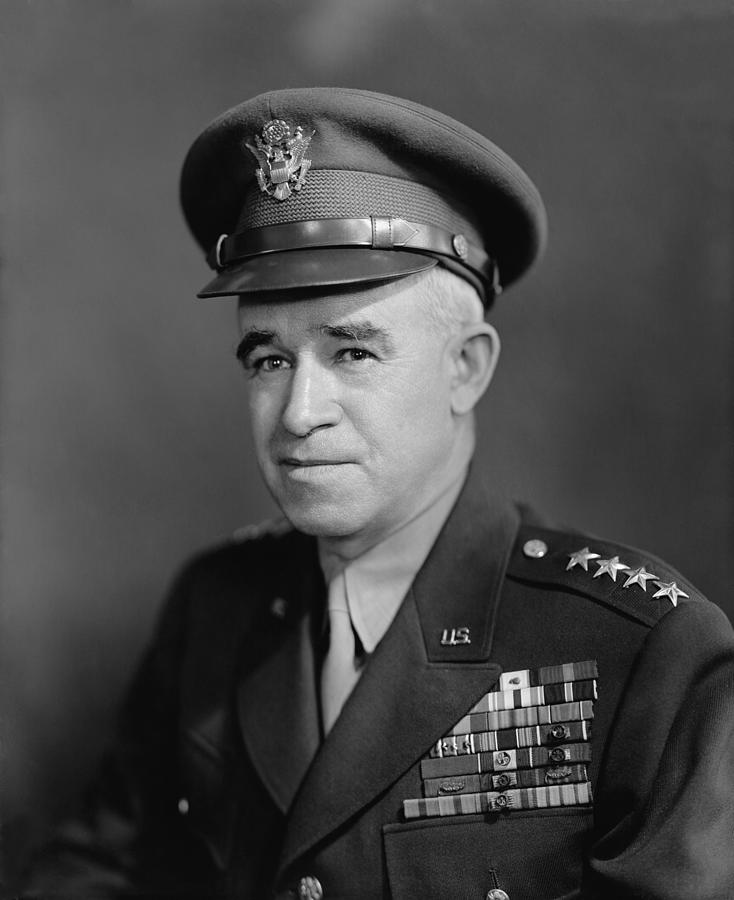
a-soldiers-storyA Soldier’s Story by General Omar N. Bradley is one of the most profound books I’ve ever read.  My friend and fellow writer, William Alford, loaned Bradley’s autobiography to me as a source of research for my novel, The Secrets of Dr. John Welles.  My research required a closer look at World War II, such as those provided by doctors and nurses (And If I Perish, Heroes From the Attic), but I still read Bradley’s account of the war, and I am extremely glad I did so.

He prefaces his autobiography with the inscription, “To those soldiers who must often have wondered WHY they were going where they did.  Perhaps this will help answer their questions.”

I believe Bradley answered these questions truthfully and without the ego that might have come from a lesser man achieving such rank and accomplishing what Bradley did.  As for the tough issue regarding loss of life, he explained how every move made by troops was analyzed and not conducted until the loss was the lowest number possible.  The decision to go ahead, shouldered by Bradley and other men like him, was not taken lightly, and it is not one I would ever want to have.

There are many who would argue that the war was unnecessary, but I concur with General Bradley:  the evil that swept through Europe wasn’t going to go away on its own.  Even with the combined forces of the Allies, the battles were not easily fought or won.  Perhaps unavoidable would be the better word choice in regards to World War II.

Bradley was against actions such as taking a site simply for the prestige of location.  Yet when other commanders’ egos swelled, he remained cordial with them even while strongly disagreeing with their decisions and/or actions.  He went so far as to put his career on the line to get the truth out to the American public regarding one such instance.

Further testimony to Bradley’s humility and strength of character are his accounts of his friend, General Patton.  Bradley spoke frankly about the times Patton overstepped his bounds, yet he never criticized in a way that tore Patton down.  When Patton was placed under Bradley’s authority, the two men worked together quite well and held each other in high regard.

Bradley includes comments from Prime Minister Winston Churchill that are chilling predictions come true.  Considering that the conversation took place in 1945 and wasn’t published until 1951, when Churchill says, “There may come a day when we shall walk into a cabinet room, break the glass over a switch, dial to the nation to be bombed, and push a button to declare war,” I can’t help but wonder if this technology was in place long before we were aware.  More unsettling are Churchill’s words, “But we shall never sit by and permit a minority to force its will upon a helpless majority anywhere,” which speak to the current world situation.

The book concludes with the end of the war in Europe, an occasion that was no doubt worthy of celebration, but I was left with a feeling of melancholy that I could only attribute to the realization that the type of patriotism displayed during World War II no longer exists.  Still, I believe that Bradley’s explanations successfully bridged the gap between those in command and those in the field.  I highly recommend A Soldier’s Story as a worthy read.