Italian Cooking

Dana Dances

Dana Dances

The picture of the little girl dancing on the couch caught my eye as I was playing on Pinterest one day. A short story flooded my head, and I simply had to open a Word document to get it all down. What followed has been revised and researched several times until I was completely happy with the story. Of course, I’m a writer, so even after I post this, I’ll probably find something I would have changed. We all know if I did that, nothing would ever be posted. So, grab a glass of chianti and a plate of your favorite pasta, tuck your napkin into your collar (don’t splash the screen), and enjoy some “Italian Cooking.”


UPDATE: This story has been edited and pasted into the body of the post for ease of reading. Enjoy!

Italian Cooking

Dana danced on every piece of furniture in my apartment. I poured a glass of wine and watched her.

“Does your mother let you do that at home?”

“Yes.” Her smile possessed the sweetness of a girl on the cusp of her teen years.

“Are you hungry? I could make you something to eat.”

“What do you have?”

I pushed up from the table and walked around the butcher block island. What would a professional Viking refrigerator hold that a child might like? This baby had been purchased to safeguard exquisite cheeses and Italian white truffles. It cost more than Annalise’s piece of crap car. I felt guilty just thinking this.

“Well, there’s some focaccia with ricotta or grilled salmon.”

Dana wrinkled her nose and pirouetted on the coffee table. One leg warmer crept downward.

“Prosciutto?”

“I don’t even know what that is.”

Her laughter sparkled. I’m pretty sure it was at my expense.

“Look in the cupboards.”

“Okay.”

I remembered a mother at my restaurant ordering spaghetti for her kid. Something told me to offer pasta to Dana.

“How about penne with tomato and basil?”

She cocked her head to the side. It made her look like a sparrow.

“Is that like spaghetti?”

“We have a winner.”

She stood right beside me as I prepared the food, eyes narrowed in curiosity.

“Nothing weird like mushrooms, okay?”

“Got it.”

One delicate hand reached out to snag a piece of basil off the cutting board. Her fingers were long and lithe, just like her legs. I could see why Annalise had her in ballet. I suddenly wanted to press those fingers between both of my hands.

“Rub the leaf between your palms and sniff.”

Her face lit up like the sunrise.

“It smells like cinnamon.”

“Very good. Cinnamon basil is my favorite. I use it in everything.”

We ate in the living room propped up against gigantic pillows. I have to admit I had my white leather couch in mind when I suggested we sit cross-legged on the floor to eat.

“I like this place. I’ve never been in a loft. It must be nice to live here.”

The bachelor in me reared up wondering what to make of her comment. She didn’t give me the chance to contemplate an answer, if one was even required.

“Gino? Why did you and Mom never marry?”

“God, Dana, that’s a tough one. I guess Annalise and I were just too . . . I don’t know.”

I ran my hand through my hair to stall.

“Why do wear your hair long like a girl?”

She did that quite often, bounced from subject to subject quicker than a basketball dribbled by LeBron. I made a noise in my throat and scratched the stubble on my chin to buy some time.

“Mom says she likes her men clean shaven.”

“That’s why.”

“What’s why?”

“That’s why I never married your mom. I hate to shave.”

Dana chewed her pasta thoughtfully, her eyes wandering over the ceiling as she decided whether or not she liked my answer. I needed to diffuse the situation.

“Why do you wear your hair short like a boy?”

Snorted laughter let me know I scored some points. Her jack-o-lantern grin returned. I should probably hold off buying that new oven for the restaurant. The cost of braces might be in my near future.

I let her stay up later than Annalise allowed. I wasn’t trying to be the good guy or anything, I just lost myself in an issue of Saveur. There was a nice article about my restaurant and another on wine.

Dana stood behind me not saying anything. One dainty hand held my head still as she used the other to pull a brush through my hair. A ponytail secured below the crown was fastened with a rubber band. I winced as she twisted it into place.

“You’re putting it all in a ponytail?”

“You’d really look like a girl it I left some down. It’ll look way cooler like this.”

I prayed that was the end of my beautification. Horror stories about fathers submitting to makeup and tea parties were part of what kept me single. Surely Dana was too old for that stuff anyhow.

Around eleven thirty I tucked her in. The idea of sleeping on a futon on the balcony wasn’t enough to keep her homesickness at bay. Her eyes looked liquid in the moonlight.

“You good?”

“I’m not cold.”

“I meant . . .” I didn’t know what I meant. “I’ll leave the slider open in case you want to come inside, okay?”

“There’s no bed inside for me.”

“There could be. In that corner you like by the bookshelves and plants. Whatever kind of bed you think would look good. I’d even let you paint the walls if you want.”

“The walls are brick.”

“Brick holds paint.”

“Is cinnamon basil a color?”

“Only if it’s made by Martha Stewart.” Then for no reason I could explain: “Would you like to call me Dad?”

“Not . . . not yet. Is that okay?”

I held the long fingers of her hand for several minutes. They were a smaller version of my own.

“Would you like me to teach you how to make biscotti tomorrow?”

The Three Baers

Stacey Baer closed the door of the cab as a sheet of rain slammed the side of the vehicle. Victory over the weather cheered her considerably until she saw the congested roads ahead. She groaned and opened her brief case removing a small laptop. The long trip home would be well spent marking portions of the deposition she took today. As she worked, her cell phone rang.

“Baer,” she answered.

“Stacey, it’s Doug.”

“So help me God, if you cancel on me—”

“Babe, this dinner is just as important to me as it is to you.”

“Obviously not, Douglas.”

“I’ll make it up to you, I promise.”

He hung up without waiting for her reply, trusting that she would give him another chance. Whether or not she forgave him wasn’t his concern.

Stacey tried not to obsess about being stood up again. Instead, she turned her thoughts to dinner and the fact that nothing had been defrosted. Perhaps there was still a carton of Chinese in the fridge. Forty-five minutes later, she unlocked the door to her apartment and walked into the smell of cooking.

“Mom?” she called.

“In here, honey,” Golda Baer replied.

Stacey found her mother in the kitchen pulling a roast chicken from the oven. A platter of latkes and bowl of warm applesauce had been placed in the middle of the table.

“Grab some plates and pour the wine,” Golda said.

“Mom, what are you doing?”

“Making dinner, what does it look like?”

“Doug and I made reservations at Piatto.”

“Well, he called and cancelled your dinner plans.”

“Did you listen to my messages again?”

“No, I answered the phone when he called. Now sit down and let’s eat.”

Stacey slammed her briefcase and purse on the countertop. “Mom, I love you, but you cannot keep making these intrusions into my life. I gave you a key to my apartment for emergencies.”

“This is an emergency. I’m trying to feed my unmarried daughter who always eats alone, and when she does eat, it’s takeout.”

“Yes, well, I really just want you to leave,” Stacey said. “Mom, did you hear me? Please put down the chicken and go.”

“I don’t understand this. I just want to have dinner with my daughter.”

“You don’t respect me or my choices, so… ”

“What? You choose to be single and take every meal by yourself? That’s not healthy. I’m being kicked out because you chose a putz for a boyfriend?”

Stacey walked to the door and opened it. She couldn’t look at her mother when Golda passed.

– – – – –

Theo Baer tapped decorative finish nails into the chair he was reupholstering. He heard the door to his workshop open and his mother call out Hello.

“Over here, Ma,” he said with nails held between his lips.

“Theo, what on earth are you doing?” Golda asked.

“Finishing this chair, what does it look like?”

Golda harrumphed. “That old thing? I thought it had been thrown on the trash heap years ago.”

“Do you remember the chair?”

“Of course I remember it. How could I forget the chair your father died in?”

“Yes, well, I thought you would remember it as the chair he spent so much time in while he was alive,” Theo said.

“I remember he watched endless baseball in that chair while I raised you kids.”

“And he read bedtime stories to me and the girls every night,” Theo offered weakly. “I wanted to surprise you by fixing it up.”

“Oh, you surprised me all right.  Surprised me by leaving a perfectly good job as a stock broker to become a carpenter. I should have named you after he whose name shall not be mentioned. How do you expect to support your family playing at this?” Golda gestured to Theo’s saw-dusted covered clothes. “Besides, that fabric is the wrong color.”

“What do you mean? I took a swatch of the old fabric with me to choose. It is twenty years old. I did the best I could.”

Golda waved her hands to dismiss her son’s comment. “That’s not the point. Green was never the right color for that chair to begin with. You should have asked me and I could have told you blue would have been a much better choice.”

“Well, I‘m asking you now, Ma, to please—just leave.”

“Why? What’s wrong?”

“What wrong? Ma, I can’t take your constant criticism anymore. Or your disappointment. Nancy totally supports my decision to take over Dad’s furniture business.”

“Nancy gave up grad school to open a flower shop,” Golda said.

“Please, Ma, make sure the door latches on the way out.”

– – – – –

Gwen Baer was exhausted after a night of grading test papers. She turned back the covers and was about to slip into bed when she heard the doorbell ringing insistently. With a groan, she dragged herself downstairs to the front door.

“Momma, what are you doing here at this hour of the night?”

Golda brushed past her youngest daughter and looked around. “Are you alone?”

“Of course I am. Who did you expect to find here?”

“Well certainly not your husband.”

“Ex-husband, Momma. Rick is my ex now,” Gwen sighed.

“You didn’t waste any time relegating him to that role, now did you?”

“What did you expect? We are divorced.”

“Never mind. I came by to make sure you made it home okay.”

“You can see that I did.”

“This neighborhood isn’t so good, Gwenie.”

“Momma, we’ve been over this several times. I couldn’t afford the house I shared with Rick after the divorce.”

“But you can afford to go out every night?”

“What are you talking about?”

“I’ve been getting reports at temple that you’ve been burning the midnight oil and not coming home. They tell me you’ve been sleeping around.” Golda whispered the last two words.

Gwen laughed. “So a few old biddies at temple have been gossiping about me? What do I care?”

“You should care about your reputation, little girl. Come home once in a while and sleep in your own bed.”

“Good grief, Momma, you make me sound like a slut.”

Golda shrugged and whined an I don’t know in her throat.

“I’m just saying that a fast girl won’t be looked at twice by a suitable man. You do want a husband, don’t you?”

“No, Momma. I just got rid of a husband who cheated on me all six years of our marriage. Being a good girl didn’t save our relationship,” Gwen said.

“That’s no reason to go sleeping with so many other men.”

“Who said I was? No, forget it. I don’t want to know.”

“And why is your nightgown so short? Who are you trying to catch, Gwenie?”

Gwen grasped handfuls of her hair and screamed through clenched teeth. “That’s it, Momma, you have to go. Now, please.”

“Is someone upstairs, honey?”

“No. I just need you to go and take your judgmental condemnation with you.”

Gwen stormed back upstairs without waiting to make sure her mother had left.

– – – – –

Golda sat on the subway alone, her handbag clutched on her lap. She crunched a peppermint, and then searched her purse for a comb to rake through her hair.

Two teenage boys shared the car with her. Their pants were low on their hips exposing plaid boxers, their expensive sneakers unlaced. Every other word out of their mouth was a swear word.

“Hey—quit that cussing,” Golda snapped.

“Mind your own business, old woman.”

“I tried to mind it, but they didn’t want to hear what I had to say.”

She rambled on and on about her unappreciative children until the boys became annoyed. They shook their heads at the crazy old lady talking to herself. She was such an easy target sitting on the seat alone, not paying attention. They mugged her for four dollars and a gold Timex watch.

As Golda sat in the now empty subway car, stunned and bruised from being roughed up, she wondered what the hell was wrong with kids these days. Their parents ought to be ashamed at the way they disrespected their elders. Why Golda herself would have died if her own three children had ever behaved in such a fashion.

She pulled her cellphone from her inner coat pocket. Little monsters didn’t think to check there, she thought. Stacey’s number was dialed first, and then Theo and Gwen were conferenced in.

“I’m making brisket and honey cake for dinner on Friday. Be there at 5:30 on the dot.”

Three voices chorused Yes, Mom, and then she hung up.

“They’re good kids,” Golda said to her own reflection across the aisle. “They just need some direction.”

Dripping Ink – Questions for Self-critique

The Writer Has the Last Word

It is my very great pleasure to share an article by Caroline Totten of The Greater Canton Writers’ Guild, Inc.  The following article was featured in the September newsletter.  Information regarding the Guild can be found at:  http://cantonwritersguild.org/

Dripping Ink by Caroline Totten

Questions for Self-critique

Do your demons imitate the gods by grabbing and holding attention? (Your demons are ideas that keep poking you in the eye. If the idea arouses laughter, tears, paranoia, fright, curiosity or indignation, etc., you have acquired a point of view, which may boil into a plot.)

Does the plot offer an opportunity to provide fresh insight into the theme? (Ideally, the plot begins with a distress signal in the middle of the story. The action is already in progress and tinged with an emotional element in the main character. Usually, the setting fits the character and supports the viewpoint.)

Is the character(s) consistent in the context of the plot? (Draw the emotional tone from your personal experience and place it in the persona of the protagonist, the main character. The conflict may be psychological, physical, or ideological, or a combination of these elements.)

Here are a few aspects of the reader/author relationship to keep in mind. By being a writer, or hoping to become one, your entire self becomes an instrument to observe and record human experience. When you extrapolate heartache, joy, fear, whatever, and put them into your character, you are actually putting the reader in touch with his emotions. (Numbness, repression, or suppression are emotional factors.)

Psychologically, mystery, or suspense stories excite the mind of the reader.

Horror stories, by a circuitous route, help the reader release his fear.

Adventure stories encourage bravery.

Love stories release hormones that tenderize the heart.

Fantasy encourages imagination by offering another way of perceiving the resolution of conflict even though at the outset, the reader may be looking for escape.

Humor may release attitudes that might otherwise be socially rude or crude.

Actually, stories that contain violence, corruption, and greed may contribute to the reduction of these elements and/or act as a catharsis for the reader.

Reading fiction is not an idle past time. Its factual component may differ from nonfiction, but the result is similar. The point of view alters the reader’s perceptions.   Effective writing heightens awareness of the subject by allowing the reader to participate in the physical and mental experience of the character. Most effective stories show the character in action. In some cases, “thinking” by the character rather than dialogue or confrontation may be the entrance into a story. The approach depends on the genre, your style, and editorial desires. (At times, magazine and book editors don’t know what they want until they see it.)

Before CK One, There Was Tabac Blond

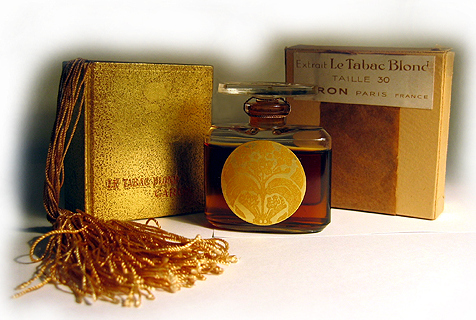
Vintage Tabac Blond

Vintage Tabac Blond

The year is 1927. John Welles and his two best friends, Sam Feldman and Claude Willoughby, are planning a clandestine night on the town. Their destination is a speakeasy hidden on the outskirts of Baltimore, Maryland. For the young medical students, the night will be both thrilling and disastrous.

Before John slips out for the night, he sneaks a dab of his Aunt Prudence’s perfume. This might seem like an extremely feminine thing to do until you become familiar with the scent he chooses to borrow.

One of my favorite subjects researched for my novel, The Secrets of Dr. John Welles, was perfume from the early 1900s. It is how I discovered Tabac Blond. The perfume was perfect for Prudence, a rebel-before-her-time class of woman who smokes, and John, by the simple fact that he’s male. Let me explain.

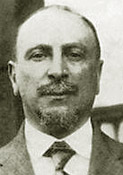
Ernest Daltroff

Ernest Daltroff

Tabac Blond was created in 1919 by perfumer and founder of the house of Caron, Ernest Daltroff. The fragrance was intended for women who smoke cigarettes, the symbol of women’s liberation and Parisian chic. What made Tabac Blond appealing were the leathery top notes, usually found in men’s fragrances, blended with a feminine floral bouquet. The added scents of undried (blond) tobacco leaves and vanilla made it desirable to both men and women.

Many reviewers insist upon a decanting of vintage Tabac Blond complaining that the new version doesn’t present as well. I’ll have to take their word for it as I do not own either and have yet to experience them in real life. It is, however, my goal to do both.

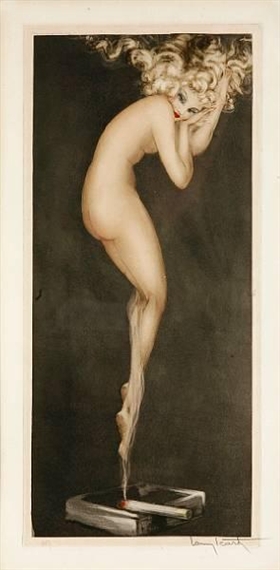
Artwork inspired by Tabac Blond

Artwork inspired by Tabac Blond

If you’re a lover of rich, exotic, glamorous perfume, Tabac Blond may be for you. Don’t let the price tag deter you from your passion. Whether you purchase the new version or a vintage decanting, there will be a small investment. I believe this is testimony to the allure of the fragrance. Be warned, however: wearing Tabac Blond may encourage behavior such as wild dancing, excessive drinking, and dressing like a flapper or F. Scott himself.

Yesterday’s Perfume

Perfume Projects

Writing What You Hear – Dialect & Accents

There is a character in my novel, The Secrets of Dr. John Welles, who is Mexican.  For a minor character, Lucia is one of my favorites.  She’s smart, classy, and in charge of all that goes on around her.  In short, she’s the perfect foil for her boss, the intelligent, elegant divorcée, Prudence Mayfield.

Prudence is nobody’s fool, but Lucia keeps her in check when needed. She pulls no punches with her employer and sometimes their conversation is quite spirited. My initial attempts at writing a Mexican dialect were hilarious and amateur. I needed to find a way to convey Lucia’s nationality without her dialog sounding cheesy or offensive.

Assistance came from a video on Howcast by voice and speech coach Andrea Caban. My mistake was that I never consider the posture of the mouth or the musicality of the dialect when writing for Lucia. The breathy S sound at the end of words, the hard R sound, and the nasally tone were exactly what I wanted for my character. How could I put that on paper without writing ridiculous phonetic spellings that would drive the reader insane?  By describing Lucia’s accent.

Originally, the only phonetic spelling I was going to use was jew for every time she said you.  I have since decided against this so I don’t offend potential readers.  Still, when I read Lucia’s comments out loud, I always do so in her accent. I’m confident the suggestions employed helped me to better express her dialect on the written page.  Please share your experience writing a foreign character’s dialect.

Recommended sites for writing dialect/accents:

How To Do a Mexican Accent

The Dos and Don’ts of Dialect

Andrea Caban – Dialect Coach

Christmas Morning Hot Cocoa

Christmas Day has a special quality that is difficult to describe. For me, as a child, it began long before the day arrived. My excitement was wrapped up in anticipation of my family gathering in the morning and spending the entire day together. I admit the presents were a bonus, but what I’m talking about is the sacred, magical characteristics unique to Christmas.

Creamy Hot Cocoa

Creamy Hot Cocoa

I tried to capture the essence of what I mentioned above in my novel, The Secrets of Dr. John Welles. The year is 1917 and Johnny is still a boy living on the farm with his family in Harford County, Maryland. The morning is almost ruined by an unwelcome visitor before Johnny’s stepmother, Collie, comes to the rescue.

Collie surprises the family with slices of pound cake and hot cocoa in addition to their usual fare. The food in this scene came from a memory I have of my mother waking my brother and me with slices of pound cake and hot cocoa one summer morning. I thought the rich cake and hot beverage would translate well to winter dining.

Sometimes the terms hot chocolate and hot cocoa are used interchangeably and incorrectly. Hot chocolate is milk and cream based with vanilla and shavings of semisweet or bittersweet chocolate. In some recipes, the quantity of chocolate used can make the drink so thick one has to spoon it out of the cup. Hot cocoa, on the other hand, is made with water, a little cream, sugar, and cocoa powder. This version is thinner with a more concentrated chocolate flavor.

For my novel, I chose to include the recipe my mother makes. It’s somewhere between the above-mentioned methods. My best memories of hot cocoa are made with the following recipe. Enjoy!

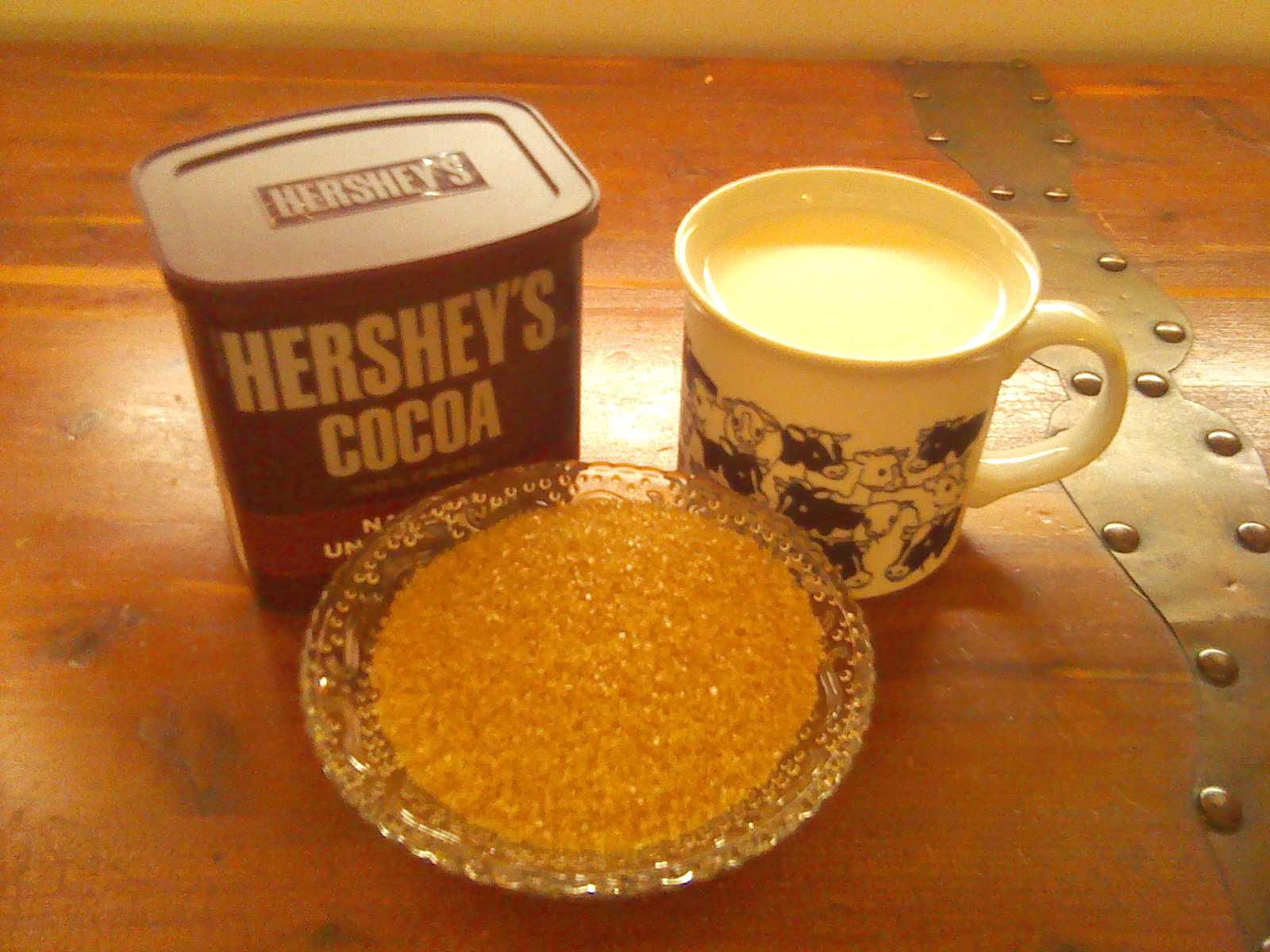
One 8 – 10 oz. mug per person

Whole Milk

Sugar (I use raw sugar)

Hershey’s Cocoa

Vanilla

Use one mug to measure out the quantity of milk needed, enough for each person, into a saucepan. Add 1 t. vanilla per person to the milk and warm on the stove. While the milk/vanilla is heating, measure 2 t. Hershey’s cocoa into each cup and 2 – 3 t sugar (depending on how sweet you like it.) When the milk/vanilla mixture is steaming, ladle it into each cup. Stir until sugar and cocoa are thoroughly mixed in. Garnish as desired.

The Debt to Pleasure – Book Review

Thank you, Lugo Mez (My Emerald Heart), for recommending The Debt to Pleasure by John Lanchester.  What a deliciously wicked tale, involving food, told from the villain’s perspective.  I enjoy a well-written bad character, the one I love to hate, and this book certainly doesn’t disappoint.  The clues leading up to the conclusion are well-placed within the ramblings of madman connoisseur, Tarquin Winot.  The recipes for food and drink are simple, elegant, and not to be ignored lest you bring the wrath of Tarquin down upon yourself.

I don’t own this book, but I must have it has part of my private library.  The fact that I’ve already read it doesn’t diminish its desirability in any way.  This one is definitely going on my Christmas list.


Disaster of a Book

Special Topics in Calamity Physics should have been cataloged as a YA book. It might have appealed to a clever teenager. The book reads the way a teenager talks with endless paragraphs of non-sense ranting. I like a little mystery in my novels and a few quirks in writing, but trendy writing with endless gimmicks is annoying. This book reminds me of the movie Heathers or any other teen movie from the 1980s.

We’re supposed to believe that Blue van Meer is intelligent enough to be valedictorian and secure a place at Harvard, but she’s too stupid to navigate the world of Blueblood snobs. Add in her pretentious, obnoxious father (no, wait-that’s every character) and you’re in for an extremely boring read.

By part two, I stopped reading anything in parentheses. By part three, I read only the dialog and the first and last sentence of each paragraph. Didn’t miss a thing, still got the gist of the story. The mystery was more what’s going on than actual who did it. The worst part was waiting for Blue to catch up to what I already figured out. It made for very tedious reading.

I finished three other books while slogging my way through Calamity. All I can think is, “There goes several hours of my life I’ll never get back.”

The Pleasure of Unexpected Surprises

I married into a family of car lovers. My only requirements for a vehicle are automatic transmission, air conditioning, and reliably get me from point A to Point B. For them, the purchase of a car is met with the same excitement one feels when bringing home a newborn for the first time.

One Sweet Ride

One Sweet Ride

My husband’s family loves to watch NASCAR, a sport devoted to cars. They sit glued to the television as the parrot-colored cars speed around the track over and over and over for hundreds, maybe thousands, of miles. After the National Anthem reverently sung by a country singer, impressive military jets soaring past, and the thrill of the classic line, “Gentlemen, start your engines,” you only need to watch the first and last lap to get the gist of what is going on. My in-laws would remind me there are spectacular crashes not to be missed.

So, if I have completely failed to understand their love of cars, how is it that one of the best days of my life was spent with my husband, Will, at a car show? The answer is that it had nothing to do with the cars and everything to do with the man who loves the cars.

This past Saturday, my best fella and I attended the annual car show hosted by Holy Cross Lutheran Church. The crisp fall day was perfect for walking around the church parking lot looking at a variety of vintage cars. The small sized ensured that a non-lover of cars like myself wouldn’t be bored.

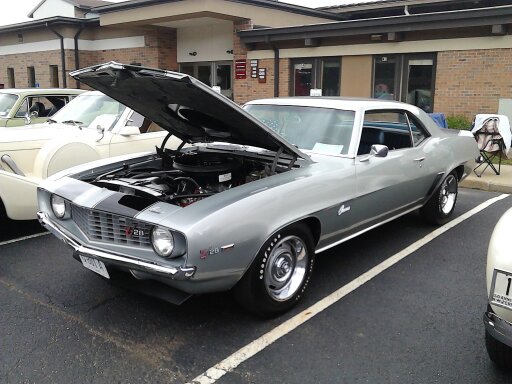
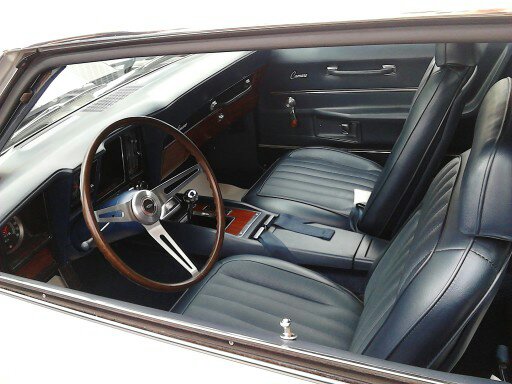
A silver and black, 1969 Camaro was the first vehicle to catch my eye. Instead of the grease and oil smell of a garage that I expected, I leaned in through the open window to inhale the sun-warmed aroma of the pristine interior. Like old-book scent, to which I am addicted, the smell of the car exuded history.

Baby You Can Drive My Car

Baby You Can Drive My Car

William, whose automotive knowledge obviously exceeds my own, kept walking away from the cars before I was ready to leave. I had to examine the front, each side, the back, the inside, and any little detail that caught my eye before I could move on. He laughed at me when I told him to either go on without me or slow down.

Our afternoon included delicious free food, a raffle of automotive-themed prizes, and the friendliest church members I have met in a long time. Still, the best part of my day was the fact that I spent it with Will. A couple child-free hours with the man I love doing what he loves best went a long way to recharging my own batteries.

He said, She said – He complained, She admitted

And the debate rages on. I’m talking about using dialog tags other than said and asked. It wasn’t so long ago that said is dead seemed to be the rule of the day. While everyone agrees that too many dialog tags are annoying, people tend to waver on whether or not to stick with said and asked or mix it up with more descriptive verbs such as complained, boasted, and grumbled.

A few tags that appear to slip under the said/asked radar include whispered, yelled, and shouted. I suppose that’s because they are either extremely passive or aggressive; on opposite ends of the said/asked spectrum.

Then there is laughed and chuckled. People will argue that you can’t laugh or chuckle while speaking; it only occurs before or after a person is done talking. I would have to disagree based on personal experience. Laughing while talking doesn’t have to hinder the speaker. Short sentences can be spoken with a lilt to one’s voice that I would definitely describe as a laugh.

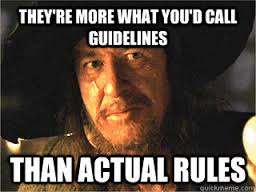
So join the debate. I want to hear from you on this subject. Do you think this is a hard and fast rule or a rule to be broken at the writer’s discretion rendering it just a guideline?

UPDATE:  Last week I sat in a seminar with a professional editor who actually suggested using dialog tags beyond said and asked.  She agreed that too many are burdensome to read, however, she pointed out how they help a reader keep track of who is speaking in a long conversation of two or more people.  I maintain that when used correctly, dialog tags beyond said and asked do not distract the reader.  Rather, they enhance the story and the writing.  In either case, I’d still love to hear your opinion, dear follower!

imagesX1C2VG7Y