Baring My Writer’s Soul – Part 20

writers-soul-20I’m two years into my author platform with my third-year anniversary coming up this August. I have a nice quantity of followers on my blog which is the most important part of my platform as far as I’m concerned because it reflects me most personally. I greatly appreciate the people who take the time to view, and hopefully read, my blog.

For this reason, I maintain quality posts that I trust my followers find interesting. These posts include samples of my writing, stories about my family life to give people a feel for who I am, and articles and recipes promoting my novel, The Secrets of Dr. John Welles. I try to post on Monday, Tuesday, and Wednesday, and I revisit these posts based on a follow-up schedule of one week, one month, and two months. Then there is my presence on Facebook, Twitter, Goodreads, and Pinterest.

Why do I mention all this? Because once again I find myself questioning the benefit of the author platform. I went in search of articles, statistics, and/or facts that would answer my question, and here is what I found. Keep in mind that I’m interested in finding info as it relates to the fiction writer.

Per Jane Friedman’s July 25, 2016, post, A Definition of Author Platform, in answer to the question Do you need a platform to get published?:

It depends. If you’re a fiction writer, no.  Fiction writers should focus on crafting the best work possible. That’s not to say a platform is unwelcome if you have one, but an agent or publisher will make a decision first based on the quality of your manuscript and its suitability for the current marketplace.

I was quite pleased to know Mrs. Friedman believes the most important part of our careers is to write good fiction. As anyone who writes knows, that doesn’t always come easily. I try to write 1000 words a day, but life has a way of crashing in on my writing that sometimes makes this difficult. Still, I press on without making pathetic excuses, and if I don’t meet my word goal, I hope I come away with at least one brilliantly written sentence for the day.

Here’s the thing, though: writing three quality posts for my blog takes quite a lot of time. True, they vary in word count, and sometimes I can squeeze three posts out of my 1000 words a day goal, sometimes more, sometimes less. I devote Sundays to writing my posts. Lately, though, I’ve been feeling that the blog is taking away valuable time from my other writing.

Coming up with three different blog posts is like having three different battle fronts open on top of the one for my novel, the one for querying, and the one for maintaining the other aspects of my platform. That’s a whole lot of fighting going on which leads to stress and fatigue. It can negatively affect my frame of mind when I approach my novel. In short, there are too many irons in the fire to allow for good writing on one project.

Then I came across statistics for the fiction writer, who is given the grace of shooting for lower stats than the non-fiction writer for whom platform is crucial, on the Writer Unboxed site in the article Building Your Writer Platform — How Much is Enough?, and I almost had a heart attack. These are loosely defined targets that the fiction writer is to aim for:

Blog Page Views Notable: 20,000/month

Twitter Followers Notable: 5,000

Newsletter Subscribers Notable: 5,000

Public Speaking Appearances Notable: Speaking to 1,000 people (total) a year

Sales of Previous Self-Published Books Notable: 2,000+ for fiction

So, now I’m curious to know if my platform is enough. Luckily, a few agents addressed the question of readiness within the same article, and I would direct you to Writer Unboxed to read them as they are quite lengthy. I’m also not sure if the agents are speaking to non-fiction or fiction writers, but in either case, I’m wondering if an author platform is a good and/or just measure of how worthy a fiction writer’s work is for publication.

I don’t want to live in fear of dropping stats on any portion of my platform, and more than that, I don’t want to offend my followers in any way that would result in losing them. And yet, so much of what I read and hear from fellow writers, whether traditionally, self-, or pre-published, is that it all comes down to how much money a writer will make for a publisher. Worse, if sales are poor, the publisher has a tendency to place the blame on the writer. Does that mean I won’t get looked at until I achieve a certain level of stats on my author platform thus guaranteeing big sales for a publisher?

Perhaps the question I should be asking is: what’s being done to make writers’ lives more conducive to writing and less stressful? I found some relief in the latter portion of Mrs. Friedman’s article, and although she was addressing non-fiction writers, I believe the same clarifications apply to fiction writers when she expounds upon What platform is NOT, What activities build author platform?, and Platform building is not one size fits all.

At the heart of this matter in my quest for publication is the desire to make a connection with other writers who may be experiencing the same concerns. I don’t want to feed the misery loves company aspect of this busines. Rather, I would love to hear from people on how they view the issue and how they are positively dealing with it.  But here is another portion of my anxiety regarding my author platform: why don’t followers engage? In a world where people love to give their opinion on anything and everything, writers are asking, begging even, for people to leave feedback and input, reviews and comments.

In closing, I agree yet again with Jane Friedman from her above-mentioned article when she says:

It rips me apart to hear very new writers express confusion and anxiety about their platform, especially when they have not a single book or credit to their name. Well, it’s not a mystery why platform is so confusing when you may not yet know who you are as a writer.  First and foremost, platform grows out of your body of work—or from producing great work. Remember that.  It’s very difficult, next to impossible, to build a platform for work that does not yet exist.

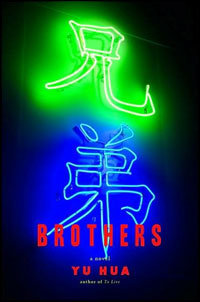
Brothers by Yu Hua

brothers-by-yu-huaWhat I loved about Brothers by Yu Hua is that within the pages of one book I found a story that made me laugh and cry over and over. The tale is both horrifyingly dark and twisted, but with seamless transition, Yu Hua writes some of the best comic scenes I’ve ever read. Life in America for the past eight years has made it possible to understand the absurdities about which Yu Hua writes, and for this reason, they are believable.

The story of Baldy Li, one of the most memorable characters I’ve encountered in fiction, and his brother, Song Gang, opens right before Mao’s Cultural Revolution. Scenes in which neighbors are unified in a common cause or belief and turned into enemies the very next day are chillingly similar to what is happening in the world today. When Yu Hua writes about Li Lan’s, Baldy Li’s, and Song Gang’s grief over the death of Song Fanping, I thought my heart would rip in two so great was their anguish.

The two definitions of stupidity (knowing the truth, seeing the truth, but still believing the lies, and doing the same thing over and over and expecting a different result) often came to mind while I read Brothers. I’m watching the premise of the story take place right in front of my eyes as the youth of America believe they can make certain political systems work in their generation even though overwhelming evidence of failure exists in other countries. I have to wonder if they’ve forgotten the past or are purposely not being taught. In either case, we’ll all be doomed for it.

The story is engaging based on the time period and cultural differences. Yet the prose is so simple that I have to wonder if this is due to the translation from Chinese to English or if the author chose to keep his words plain. In either case, his writing style works. Another thing I noticed while reading this translation was the repetitive nature of the writing. I’ve only encountered this in one other translation, Haruki Murakami’s 1Q84, and I wonder if this is a style particular to Asian writers. I find it lends emphasis to details and storylines.

Yu Hua broke the rules of writing brilliantly by not following plotting formulas. Two ways in which he did this was by the introduction of a new character and storylines in the last one third of the book. Not surprisingly, the pacing of the novel was not interrupted, and as a reader I wasn’t jarred out of the book. Obviously, Yu Hua writes for intelligent readers, and in this way, it reminded me of Dumas’s The Count of Monte Cristo with its large cast of characters, interwoven storylines, and backstory. In both cases, readers willing to stay with the book to the end will absolutely not be disappointed.

I know the book was written as a criticism on political systems and to show all the evil and craziness that stems from them. I found my interest focused on the relationships of the characters enduring life under the various political systems and how their relationships were further affected by their personalities which dictated how they reacted to circumstances and each other.  I came to the conclusion that all one can probably do in such a situation is be kind, work hard, and do no harm.

Despite the depth of the tale Brothers presented, as I said there were some hilarious moments including a chicken search party, Yanker Brand underwear, and actual blind men drawing blind conclusions. But again, that’s part of Yu Hua’s ability to make a reader laugh while getting his point across. The best line though was probably Yanker Yu explaining politics to Popsicle Wang when he said, “…comfortable circumstances breed freethinking, which is why the rich love politics.” I laughed aloud as I shuddered thinking how stirred up the politicians are keeping the world.

Baring My Writer’s Soul – Part 16

Writers are an odd lot. We’d be the first to admit it. Writer’s post things like “That moment when you finish a book, look around, and realize that everyone is just carrying on with their lives as though you didn’t just experience emotional trauma at the hands of a paperback.” And because we’re writers, we’re also readers. At least we should be.

We reading/writing types are deeply and emotionally attached to the characters we read about. They become real for us in a way that often defies description. The closest I can come is to say that when I finish a well-written book, I feel as if I’m leaving behind great friends. Non-readers may scoff at us, suggesting that we simply re-read the book. That is an option, but what we want as readers is to move forward with our favorite characters, possibly gathering them all together regardless of genre, entwining them in our lives. That may seem a titch odd, but what can I say? We’re artists; perhaps this is why we write.

The interesting thing I have discovered as a reader/writer is that just like our real friends, we each have different criteria for which fictional characters we will allow in our lives. What first brought this to my attention was when I learned that my friend was reading Gone With the Wind for her classical literature book club. We discussed the book over lunch during which I admitted that I pushed myself to read it and could barely make it halfway through. I hated every minute of that piece of vintage literary fluff which actually surprised me because it came so highly recommended. After Margaret Mitchell’s endless declarations about the quaint South and dreary passages of battle scenes, the book was incredibly mediocre. Yet it wasn’t the writing that ruined it for me.

Scarlett was. I hated her. Each self-centered deed and word I had to endure at the hands of Scarlett made me want to beat her with a stick. I rooted against her at every turn and rejoiced when she didn’t get her way. Throw in spineless Ashley and sickening Melanie, and there was no way I was going to finish this book. I simply cannot stand annoying people in my real life, so why would I waste my time enduring three fictional nuisances? My friend, on the other hand, found Scarlett to be funny in her total self-absorption. Maybe my friend is more patient that I am.

Writer's Soul 16Then Dale came to mind. She’s a character from Joanna Trollope’s book, Other People’s Children. Dale was every bit as self-serving and manipulative as Scarlett and more so because she possessed a psychological hold on two other characters. She was evil, she was brilliant. I hated her with a passion and seriously considered writing Mrs. Trollope to request a sequel in which Dale was killed off slowly and painfully.

So what was the difference? Well, I’d never willingly allow someone like Dale in my life, but I wouldn’t hesitate to take her head on either. Whereas pathetic, annoying Scarlett wouldn’t earn a second glance from me as I ignored her in the most obvious ways possible. However, we’re dealing with the fictional realm, and in this world, Scarlett would never be able to compete with Dale as a worthy opponent and one that would engage me as a reader. Where Margaret Mitchell failed with Scarlett, Joanna Trollope succeeded with Dale.

In addition to the writing behind amazing characters that have the ability to evoke great response from the reader, our desires and tolerances make them appealing to us whether they are the protagonist, antagonist, or peripheral character. These factors combined determine who we will welcome into our minds. The beauty of this is that your choices don’t have to be all pleasant ones. You can fall for the bad character without any harmful side effects unlike real life where allowing the wicked person into your life may destroy you. It’s quite brilliant, really, and I wonder why more people don’t read.

Write Happy!

Dripping Ink – Questions for Self-critique

The Writer Has the Last Word

It is my very great pleasure to share an article by Caroline Totten of The Greater Canton Writers’ Guild, Inc.  The following article was featured in the September newsletter.  Information regarding the Guild can be found at:  http://cantonwritersguild.org/

Dripping Ink by Caroline Totten

Questions for Self-critique

Do your demons imitate the gods by grabbing and holding attention? (Your demons are ideas that keep poking you in the eye. If the idea arouses laughter, tears, paranoia, fright, curiosity or indignation, etc., you have acquired a point of view, which may boil into a plot.)

Does the plot offer an opportunity to provide fresh insight into the theme? (Ideally, the plot begins with a distress signal in the middle of the story. The action is already in progress and tinged with an emotional element in the main character. Usually, the setting fits the character and supports the viewpoint.)

Is the character(s) consistent in the context of the plot? (Draw the emotional tone from your personal experience and place it in the persona of the protagonist, the main character. The conflict may be psychological, physical, or ideological, or a combination of these elements.)

Here are a few aspects of the reader/author relationship to keep in mind. By being a writer, or hoping to become one, your entire self becomes an instrument to observe and record human experience. When you extrapolate heartache, joy, fear, whatever, and put them into your character, you are actually putting the reader in touch with his emotions. (Numbness, repression, or suppression are emotional factors.)

Psychologically, mystery, or suspense stories excite the mind of the reader.

Horror stories, by a circuitous route, help the reader release his fear.

Adventure stories encourage bravery.

Love stories release hormones that tenderize the heart.

Fantasy encourages imagination by offering another way of perceiving the resolution of conflict even though at the outset, the reader may be looking for escape.

Humor may release attitudes that might otherwise be socially rude or crude.

Actually, stories that contain violence, corruption, and greed may contribute to the reduction of these elements and/or act as a catharsis for the reader.

Reading fiction is not an idle past time. Its factual component may differ from nonfiction, but the result is similar. The point of view alters the reader’s perceptions.   Effective writing heightens awareness of the subject by allowing the reader to participate in the physical and mental experience of the character. Most effective stories show the character in action. In some cases, “thinking” by the character rather than dialogue or confrontation may be the entrance into a story. The approach depends on the genre, your style, and editorial desires. (At times, magazine and book editors don’t know what they want until they see it.)

Edible Fiction

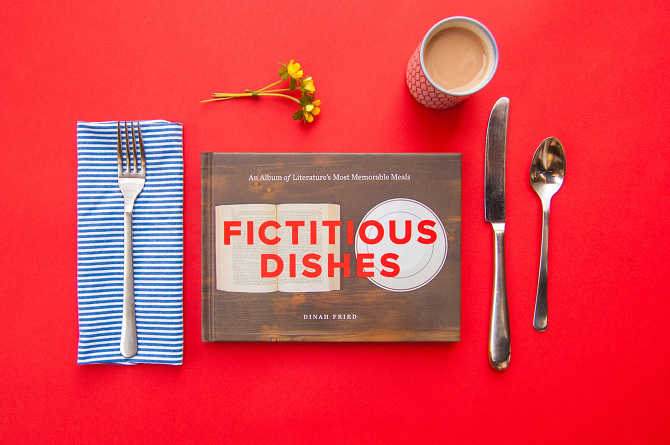
About a month ago, I had a brilliant idea for my blog:  feature the food in my novel, The Secrets of Dr. John Welles. That very same day, a patron at the library where I work checked out a book called Fictitious Dishes by Dinah Fried.

I could have been bitter, believing my brilliant idea to have been stolen right out from under my nose, but realized I was on to something good. I placed the book on hold and waited another month for my turn to read it.

In the meantime, I scoured my own novel for every mention of food. There were plenty. I’m not really surprised because I have always enjoyed eating. Also in that vein of thought, I love to feed my family and friends. It made sense that I fed my fictional people as well.

Based on this discovery, I decided to provide recipes and pictures of the food in my book. My goal would be to immerse the reader into the world of my main character, John Welles. Not to mention, it has been and will be incredibly fun to create the food, photograph the food, and eat the food.

Bon appétit!