Javaaaah!

Coffee features quite often in my novel, The Secrets of Dr. John Welles. Whether my characters consumed it with dessert, dinner, or by itself, coffee plays an important role in the scenes as much as the food I’ve chosen for them to eat. Rather than bore you with the entire history of coffee or mention trivia such as how many cups are consumed in the world a day, I’ll focus on how coffee was prepared during the years my novel takes place.

By the time my novel opens in 1907, one of the simplest methods of brewing coffee involved placing grounds and water in a heat-proof container and bringing it to a boil over a heat source. It was that inelegant sometimes. Most of the containers were actually metal pots with a handle and spout intended for coffee, however, brewing coffee in a cooking pot wasn’t unheard of.
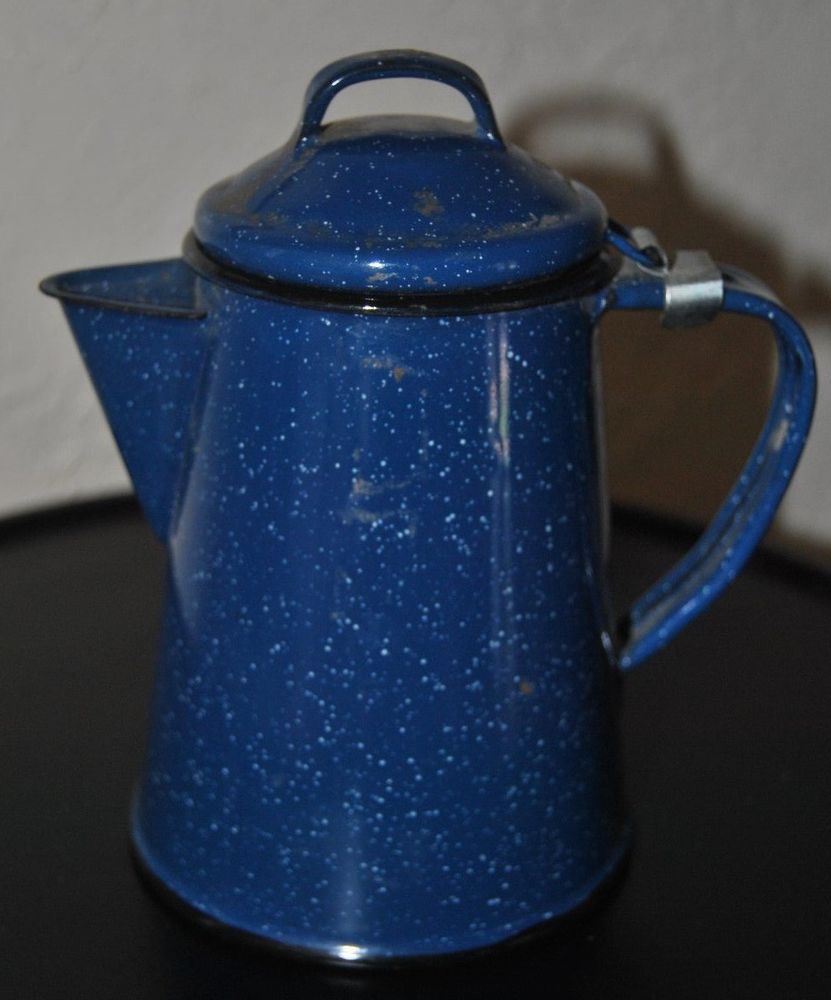
javaaaah2I imagine Johnny’s stepmother, Collie, might have brewed coffee in a pot without a filter, heated on a wood-burning or coal stove. I envision it looking much like the speckleware version pictured to the right. Careful pouring ensured that most of the grounds stayed in the bottom of the pot. Another name for this simple process is cowboy coffee. Riding the plains and herding animals didn’t lend much time for the more sophisticated methods of brewing, and in Collie’s case, neither did running a farm.

Perhaps Collie was lucky enough to own a percolator. She still would have heated it on the stove because electricity wouldn’t have been available as far out as the Welleses lived on their farm. The advantage to the percolator would have been a separation of the spent grounds from the final product, making a much more palatable beverage.

Percolating coffee pots consist of a chamber at the bottom with a vertical tube leading from the lower chamber to the top of the pot. Resting on the vertical tube is another chamber with a perforated bottom. This is where the ground coffee is placed. The water level should not touch the bottom of the coffee chamber. There was also a lid with a clear knob.

javaaaahThe heat source beneath the percolator heats the water in the lower chamber. Heated water starts to boil, and the boiling makes the water rise up the tube and spill over into the coffee chamber. The heated water seeps through the grounds, out through the perforations at the bottom, and back into the water chamber. This process is repeated until the desired strength of brew is achieved. Those using a percolator would check the clear knob on the lid to see if the brew has reached the right color and strength.

One source credits James Nason of Massachusetts with patenting a percolator design in 1865. Another says on August 16, 1889, Hanson Goodrich, a farmer from Illinois, received his patent for the percolator. Still another gives American-born, British physicist Count Rumford, AKA Sir Benjamin Thompson, the acclaim for the invention of the percolator somewhere between 1810–1814. Regardless of who invented or patented it first, earlier models used glass construction, but percolators made from the 1930s on were made of metal, mostly aluminum and copper.
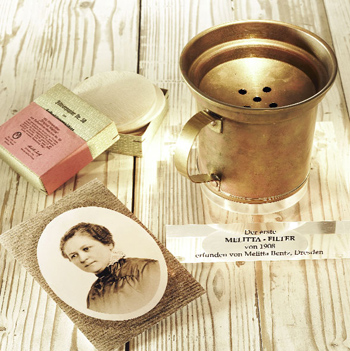
javaaaa3Only John, his Aunt Prudence, and some of the wealthier characters would have had access to restaurants that served espresso, the result of making coffee with steam pressure, or friends who owned a French press, a pot that brews coffee then separates the final product from the grounds by use of a plunger. The classiest method the others might have encountered would be filter drip brewing invented in 1908 by German housewife, Melitta Benz, in an effort to eliminate the bitter taste produced by boiling loose coffee grounds

After experimenting with various types of filtration, Melitta Benz ended up using blotting papers from her son’s exercise book. The ensuing result was met with enthusiasm, and she patented her invention, started a company, and hired her husband and two sons. Melitta coffee filters and pots are still around today.

So the next time you enjoy a cup of coffee from your favorite establishment, whether it’s a simple cup of joe or a fancy latte, keep in mind coffee’s humble beginnings and that, as of this post, it’s still the world’s favorite hot beverage.

First Class Storytelling

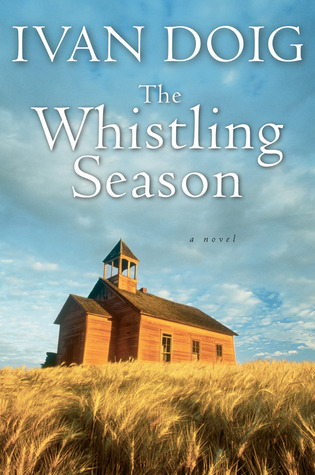
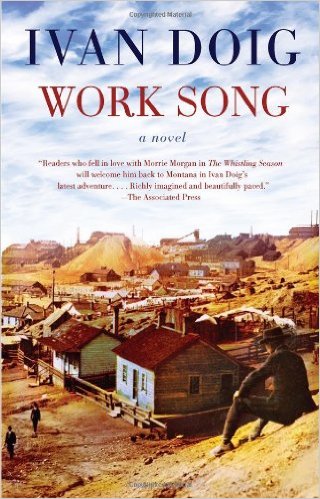
first-class-storytellingFans of Ivan Doig’s storytelling will not be disappointed with his novel, Work Song. The tale picks up with the character of Morgan Llewellyn, alias Morrie Morgan, after he departs the cast of characters living in Marias Coulee in The Whistling Season.

Morrie, still mourning his loss of Rose to widower Oliver Milliron, finds his way back to Montana and the copper mining town of Butte. He takes up residence in the boarding house of the lovely widow Grace Farraday where he meets Griff and Hoop, the twin-like retired miners full of life, full of the love of mining, and full of themselves.

Morrie’s first job as a funeral crier introduces him to the woes of life for the miners and their struggle with the Anaconda Copper Mining Company and the Industrial Workers of the World. But it is his love of reading and a fortuitous trip to the Butte Public Library that lands him in the position of glorified errand boy for the enigmatic and terrifying ex-rancher turned library administrator, Samuel S. Sandison.

Before long, Morrie is dragged into the copper miners’ battle between Anaconda, the IWW, and the union all the while dodgingDoig_WS_5.indd company goons who try to peg him as an IWW agitator and Chicago mobsters still looking for him for the gambling debacle he perpetrated with his brother. As if that weren’t enough to keep him hopping, Morrie finds his plate even fuller when a former student from Marias Coulee, now engaged to the union leader, presses him into service on behalf of the union. The Latin-loving bibliophile can no longer stay neutral in the battle, but he must operate below his tyrannical employer’s unpredictable nature and ever-watching eye.

At the eleventh hour, Sandison, a large man with an even larger secret, comes to Morrie’s rescue. All is saved, yet Morrie, who has fallen in love with the Widow Farraday, knows he cannot stay in Butte for it is only a matter of time before the mob finds him. A final, well-placed bet secures the financial future for those Morrie has come to care for. His last goodbye to Grace, another widow he must leave behind, produces the best windfall Morrie experiences to date.

first-class-storytelling-3Doig’s tales of western life transcend the clichéd cowboy story. He writes from the working class point of view and evokes the joys and hardships of life in his beloved Montana. One of my absolute favorite authors, it was my sincere wish that he write a third novel summing up the lives of Morrie Morgan and the marvelous cast of characters spanning both the The Whistling Season and Work Song. Alas, with Ivan Doig’s passing in 2015, not only did his unforgettable characters lose their voice, literature lost one of the best storytellers known to man.

Welcome to The Apple Crate

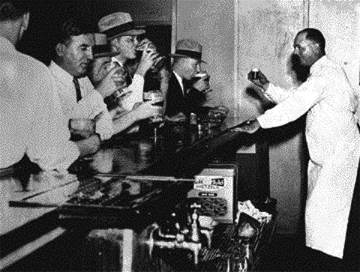
welcome-to-the-apple-crateOne of the most well-known results of Prohibition was the speakeasy. In total rebellion against the laws meant to curb crime and drinking, speakeasies popped up almost everywhere from 1920 to 1933. According to one article I researched while writing my novel, The Secrets of Dr. John Welles, for every legal saloon operating prior to Prohibition, at least six speakeasies opened after Prohibition. With all that temptation, it was understandable that John and his two best friends, Sam and Claude, would end up in one of the illegal establishments pushing the boundaries of youthful adventure.  Here’s what I discovered while creating The Apple Crate, a speakeasy located below a grocery store owned by a gangster of my inventing, Leo Jenkins.

Like legal establishments and today’s clubs, some speakeasies offered entertainment in the form of singing or jazz bands. Entry into the club required knowledge of a password letting the doorman, often the owner or manager of the club, know that you weren’t law enforcement and to keep the government from finding the location. A personal introduction or presenting of a card may also have been required to ensure security against raids.

The term speakeasy came from a bartending term. To speak easy meant to act casually so as not to draw attention to oneself with quick, nervous behavior when purchasing illegal alcohol. Terms used to conceal the identity of bootleg liquor included coffin varnish, monkey rum, white mule, horse liniment, panther sweat, tarantula juice, and rot gut. Not very appealing names for the barely drinkable booze served, but it didn’t keep people from seeking out alcohol every chance they had.

Speakeasies were also known as a blind pig or blind tiger, but these terms were reserved for lower class establishments. There is debatable history surrounding these names. One story claims that entertainment involving pigs resulted in the first name. People supposedly paid to see the pig and a drink was thrown in for free. Blind tiger was purportedly the name used when the identity of the seller was concealed.

While gaining access to a speakeasy required connections, locating one probably wasn’t as difficult. They were everywhere in America and Canada, usually set up in stores and businesses, operating right next to or within legal establishments. Speakeasies were most common in New York where the famed 21 club had the extra security measure of safety switches meant to short circuit and deny access to all the of the doors that contained alcohol.

Because respectable women weren’t welcome in a public bar prior to Prohibition, many started flocking to speakeasies after the Eighteenth Amendment took effect. These women, easily recognized as flappers, would dance the night away to music performed by jazz bands.

Gangsters were often associated with speakeasies, the most famous being Al Capone, but luckily John and his friends didn’t encounter any during their night out. Hustling illegal liquor was an extremely profitable venture for gangsters, and many became quite wealthy at it. Unfortunately, many regular people also became rich by supplying the demands of thirsty Americans.

Some of the crazier methods of transport included hip flasks, hot water bottles, false books, garden hoses, carriages with babies placed on top, carpenter’s aprons, coconut shells, and in one interesting case, eggs. Supposedly, a creative soul emptied the eggs of their true contents and refilled them with liquor.

The interior of a speakeasy could range from the extremely elegant to an unsophisticated hole-in-the-wall. Depending on the success of a particular speakeasy, drinks might be served in appropriate barware or from chipped mugs. In either case, people ranging from the famous, wealthy, and artistic to the downtrodden streamed to speakeasies during Prohibition. The only thing that went away with the repeal of the Eighteenth Amendment was the crime involved with selling alcohol. Well, most of it anyways.  (See:  By the Light of the Silvery Moon)

The Music of Life

the-music-of-lifeSeveral years ago while shelving AV material at the library where I used to work, I came across a CD titled The Goat Rodeo Sessions. What caught my eye, besides the unusual title, was Yo-Yo Ma on the cover. I was familiar with Yo-Yo Ma as a classically trained musician, but here he was featured on a CD devoted to music of a completely different genre. Without hesitation, I checked out the CD and couldn’t wait to listen to it on the drive home. What I heard started a love affair with a type of music I’d previously tiptoed around.

Probably what kept me from exploring this genre earlier was the fact that much of it was labeled Bluegrass. My opinion of Bluegrass included all things twangy and hick-i-fied. Yes, that is a word. What I discovered that day was something called Classical Crossover. Classical Crossover is a genre that hovers between classical and popular music, and is usually targeted at fans of both types of music. In the most common type of crossover, classically trained performers sing or play popular songs, folk music, show tunes, or holiday songs.

Chris Thile, Edgar Meyer, and Stuart Duncan also contributed to the CD’s eleven tracks of music based on English and Irish fiddle music that gave birth to what we know as Appalachian fiddle music. The closest I’d ever come to anything like it was the little bits of fiddle I’d heard in songs by Clannad and The Chieftains.

After listening to The Goat Rodeo Sessions, I went in search of other CDs by the same artists or those featuring similar music. I discovered Appalachian Waltz, Short Trip Home, Appalachian Journey, and Heartland: An Appalachian Anthology all of which are now in a playlist that became the soundtrack of my mind as I wrote my novel, The Secrets of Dr. John Welles. One song in particular, “Sliding Down” featuring Béla Fleck, Edgar Meyer, and Mike Marshall, epitomized John Welles’s experience in the later years of his life.

By the time John lived in the Appalachian Mountains of West Virginia, his life had taken so many downward turns that he believed he’d never dig himself out from under them. Yet through it all, he retained a shred of hope buried deep in his heart. “Sliding Down” is the musical representation of what John felt during those years:  melancholy with a touch of optimism on the horizon that he was too afraid to reach for.

Other tracks from the above-listed CDs also played perfectly to the scenarios I wrote whether it was John as a boy on the family farm, as a student at the University of Maryland, during his relationship with the beautiful, enigmatic Garland, or the months following the D-Day Invasion. I don’t doubt that the music shaped what I wrote as if the songs were indeed a custom-made soundtrack. However, I finished writing over a year ago, so I haven’t accessed my Appalachian playlist in some time.

Last week, I had the opportunity to re-read To Kill a Mockingbird. It had been over thirty years since I had done so as an Honors English student in high school, but thanks to one of my book clubs, we revisited the classic. During one scene, Scout mentioned that Atticus liked listening to fiddle music on the radio. Suddenly my forgotten playlist rushed back to my memory. A quick check on Google confirmed that the Appalachian Mountains extend as far south as northern Alabama. As I read, all my favorite pieces became the background music for Scout, Jem, Dill, and Atticus’s adventures, and I listened to my playlist for two days straight.

By the way, the term goat rodeo refers to a chaotic event where many things must go right for the situation to work, a reference to the unusual and challenging aspects of blending classical and bluegrass music. Yo-Yo Ma described a goat rodeo saying, “If there were forks in the road and each time there was a fork the right decision was made then you get to a goat rodeo.” In the case of The Secrets of Dr. John Welles and To Kill a Mockingbird, the right choices weren’t always made, but somehow life worked out for the majority of those involved. This fact further reinforces my belief that the music of Appalachia is truly the music of real life.

Brothers by Yu Hua

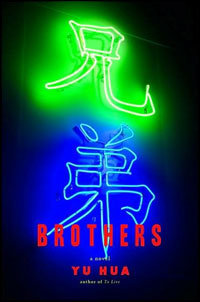
brothers-by-yu-huaWhat I loved about Brothers by Yu Hua is that within the pages of one book I found a story that made me laugh and cry over and over. The tale is both horrifyingly dark and twisted, but with seamless transition, Yu Hua writes some of the best comic scenes I’ve ever read. Life in America for the past eight years has made it possible to understand the absurdities about which Yu Hua writes, and for this reason, they are believable.

The story of Baldy Li, one of the most memorable characters I’ve encountered in fiction, and his brother, Song Gang, opens right before Mao’s Cultural Revolution. Scenes in which neighbors are unified in a common cause or belief and turned into enemies the very next day are chillingly similar to what is happening in the world today. When Yu Hua writes about Li Lan’s, Baldy Li’s, and Song Gang’s grief over the death of Song Fanping, I thought my heart would rip in two so great was their anguish.

The two definitions of stupidity (knowing the truth, seeing the truth, but still believing the lies, and doing the same thing over and over and expecting a different result) often came to mind while I read Brothers. I’m watching the premise of the story take place right in front of my eyes as the youth of America believe they can make certain political systems work in their generation even though overwhelming evidence of failure exists in other countries. I have to wonder if they’ve forgotten the past or are purposely not being taught. In either case, we’ll all be doomed for it.

The story is engaging based on the time period and cultural differences. Yet the prose is so simple that I have to wonder if this is due to the translation from Chinese to English or if the author chose to keep his words plain. In either case, his writing style works. Another thing I noticed while reading this translation was the repetitive nature of the writing. I’ve only encountered this in one other translation, Haruki Murakami’s 1Q84, and I wonder if this is a style particular to Asian writers. I find it lends emphasis to details and storylines.

Yu Hua broke the rules of writing brilliantly by not following plotting formulas. Two ways in which he did this was by the introduction of a new character and storylines in the last one third of the book. Not surprisingly, the pacing of the novel was not interrupted, and as a reader I wasn’t jarred out of the book. Obviously, Yu Hua writes for intelligent readers, and in this way, it reminded me of Dumas’s The Count of Monte Cristo with its large cast of characters, interwoven storylines, and backstory. In both cases, readers willing to stay with the book to the end will absolutely not be disappointed.

I know the book was written as a criticism on political systems and to show all the evil and craziness that stems from them. I found my interest focused on the relationships of the characters enduring life under the various political systems and how their relationships were further affected by their personalities which dictated how they reacted to circumstances and each other.  I came to the conclusion that all one can probably do in such a situation is be kind, work hard, and do no harm.

Despite the depth of the tale Brothers presented, as I said there were some hilarious moments including a chicken search party, Yanker Brand underwear, and actual blind men drawing blind conclusions. But again, that’s part of Yu Hua’s ability to make a reader laugh while getting his point across. The best line though was probably Yanker Yu explaining politics to Popsicle Wang when he said, “…comfortable circumstances breed freethinking, which is why the rich love politics.” I laughed aloud as I shuddered thinking how stirred up the politicians are keeping the world.

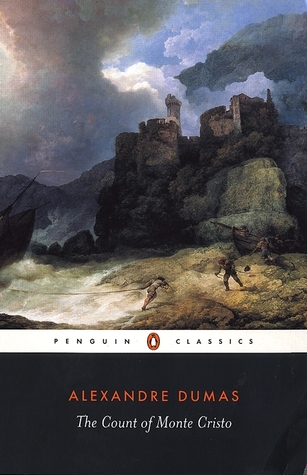
The Count of Monte Cristo – Alexandre Dumas

the-count-of-monte-cristoYou’ve probably heard it said many times that a movie is never as good as the book on which it was based. I’d have to agree 99.9% of the time, because I have two movies in mind that actually were better than the book. Still, as my aunt once pointed out to me, the reason I enjoyed movies based on my favorite books, and that is a rare occurrence, is because I read the book first and was familiar with all the details and nuances of story and character that never made it on screen.

With all that being said, The Count of Monte Cristo is one book that will never be captured in its entirety in a movie, and yes, I know it’s been made into a movie, and no, I haven’t watched any version; I don’t have to, I’ve read the book. All 1276 glorious pages. But perhaps a mini-series would do a good job of catching a few extra, interesting tidbits, you say. I’m sorry, my friend, that will never be sufficient.

As I read Alexandre Dumas, admittedly for the first time, his writing constantly reminded me of Anne Baxter’s portrayal of Nefertiti in The Ten Commandments. Both Dumas and Baxter displayed the same intensity of passion for his and her craft. I’m talking over-the-top passion that sweeps one away with what they are reading, or in the case of Baxter, watching.

The cast of characters is as interesting and varied as the type of people one might view walking through a crowded bazaar in a foreign country. Rich and poor, saint and sinner, they all have wonderful personalities, even when it’s as an antagonist, and backstory galore. The interesting thing is I didn’t once mind reading their histories because without it the overall novel would have lost its magic and momentum. Dumas wove together what would have been for writers of today probably two or three novels. Yet he made the enormous quantity of words and pages work. He made it flow. He made me sigh when I finished the novel the same way I would upon leaving great friends.

The Count of Monte Cristo is not for the timid or impatient reader nor is it for someone who wants a quick hit story that translates well onto the big screen. Everything that makes the novel a classic is, unfortunately, being stripped out of writing today. There’s a reason it’s a classic, and I believe one would do well to follow in the footsteps of the masters.

One such technique, which Dumas employed brilliantly, was to engage his reader directly with gentle reminders of previously mentioned details, scenes, and actions. The writers of today would probably label this poor writing because they’ve been taught not to do anything that would jar the reader out of the story. How absurd. I wasn’t jarred out of the story, my mind so feeble or easily distracted that I took offense with the author. On the contrary, I found it tantalizing for this passionate man to say, “Now stay with me because I have something even more incredible to show you, and I didn’t want you to forget a single detail in my extensive, worthy novel.”

My classical literature book group read the Robin Buss translation published by Penguin. I researched Buss as a translator, and the general opinion about his translation of The Three Musketeers was that he did the best and most accurate job. Therefore, I trusted him for The Count of Monte Cristo. The point on which all agreed regarding the Buss translation is that it kept certain sexual overtones in place which had previously been removed or glossed over by other translators and/or editors so as not to offend delicate, Victorian sensibilities. Don’t allow this tiny fact to scare you off from reading Dumas. Compared to novels produced today for tweens and teens, the sexual scenes Dumas wrote would be considered implied at best.

In conclusion, if you’re looking for an easy yet engaging read, an exciting romp through history full of adventure, dashing, mysterious men, maidens who blanch and faint, and above all a great story of well-deserved revenge, then I highly recommend The Count of Monte Cristo.

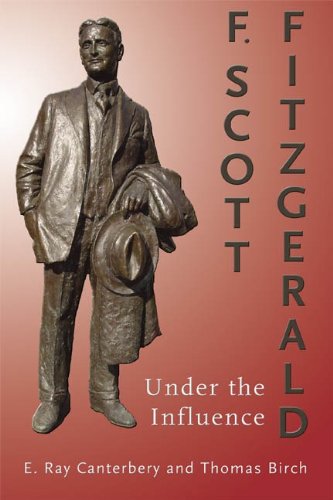
Under the Influence

under-the-influenceAs a follow up to reading F. Scott Fitzgerald – The Short Stories, I read his biography, Under the Influence, by E. Ray Canterbery and Thomas D. Birch. I assigned myself the goal of learning about the man as an author and a person for research toward a novel I’m working on.

As I suspected, my opinion of him hasn’t changed, and I’m seriously reconsidering the other Fitzgerald commentaries, biographies, and novels I had planned to read to gain a better understanding of him. The role to which he will be assigned in my new novel doesn’t warrant more than what I’ve already completed.

Under the Influence was well-written, highly informative, and laid a large portion of the blame for Fitzgerald’s failure at Zelda’s feet. It is well known now that Zelda suffered from schizophrenia and that her mental illness wreaked havoc upon their marriage. However, one must step back and analyze why Fitzgerald married Zelda in the first place.

Fitzgerald had lost the love of his life, Ginevra King, who represented two of his lifelong ambitions: wealth and power. Zelda, also beautiful and rich, seemed a means to an end where his desires were concerned. Then there was the fact that she was the rebound girl, and everybody knows you don’t fall in love with, let alone marry, the rebound girl. His actions make me question whether he truly loved either woman or was simply satisfying his need for a “top girl.”

I don’t blame Fitzgerald for not being able to predict Zelda’s illness, but he could have handled it better once she started displaying signs. Even before she was diagnosed, when she was unable to curb her outlandish conduct, instead of exercising maturity and control, more often than not Fitzgerald would join her in bizarre behavior. The biography presents him as a caring family man, but responsible family men don’t indulge bad actions.

While Zelda was a victim of a condition not of her own choosing, Fitzgerald was a prisoner of a condition of his own making. He alone was responsible for his excessive drinking and all the negative effects it had on his life, his family, and his writing. Throughout his life, Fitzgerald relied on alcohol to bolster his insecure nature, and it cost him both personal and professional relationships as well as reputation among fellow authors.

The biography reinforced my belief that Fitzgerald wrote himself into much, possibly all, of his work. His fictional characters reflect his ambitions, goals, beliefs, failures, and successes. One really doesn’t need to read the autobiographical Crack Up essays to obtain a clear picture of the man. Although I don’t care for his writing, I still find it sad that he squandered his talent chasing the idea of the American Dream, specifically the portion where he was steeped in wealth.

How I Cheated at NaNoWriMo and Won

how-i-cheated-at-nanowrimoA couple years ago, my friend and fellow writer, S of JSMawdsley, talked me into trying NaNoWriMo. She mentioned it at the writer’s group she facilitates at the library where we worked. At the time, I was mainly a short story writer and dabbled in the occasional picture book. As luck would have it, I had an idea for a novel in mind, and NaNoWriMo seemed like the perfect way to get it out of my head and on my laptop.

Being new to the world of NaNoWriMo, I didn’t prepare at all. I just started writing on November first and quit on November thirtieth. I had 50,000 words, which satisfied the requirements of NaNoWriMo, but I didn’t have a complete novel. What I did have was a lot of work ahead of me and the conviction that maybe I really hadn’t won.

At this point, S would probably have told me I needed to outline my novel, but the first thing I discovered from writing such a lengthy piece is that I’m a pantser. I plot a little when approaching my writing, but I love to explore the rabbit trails because that is where I discover my best writing. My opinion on pantsing can be read here: Are You A Pantser?

So, did I win NaNoWriMo or did I cheat? I started at about the last one-third of the novel because I had the most information for writing that portion. In short, I learned the valuable lesson of researching before you write especially if it’s for a contest such as NaNoWriMo. You don’t want the added stress of trying to conduct research while keeping up a word goal.

I pressed on throughout the year editing what I had written and creating the rest of the novel as I wanted it to be. I researched more thoroughly and ended up chucking quite a bit of what I wrote for NaNoWriMo. Again, part of that was my fault, but I also wondered if one 50,000-word novel every year is what I wanted. Is that what the creators of NaNoWriMo want?

I suspect and sincerely hope the purpose of NaNoWriMo is to keep people writing because that’s what I did. Before I knew it, November had rolled around again, and with it NaNoWriMo. I wasn’t finished with my first novel, so why on earth would I abandon it for the added pressure of creating a new novel. Admittedly, I had no new ideas at the time, and I didn’t want the burden of coming up with one. Also, there was no time to research even the slim ideas that passed through my head.

Instead, I cheated, and I cheated grandly! I signed up for NaNoWriMo, and without a single ounce of shame, I re-entered my novel, The Secrets of Dr. John Welles. Dr. Welles’s story was almost complete, but I needed a little motivation to finish the missing chapters and tie it all together. NaNoWriMo provided this inspiration by keeping me on track with a daily word goal, but it also became a beneficial editing tool. If I edited my daily word goal, I counted it along with any new writing.

What I achieved wasn’t another half-baked novel, but rather a well-written, well-edited novel with which I was extremely pleased. A titch more editing after the fact, and Dr. Welles was ready for the hands of beta readers.

I took a couple years off from NaNoWriMo, but the point of the contest was always close to my heart. I knew I couldn’t devote time to a new novel and make The Secrets of Dr. John Welles all I wanted it to be.   Then there is the fact that when story inspiration comes to me, I have to begin which sometimes means starting before NaNoWriMo starts. Yes, there is Camp NaNo, but my heart belongs to the original taking place in November.

When NaNoWriMo rolled around this year, I was already a little over halfway through my current novel. During the month of October, I had to set my writing aside to prepare for my son’s Eagle Scout Court of Honor. When I was ready to restart, good ole NaNoWriMo once again came to the rescue as a means up jumpstarting my writing. Although I didn’t sign up with the official website, I created a spreadsheet to track and tally my daily writing goal. I’m using it to finish the current novel, for which I am prepared research wise, as well as for any writing I do that can be published including my blog posts.

Yes, that’s cheating because it’s not a single new novel of at least 50,000 words. But again, I have to believe the heart and soul purpose of NaNoWriMo is to keep writers writing. That is what I am doing.

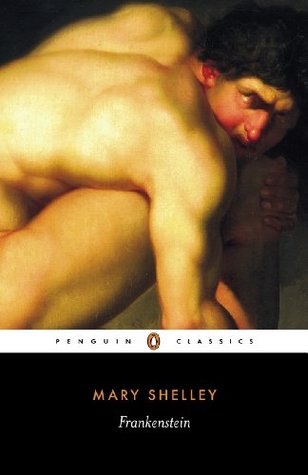
Mary Shelley’s Frankenstein

mary-shelleys-frankensteinI recently read Mary Shelley’s Frankenstein as a requirement for my classic literature book club. It was my first time reading the book, and I looked forward to it. As I approached the story, I knew better than to compare it to the Boris Karloff version of the movie by the same title. I’ve only viewed portions of the movie, and from what I’ve seen, I’m pretty sure I didn’t miss anything.

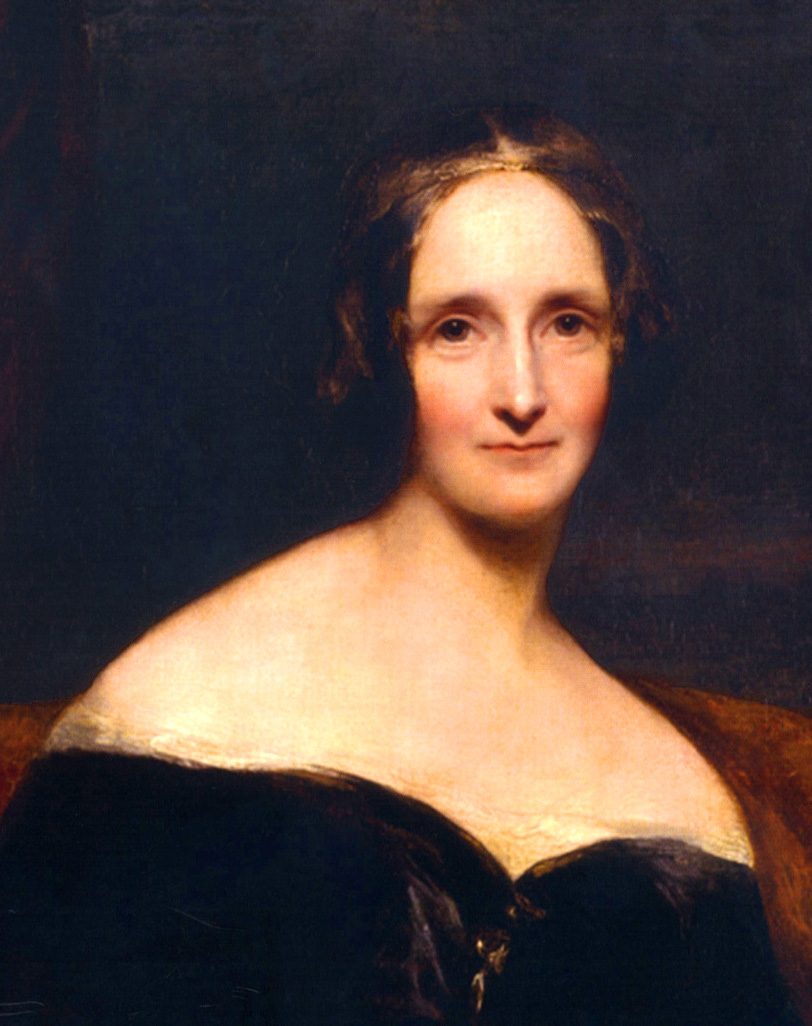
Of course, there was the Kenneth Branagh version of Frankenstein that I watched years ago. I recall the movie seemed classier, and it had Mary Shelley’s name in the title, so perhaps it was more closely linked to her original tale. Prior to reading the novel, my only other experience with Frankenstein was during my senior English class in high school. The teacher mentioned that Mary Shelley wrote the story as part of a competition with her husband, Percy Bysshe Shelley, and friend, Lord Byron, to write a ghost story. From Mary Shelley’s efforts, the novel was born.

With all this build up, I launched expectantly into Shelley’s biography at the beginning of the book. She had an unfortunate life full of tragedy and was a husband stealing adulteress. I kept in mind that the last fact should have no bearing on her writing. I did, however, tuck away her comment that people often asked her how a young woman could have written such a tale. I didn’t find it difficult to believe that a young woman wrote the book; the novel gushed on and on with a relentless amount of filler. In tone and passion, it matched the sappiest of poorly written romance novels. Truly, Mary Shelley had written a horror novel.

I suspect Mary Shelley’s overinflated belief in her ability to write was influenced by her sphere of acquaintances. Her parents were prominent writers and philosophers (her mother died shortly after Mary’s birth but left behind quite a legacy), her husband and friend (Lord Byron) were well-known writers, so why not give it a whirl herself? I must admit that Frankenstein is the only work by Mary Shelley I’ve read, but based on what I encountered, I am not motivated in the least to seek out her other writings. Feminists everywhere are probably damning me right now.

Led around by the nose is the phrase that kept coming to mind as I read the book. Mary Shelley obviously had a point she wanted to make, but she didn’t allow her readers to arrive at this point on his or her own. Victor Frankenstein was meant to be disliked and the monster pitied. I believe her intent was to make us wonder who the real monster was.

I kept hoping that Mary Shelley would raise the Creator vs. Creation issue because I would have enjoyed arguing that subject as I read. After all, Victor Frankenstein as the imperfect Creator would have made for a wonderful debate. Instead, we’re given a pathetic, weak man who repeatedly saves his own life over those he claims to love. I still don’t know why he suddenly rejected his own creation. We’re expected to suspend belief and simply accept that he did.

As for the suspension of belief, prepare to do so over and over and over again. The most unforgiveable place I found this to be true was in the mary-shelleys-frankenstein-2creation of the monster. Mary Shelley didn’t do her research as far as I’m concerned. She didn’t provide any method of preservation or refrigeration for the body parts and briefly mentions decay. Still, we’re expected to believe that Frankenstein built a human in a rented room in the middle of town. She glosses over the part where the creature is brought to life by having Frankenstein refuse to tell Captain Walton how he did it to prevent the sailor from making the same mistake. As a writer, I know that’s a major faux pas. Perhaps it was more acceptable when Mary Shelley wrote.

It’s a toss-up who fluctuated more in character: Victor Frankenstein or The Monster. Frankenstein’s resolve wavered every time he decided he was going to deal with his creation, and right on cue someone he loved would die by the monster’s hands because Victor’s spinelessness reasserted itself yet again. It was dangerous to be loved by this man, and I do not buy into the belief that he was helpless to stop the monster’s rampage.

The monster was intelligent enough to grab clothes upon fleeing Frankenstein’s rooms, learn language and reading in about a year, quote Percy Bysshe Shelley, Lord Byron, and John Milton’s “Paradise Lost,” but couldn’t discern his own feelings or come up with better plans for inserting himself into society. From the last two incidents, we’re supposed to believe the monster was a victim.

And when, exactly, did Frankenstein’s creation become a monster? In my opinion, it was when he refused to extend the grace he sought from humanity. In his unjustifiable rage, he lashed out not only toward those whose company he sought, but he hurt innocent bystanders as well (ex: burning the cottage punished the owner when the creature was rejected by De Lacy, Felix, Agatha, and Safie.) I could not find him pitiable, and it was not his right to act accordingly.

I could continue with issues such as why the monster possessed supernatural strength, how the scenes were predictable, the presence of too many coincidences, and how the character arcs read more like character cliffs. Since I haven’t read what the feminists believe Mary Shelley’s intent was for her novel, I’ll not enter that debate.

Instead, I’ll sum it up with the question of what makes a classic. If shock value for the era in which a novel was written qualifies, then a certain book in fifty shades is destined to become a classic in about one hundred years. Or does a book become a classic by the fact that it was written by an anonymous author who turns out to be the opposite sex from what we expected? All this did for me was present Mary Shelley starring in the role of Victor Frankenstein. (If you’re going to write an opposite sex character, try to make them masculine or feminine as is required of said character.) Don’t forget popularity and sales; they lend high regard for a book in the opinion of many people these days.

I’m not sorry that I read Frankenstein because now I can say I know for myself, but I cannot recommend the book as either well-written or worthy of being called a classic.

Night on the Town

night-on-the-town-2The Alexander cocktail features in my novel, The Secrets of Dr. John Welles, during the winter of 1927 when John and his two best friends, Claude and Sam, sneak away for a night on the town. Prohibition limits their choice of establishments where they might procure a decent drink, but the young men are looking for a little wild entertainment. Where they end up provides more than they bargained for in quite a few ways. I’ll leave you with that little teaser (I have to save something for the publication of my novel), and provide you with the recipes I found and my experience with the drink.

I don’t keep ingredients on hand for cocktails, so I ventured out with my best friend, Emily, to find a bartender who could make the drink for us. It took us three tries at different restaurants before we found one that had the ingredients to make an Alexander. The drink is old-fashioned, and only one bartender knew what we were talking about.

When you mention an Alexander, the drink that most often comes to mind is the brandy version with white crème de cacao.   Even if you don’t order a Brandy Alexander, this is probably what you will receive.

Brandy Alexander

¾ oz. brandy

¾ oz. white crème de cacao

¾ oz. heavy cream

Add all the ingredients to a cocktail shaker and fill with ice. Shake, and strain into a chilled cocktail glass. Garnish with freshly grated nutmeg.

But let’s tiptoe back a little farther in history to 1910 and Jacob Abraham Grohusko’s book, Jack’s Manual on The Vintage & Production, Care & Handling of Wines, Liquors, etc., which is supposedly the oldest reference to a drink called The Alexander. It sounds lovely and like it might have a bit of kick with the rye whisky.

Alexander Cocktail

75% rye whisky

25% Benedictine

1 piece of ice

Twist of orange peel. Stir and serve.

And let us not forget the 1916 mention in Hugo Ensslin’s book, Recipes for Mixed Drinks, which provides this version of The Alexander.

Alexander Cocktail

⅓ El Bart gin

⅓ white crème de cacao

⅓ sweet cream

Shake well in a mixing glass with cracked ice, strain, and serve.

So which drink would John, Claude, and Sam have imbibed during their night on the town? For recipes, I’m following the lead of Gary Regan in his 2011 article, Behind the Drink: The Brandy Alexander, but I’m putting the gin back in the drink as it was originally created.

The Alexander

The lovely Gretchen

The lovely Gretchen

2 oz. gin

1 oz. dark crème de cacao

1 oz. heavy cream

Add all ingredients to a cocktail shaker and fill with ice. Shake, and strain into a chilled cocktail glass. Garnish with freshly grated nutmeg.

Emily and I requested Tanqueray gin, and the lovely bartender, Gretchen, was kind enough to procure heavy cream from the kitchen to make our drink. The restaurant where we dined makes a Brandy Alexander with gelato, but we were striving for authenticity. In our opinion, the drink was delicious. Not too cloying, the flavor of each ingredient blended well, but they also remained well defined. The gin made for a light, crisp drink despite the cream. For the sake of research, we tried the brandy version.

Brandy Alexander

2 oz. Cognac or other fine aged brandy

1 oz. dark crème de cacao

1 oz. heavy cream

Add all ingredients to a cocktail shaker and fill with ice. Shake, and strain into a chilled cocktail glass. Garnish with freshly grated nutmeg.

The Brandy Alexander was also a delicious cocktail but with a titch more warmth to it. The flavor was richer which we attributed to the brandy. Again, the three ingredients complimented each other without losing their identity and becoming something else entirely.

Traditionally, the drink was served in a cocktail glass, sometimes called a champagne glass, and if you aren’t familiar with it, it’s the saucer style glass on a stem. Today, if you find a restaurant or bar that can make a Brandy Alexander, or the gin version, you’ll receive the cocktail in a martini glass.

For an interesting tidbit, Barry Popik, historian, states the cocktail was invented at Rector’s in New York. According to Mr. Popik, Troy Alexander, the bartender, created the white drink to celebrate Phoebe Snow, the fictional character used in advertising for Delaware, Lackawanna & Western Railroad. The snowy beverage was used to emphasize the fact that the railroad powered its locomotives with anthracite, a clean-burning variety of coal, and was backed up by images of Phoebe Snow in a snow-white dress. The Brandy Alexander was originally known as Alexander #2.

Cheers!